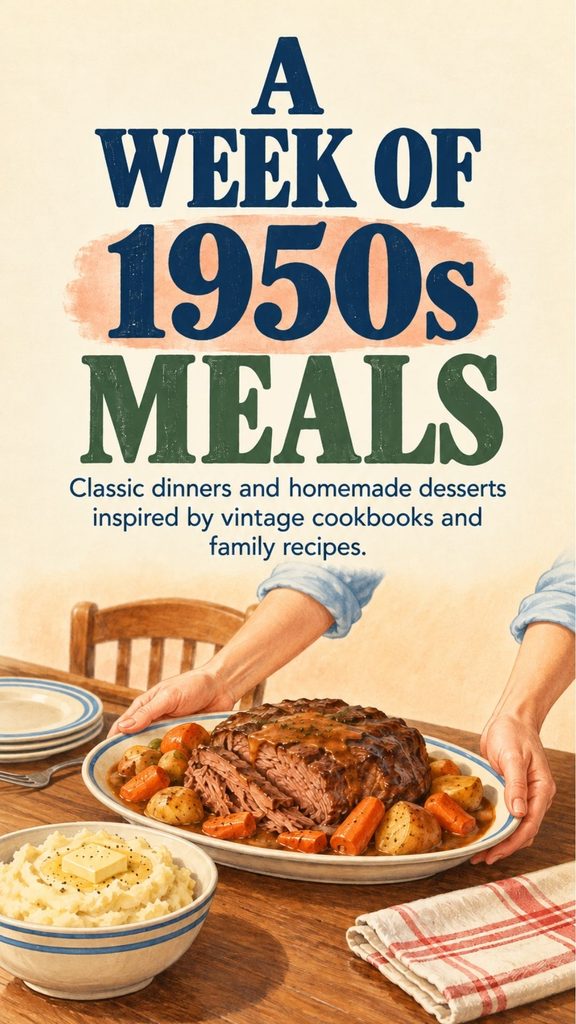
There’s something comforting about opening an old family cookbook and finding recipes that have been prepared around dinner tables for generations. Before takeout apps, meal delivery subscriptions, and endless online recipes, many households relied on familiar ingredients, handwritten recipe cards, and a dependable collection of family favorites.
The 1950s are especially interesting to revisit because home cooking during that decade combined traditional comfort food with a growing enthusiasm for convenience products, colorful salads, and creative casseroles.
A typical American family dinner might feature a roast, mashed potatoes, cooked vegetables, and a homemade dessert. Another evening could bring spaghetti and meatballs, chicken pot pie, or stuffed bell peppers. And for special occasions, molded gelatin salads sometimes appeared alongside savory dishes.
You Might Also Like:
- Loading posts...
Not every family ate alike, of course. Regional traditions, household income, cultural background, and personal preferences shaped what appeared on the table. American cooking in the 1950s was more varied than the familiar images in vintage advertisements might suggest.
Still, preparing a week of dinners inspired by mid-century cookbooks can be a delightful way to rediscover simple recipes and traditional meal planning.
Here is a complete seven-day menu inspired by 1950s American home cooking, along with practical preparation tips, easy recipe ideas, and ways to enjoy these nostalgic meals without spending the entire week washing dishes.
What Was Family Dinner Like in the 1950s?
In many mid-century American households, dinner was organized around a main dish, one or two vegetables, and a simple accompaniment such as potatoes, bread, or rice.
Sunday dinners were often more elaborate, especially when extended family gathered around the table.
Cookbooks and magazines of the period frequently featured roasts, casseroles, meatloaf, creamed vegetables, salads, and homemade desserts.
Convenience foods were also becoming increasingly prominent. Canned soups, packaged gelatin, frozen vegetables, and prepared baking ingredients offered new options for households interested in saving time.
Yet it would be misleading to imagine that everyone cooked elaborate meals from scratch every evening. Some families relied heavily on leftovers and economical dishes, while others used prepared foods or followed cultural cooking traditions that differed substantially from mainstream magazine menus.
One particularly recognizable feature of mid-century entertaining was the molded salad.
Gelatin dishes could contain fruit, vegetables, cottage cheese, or other surprising combinations. While some recipes seem unusual today, colorful gelatin creations were popular features of many American cookbooks and celebrations.
For this menu, the goal is to capture the welcoming character of traditional family meals without assuming every recipe needs to be prepared exactly as it was decades ago.
Your Complete 7-Day 1950s-Inspired Dinner Menu
<text color=”secondary” size=”xs” weight=”medium”>A nostalgic weekly menu for everyday family cooking</text>
| Day | Main dish | Sides and dessert |
|---|---|---|
| Monday | Spaghetti and meatballs | Green beans, tossed salad, garlic toast |
| Tuesday | Oven-baked pork chops | Cheesy cauliflower, buttered corn, baked apples |
| Wednesday | Homemade chicken pot pie | Pineapple and lettuce salad |
| Thursday | Stuffed bell peppers | Tomato salad, cranberry gelatin salad |
| Friday | Old-fashioned Swiss steak | Scalloped potatoes, carrots, peach and cottage cheese salad, pineapple upside-down cake |
| Saturday | Family dinner or gathering | Bring a chocolate mayonnaise cake |
| Sunday | Slow-cooked pot roast | Mashed potatoes, broccoli, green salad, dinner rolls, leftover cake |
This menu is intentionally generous. You can simplify the side dishes, reduce the desserts, or use leftovers when appropriate.
The purpose is to enjoy a taste of vintage family cooking, not recreate the workload of a large mid-century household.
Monday: Classic Spaghetti and Meatballs
Spaghetti and meatballs became a familiar comfort-food dinner in many American households during the twentieth century.
It’s a welcoming way to begin a vintage-inspired week because the ingredients are straightforward, the portions are easy to adjust, and the meal can be prepared largely from pantry staples.
Ingredients
For approximately four servings:
- 12 ounces dry spaghetti
- 1 pound ground beef or a suitable ground-meat mixture
- 1 egg
- 1/3 cup breadcrumbs
- 2 tablespoons milk
- 1 small onion, finely chopped
- 2 cloves garlic, minced
- 1 can (28 ounces) crushed tomatoes
- 1 tablespoon olive oil
- 1 teaspoon dried oregano
- 1/2 teaspoon dried basil
- Salt and black pepper to taste
How to Prepare It
Combine the ground meat, egg, breadcrumbs, milk, and half the onion in a mixing bowl.
Shape into evenly sized meatballs and arrange on a lightly greased baking sheet.
Bake at 400°F (200°C) until the centers reach a safe internal temperature. Ground beef should reach 160°F (71°C), while ground poultry requires 165°F (74°C).
Meanwhile, soften the remaining onion in olive oil, add the garlic, and stir in the crushed tomatoes and herbs.
Simmer the sauce gently while the meatballs finish cooking.
Add the cooked meatballs to the sauce, then serve over freshly cooked spaghetti.
Traditional Side Dishes
For a simple old-fashioned vegetable side, cook green beans until tender, then toss with a little butter and toasted breadcrumbs.
Prepare a tossed salad with lettuce, tomatoes, and a basic dressing made from olive oil and vinegar.
Serve with garlic toast.
Although some vintage spaghetti recipes relied on relatively simple seasonings, American families in the 1950s had diverse cooking traditions. Italian-American households, in particular, had well-established approaches to flavorful tomato sauces.
Use the herbs and seasonings your family enjoys.
Tuesday: Baked Pork Chops With Cheesy Cauliflower
Pork chops were a practical family dinner choice in many mid-century cookbooks.
Baking them in the oven made it possible to prepare vegetables and other side dishes while the main course cooked.
Pairing pork with a creamy vegetable casserole creates the kind of substantial dinner commonly associated with traditional American home cooking.
Easy Oven-Baked Pork Chops
You’ll need:
- 4 pork chops
- 1 tablespoon cooking oil
- 1 teaspoon paprika
- 1/2 teaspoon garlic powder
- Salt and black pepper
- Optional dried thyme
Preheat the oven to 375°F (190°C).
Pat the pork chops dry, rub lightly with oil, and season both sides.
Arrange them in a suitable baking dish and cook until the thickest part reaches 145°F (63°C), followed by a three-minute rest.
Cooking time depends on thickness and whether the chops contain bones, so use a food thermometer rather than relying on a fixed number of minutes.
Cheesy Baked Cauliflower
For a simple white sauce, melt two tablespoons of butter in a saucepan and stir in two tablespoons of flour.
Cook briefly, then gradually whisk in one cup of milk.
Stir until the sauce thickens.
Add a little shredded cheese and season to taste.
Place lightly cooked cauliflower florets in a baking dish, pour the sauce over them, and bake until hot and lightly golden.
Finish With Baked Apples
Core four apples and place them in a baking dish.
Sprinkle with cinnamon and add a small amount of brown sugar if desired.
Pour a little water into the bottom of the dish and bake at 350°F (175°C) until the apples are tender, usually about 25–40 minutes depending on their size and variety.
Serve with the pork chops, cheesy cauliflower, and buttered corn.
The baked apples provide a simple dessert without requiring cake or pastry.
Wednesday: Homemade Chicken Pot Pie
Chicken pot pie is one of the most recognizable American comfort foods.
Its combination of tender chicken, vegetables, creamy sauce, and pastry makes it a complete and satisfying meal.
It’s also useful for turning leftover cooked chicken into something that feels entirely different.
Ingredients
- 2 cups cooked chicken, chopped
- 2 cups mixed vegetables
- 1 small onion
- 3 tablespoons butter
- 3 tablespoons flour
- 1 1/2 cups chicken broth
- 1/2 cup milk
- Salt, pepper, and dried thyme
- Prepared pie pastry or a homemade crust
Instructions
Preheat the oven to 400°F (200°C).
Melt the butter in a saucepan and soften the chopped onion.
Stir in the flour and cook briefly.
Gradually add the chicken broth and milk, whisking until smooth.
Simmer until the sauce thickens, then add the chicken, vegetables, and seasonings.
Transfer the mixture to a suitable pie dish and cover with pastry.
Cut a few small vents in the crust.
Bake until the pastry is golden and the filling reaches 165°F (74°C), approximately 30–40 minutes depending on the recipe and dish.
Allow the pie to stand briefly before serving.
A Simple Pineapple Salad
For a vintage-inspired side, arrange well-drained canned pineapple on crisp lettuce leaves.
You can add a little cottage cheese if desired.
This combination may sound unusual compared with modern salads, but fruit-and-lettuce arrangements appeared frequently in twentieth-century American home cooking.
Because pot pie already contains meat, vegetables, and pastry, there’s no need to prepare several additional side dishes.
Thursday: Stuffed Bell Peppers and Cranberry Gelatin Salad
Stuffed peppers are a wonderful example of practical family cooking.
A single pepper can hold meat, rice, vegetables, and sauce, creating convenient individual portions.
The dish can also be prepared ahead of time and refrigerated until you’re ready to bake it.
Ingredients for Stuffed Peppers
- 4 large bell peppers
- 1 pound ground beef
- 1 cup cooked rice
- 1 small onion, chopped
- 1 cup tomato sauce
- 1 teaspoon dried parsley
- Salt and black pepper
- Optional shredded cheese
Preparation
Preheat the oven to 375°F (190°C).
Cut the tops from the peppers and remove the seeds and membranes.
Brown the ground beef with the chopped onion in a skillet, draining excess fat if necessary.
Stir in the cooked rice, most of the tomato sauce, and the seasonings.
Fill the peppers with the mixture and arrange them upright in a baking dish.
Spoon the remaining tomato sauce over the tops.
Cover with foil and bake until the peppers are tender and the filling is thoroughly heated, approximately 30–40 minutes depending on their size.
If you add cheese, sprinkle it over the peppers near the end of cooking.
For food safety, ensure any ground beef filling reaches at least 160°F (71°C).
Serve With a Classic Salad
Add a simple lettuce and tomato salad with homemade Thousand Island dressing.
A basic dressing can be made from mayonnaise, ketchup, finely chopped pickles or relish, and a little lemon juice.
The amount of dressing can be adjusted according to preference.
Try an Old-Fashioned Cranberry Gelatin Salad
A molded cranberry gelatin salad is an unmistakably mid-century addition to the menu.
For an easy modern version, prepare a cranberry-flavored gelatin mixture according to the package directions, or use another compatible flavor with cranberry sauce.
Fold in suitable drained fruit once the gelatin has cooled and begun to thicken, following the recipe’s proportions.
Refrigerate until fully set.
Avoid adding fresh pineapple to ordinary gelatin because its enzymes can prevent proper setting. Canned pineapple is generally suitable because processing inactivates the relevant enzyme.
Serve the chilled salad in small portions as a nostalgic accompaniment.
Friday: Swiss Steak and Scalloped Potatoes
Friday’s menu is a particularly hearty combination of old-fashioned favorites.
Swiss steak, despite its name, is an American-style dish featuring beef that is tenderized and cooked slowly in a flavorful sauce.
The term doesn’t mean the recipe originated in Switzerland.
It is often associated with the process of mechanically tenderizing meat.
How to Make Old-Fashioned Swiss Steak
Choose an appropriate cut such as round steak.
You’ll need:
- Approximately 1 1/2 pounds round steak
- 1/4 cup flour
- Salt and pepper
- 1 tablespoon cooking oil
- 1 onion, sliced
- 1 can (14–15 ounces) diced tomatoes
- 1/2 cup beef broth or water
- Optional celery and carrots
Cut the beef into serving pieces and lightly coat with seasoned flour.
Brown the meat in a heavy pot with the cooking oil.
Add the onion, tomatoes, broth, and optional vegetables.
Cover and simmer gently until the beef becomes tender, which may take approximately 1 1/2–2 hours or longer depending on the cut and thickness.
Add more liquid if necessary to prevent scorching.
Swiss steak benefits from slow, moist cooking rather than rapid high heat.
Homemade Scalloped Potatoes
Thinly slice approximately two pounds of potatoes.
Arrange the slices in a greased baking dish with a lightly seasoned milk-based white sauce.
Cover and bake at 350°F (175°C) until the potatoes are tender, often about 60–75 minutes depending on the thickness of the slices and depth of the dish.
Remove the cover toward the end if you want a lightly browned surface.
Traditional scalloped potatoes don’t necessarily include cheese, although many modern recipes do.
Classic Side Dishes
Serve buttered carrots alongside the beef and potatoes.
A small salad of canned peach slices and cottage cheese adds another recognizable vintage touch.
The combination of sweet fruit and mild dairy appeared in many mid-century American meal suggestions.
Dessert: Pineapple Upside-Down Cake
Finish the meal with a homemade pineapple upside-down cake.
This traditional dessert features pineapple arranged in a buttery brown-sugar topping beneath a cake batter.
When the baked cake is carefully inverted, the caramelized fruit becomes the top.
Maraschino cherries are an optional decorative addition.
Pineapple upside-down cake predates the 1950s but remained a familiar home-baking favorite during the decade.
Serve it warm or at room temperature.
Make enough to enjoy a few additional servings over the weekend, storing the cake appropriately.
Saturday: A Family Dinner and Chocolate Mayonnaise Cake
Not every evening needs an elaborate home-cooked dinner.
Saturday can be a welcome opportunity to visit relatives, share a meal with friends, or prepare something simple using ingredients already available.
If you’re invited to dinner, offering to bring dessert is a thoughtful gesture.
A chocolate mayonnaise cake is an excellent vintage-inspired choice.
Despite its unusual name, the cake doesn’t taste like mayonnaise.
Mayonnaise contains oil and eggs, ingredients commonly used in baking. In a suitable cake recipe, mayonnaise can contribute fat and moisture.
Its acidity may also interact with leavening ingredients, depending on the recipe.
Easy Chocolate Mayonnaise Cake
For a simple version, gather:
- 2 cups all-purpose flour
- 1 cup granulated sugar
- 1/3 cup unsweetened cocoa powder
- 1 1/2 teaspoons baking soda
- 1 cup full-fat mayonnaise
- 1 cup water
- 1 teaspoon vanilla extract
Preheat the oven to 350°F (175°C).
Grease an appropriate 9-inch square baking pan.
Whisk the flour, sugar, cocoa powder, and baking soda together.
In a separate bowl, combine the mayonnaise, water, and vanilla.
Stir the wet ingredients into the dry ingredients until just combined.
Spread the batter in the prepared pan.
Bake for approximately 30–40 minutes, checking that the center is set and a toothpick inserted into the middle comes out clean or with a few moist crumbs.
Cool before serving.
Use plain mayonnaise rather than sweetened salad dressing, which may produce a different result.
The cake can be finished with a light dusting of powdered sugar or a simple chocolate frosting.
It’s a charming way to bring a vintage recipe to a gathering without preparing an entire dinner.
Sunday: Traditional Pot Roast With All the Trimmings
Sunday dinner was an important family occasion in many American homes, although traditions varied widely between households.
For this 1950s-inspired menu, a slow-cooked beef roast with potatoes, vegetables, rolls, and dessert makes an appropriate finale.
Preparing the Pot Roast
Choose a suitable beef chuck roast, approximately three pounds.
Season it with salt and pepper, then brown it on all sides in a heavy Dutch oven with a small amount of oil.
Add sliced onions, carrots, a little beef broth, and optional herbs.
Cover and cook slowly in a 300°F (150°C) oven until the meat becomes fork-tender, often approximately three to four hours depending on its size.
Chuck roast contains connective tissue that benefits from extended moist cooking, so the finished texture is more useful for judging tenderness than a minimum safe temperature alone.
Keep enough liquid in the pot to prevent drying or scorching.
Make Creamy Mashed Potatoes
Peel or scrub potatoes, cut into similar-sized pieces, and simmer until tender.
Drain and mash with butter and warm milk.
Season lightly with salt and pepper.
For a smoother texture, avoid excessive mixing, which can make some potatoes gluey.
Add Broccoli and Hollandaise Sauce
Broccoli provides a welcome vegetable contrast to the rich roast.
Steam until tender-crisp.
Hollandaise sauce is traditionally made with egg yolks, melted butter, and lemon juice.
Because traditional preparations may use lightly cooked eggs, choose a method that heats the yolks appropriately or uses pasteurized eggs when needed.
A simple lemon-butter dressing is another option if you want a lighter or quicker accompaniment.
Complete the Table
Serve with a tossed green salad and warm dinner rolls.
For dessert, offer suitable leftover pineapple upside-down cake or chocolate mayonnaise cake.
Refrigerate perishable cakes promptly, especially those containing dairy-based frosting or fillings.
This Sunday dinner captures the comforting character of a traditional family meal without requiring every component to be made from scratch.
How to Make a 1950s Menu Without Spending All Day Cooking
One thing becomes clear when looking through vintage dinner menus: many contain several dishes prepared separately.
That can mean a considerable amount of cooking and washing up.
Fortunately, you can keep the nostalgic flavors while simplifying the work.
Prepare Ingredients Ahead of Time
Chop onions and suitable vegetables before the busiest part of the week.
Store them correctly in the refrigerator.
Cook rice ahead only if you can cool it promptly and refrigerate it safely.
You can also prepare meatballs in advance and freeze them until needed.
Use Ingredients Across Several Meals
Choose overlapping ingredients.
For example, carrots appear in several of these recipes.
Onions are useful for meatballs, tomato sauce, stuffed peppers, pot pie, Swiss steak, and pot roast.
Potatoes serve as a side dish and can contribute to leftovers.
Buying versatile ingredients can reduce both grocery spending and waste.
Simplify the Side Dishes
You don’t have to prepare four separate foods at every meal.
If chicken pot pie includes meat, vegetables, and pastry, a simple salad may be enough.
For pork chops, choose one vegetable side when time is limited.
Traditional menus can provide inspiration without becoming strict obligations.
Freeze Extra Portions
Suitable cooked meatballs, pot pie filling, and other prepared foods can be frozen for future meals.
Use clean freezer-safe containers and label them.
Cool and refrigerate perishable food promptly, and freeze it within an appropriate storage period.
Most cooked leftovers should be used within three to four days if refrigerated.
Reheat leftovers thoroughly to 165°F (74°C).
A Practical Grocery List for the Week
A little planning helps prevent buying ingredients that will only be used once.
Adjust this list according to your household size and what you already own.
Meat and Protein
- Ground beef for meatballs and stuffed peppers
- Pork chops
- Chicken for pot pie
- Beef round steak for Swiss steak
- Beef chuck roast
- Eggs
- Cottage cheese
Vegetables and Fruit
- Potatoes
- Bell peppers
- Onions
- Carrots
- Cauliflower
- Broccoli
- Green beans
- Lettuce
- Tomatoes
- Apples
- Canned pineapple
- Canned peaches
- Corn
- Cranberry sauce or suitable gelatin salad ingredients
Pantry and Baking Staples
- Spaghetti or other pasta
- Rice
- Canned tomatoes
- Tomato sauce
- Flour
- Sugar and brown sugar
- Cocoa powder
- Baking soda
- Breadcrumbs
- Cooking oil
- Broth
- Dried herbs and seasonings
- Mayonnaise
- Gelatin mix
- Baking supplies for pineapple upside-down cake
Dairy and Bread
- Milk
- Butter
- Cheese
- Bread for toast
- Dinner rolls or ingredients to make them
Before shopping, review the quantities needed for each dish.
You may already have several of these items in your cupboards.
What We Can Learn From 1950s Home Cooking
Revisiting vintage meals offers more than a collection of nostalgic recipes.
There are several useful household lessons worth bringing into a modern kitchen.
Familiar Recipes Make Meal Planning Easier
Many families relied on a rotation of dishes they knew how to prepare.
Having dependable recipes reduces the time spent making decisions each evening.
Simple Ingredients Can Become Satisfying Meals
Potatoes, vegetables, rice, pasta, and affordable cuts of meat can create a wide variety of dishes.
The quality of the meal doesn’t depend on using expensive or unusual ingredients.
Presentation Matters
A simple salad served in a pretty bowl, warm rolls in a basket, or a homemade dessert on a cake stand can make an ordinary dinner feel special.
Food Traditions Create Memories
Family recipes often survive because of the people and occasions associated with them.
A grandmother’s stuffed peppers or a familiar Sunday roast can become part of a household’s shared history.
Not Every Old-Fashioned Habit Needs to Return
Vintage diets weren’t automatically healthier or more economical.
Some meals were heavy in saturated fat, sodium, or added sugar, and the time required to prepare elaborate dinners could be considerable.
Modern families can preserve the enjoyable parts of traditional cooking while using current food-safety knowledge, incorporating a wider variety of vegetables, and adjusting recipes to their nutritional needs.
How to Give Your Dining Table a 1950s Feel
Food isn’t the only way to enjoy a nostalgic dinner week.
You can create a simple mid-century-inspired atmosphere without purchasing vintage dishes or elaborate decorations.
Use a tablecloth or placemats, fold napkins neatly, and arrange serving dishes in the center of the table.
If you already own floral plates, small glass bowls, or an old-fashioned pitcher, bring them out for the occasion.
Keep the table practical rather than crowded.
You could also write the weekly menu on a small chalkboard or piece of paper displayed in the kitchen.
Children may enjoy helping set the table, folding napkins, or choosing the dessert for one evening.
These details add character without significantly increasing the household workload.
Is It Worth Trying a Vintage Dinner Week?
A full week of 1950s-inspired meals can be an enjoyable family project, particularly for people who love old cookbooks, comforting dinners, and traditional homemaking.
However, the menu may involve more preparation than an ordinary week of quick meals.
Several dinners include homemade sauces, baked vegetables, side salads, and desserts.
You don’t need to prepare everything exactly as written.
Perhaps you’ll discover that Swiss steak is worth adding to your regular meal rotation, while molded gelatin salads are something you’d prefer to serve only for a special occasion.
You may find that a simple baked apple dessert is more practical than preparing cake every evening.
The point is to explore traditional recipes and decide which ones deserve a place in your own kitchen.
Final Thoughts: Bringing Old-Fashioned Family Dinners Back to the Table
A week of cooking inspired by the 1950s offers an enjoyable reminder of how many satisfying meals can be made from familiar ingredients.
Spaghetti and meatballs, baked pork chops, chicken pot pie, stuffed peppers, Swiss steak, chocolate mayonnaise cake, and Sunday pot roast all have the kind of comforting character that keeps family recipes popular across generations.
Some dishes are wonderfully practical. Others are more elaborate, and a few vintage combinations may seem unusual to modern tastes.
That’s part of the fun of exploring old cookbooks.
You don’t have to recreate every detail of a mid-century household to appreciate its food traditions.
Choose the recipes that appeal to you, simplify the preparation where necessary, and gather everyone around the table when possible.
The best thing worth bringing back from old-fashioned family dinners isn’t a particular casserole or gelatin mold. It’s the pleasure of sharing good food, familiar recipes, and a little time together at the end of the day.