Christmas week can put a surprising amount of pressure on the grocery budget. Between holiday baking, special dinners, gifts, and family gatherings, it’s easy to spend more on food than you originally planned.
But before making another expensive grocery run, take a closer look at what’s already sitting in your kitchen.
That forgotten bag of rice, half-used box of pasta, canned beans, frozen vegetables, and leftover potatoes might be enough to make several delicious meals. With a little planning and a few inexpensive additions, ordinary pantry ingredients can become warm, satisfying dinners your family will actually enjoy.
You Might Also Like:
- Loading posts...
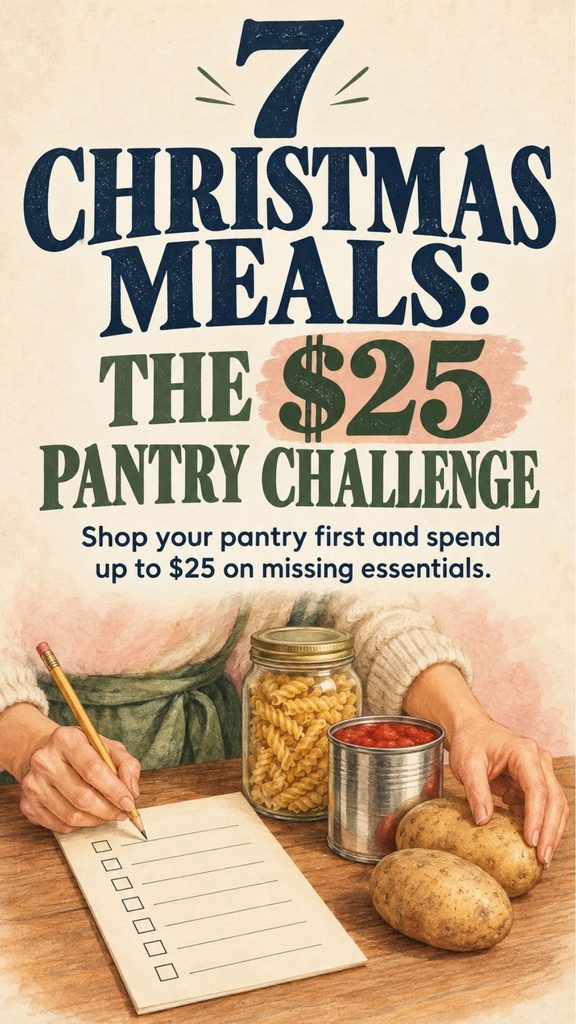
That’s the idea behind the $25 Christmas Pantry Challenge.
The goal is to prepare seven comforting meals using mostly ingredients you already own, with a maximum of $25 available to purchase any missing essentials.
This isn’t a claim that $25 can buy a full week’s groceries for every household. The challenge works best when you already have a reasonable supply of food at home. Your pantry provides most of the ingredients, while the small shopping budget fills the gaps.
It’s a practical way to reduce food waste, stretch your holiday money, and discover just how many meals you can make without starting from scratch.
What Is the $25 Christmas Pantry Challenge?
A pantry challenge is a short period when you intentionally cook from existing food supplies instead of buying new ingredients for every meal.
Rather than planning recipes first and then purchasing everything they require, you reverse the process.
You look at what you already have and create meals around those ingredients.
For this Christmas challenge, the rules are simple:
- Prepare seven meals using mostly ingredients from your pantry, refrigerator, and freezer.
- Set a maximum additional grocery budget of $25.
- Use perishable ingredients before they spoil.
- Substitute ingredients when practical instead of making unnecessary purchases.
- Keep meals satisfying, nutritious, and suitable for your household.
You don’t have to spend the entire $25.
If you already have everything necessary, your additional grocery spending could be zero.
On the other hand, if your pantry is nearly empty, seven complete family dinners may not be realistic with only $25. In that situation, treat the challenge as a way to reduce your usual spending rather than a rigid limit.
The purpose is to make better use of available food without skipping meals or compromising nutrition.
Step 1: Take Inventory of Your Kitchen
Before choosing your seven meals, find out exactly what you have.
Most kitchens contain more usable ingredients than their owners realize.
A half-empty bag of lentils, two cans of tomatoes, frozen spinach, and a little shredded cheese may not look like much individually. Together, they can form the foundation of several dinners.
Start with three areas.
Check Your Pantry
Look for shelf-stable ingredients such as:
- Rice, pasta, and oats
- Flour and cornmeal
- Canned beans and lentils
- Canned tomatoes and tomato sauce
- Broth or bouillon
- Peanut butter
- Cooking oils
- Dried herbs and spices
- Canned vegetables
- Breadcrumbs
Record approximate quantities so you know whether you have enough for several servings.
Check Your Refrigerator
Look for foods that need to be used soon.
Eggs, cheese, fresh vegetables, milk, cooked leftovers, and opened ingredients are especially useful.
Check dates and storage conditions, but don’t assume every product is unsafe immediately after a best-by date. Many date labels concern quality rather than safety.
Discard food showing spoilage, damaged packaging, or other safety concerns.
Check Your Freezer
A freezer can make a pantry challenge considerably easier.
Look for frozen vegetables, meat, poultry, bread, and previously prepared meals.
Write down what you find without leaving perishable foods sitting at room temperature while you organize.
Once your inventory is complete, you’ll have a much clearer idea of what you can cook.
Step 2: Spend Your $25 on Ingredients That Work in Several Meals
The smartest way to use a limited grocery budget is to purchase versatile ingredients rather than specialty products.
An ingredient that contributes to three dinners is often more useful than something you’ll use only once.
For example, eggs can become a frittata, add protein to fried rice, or help prepare homemade baked goods.
Potatoes work in soups, mashed potato bowls, and simple casseroles.
Cheese can be divided between pasta, egg dishes, and baked potatoes.
Example $25 Shopping Plan
<text color=”secondary” weight=”medium” size=”xs”>Illustrative spending caps, not verified store prices</text>
| Grocery item | Budget allowance |
|---|---|
| 1 dozen eggs | $4.00 |
| 5 lb bag of potatoes | $4.00 |
| 1 lb block of cheese | $4.00 |
| 2 lb bag of carrots | $2.00 |
| 2 onions | $2.00 |
| 1 bag frozen mixed vegetables | $2.50 |
| 1 gallon milk | $4.00 |
| Total | $22.50 |
| Remaining allowance | $2.50 |
Prices depend heavily on location, store, season, and available discounts. Adjust the list to current prices and your actual inventory.
If you already have eggs, use that money for another missing essential.
You may also need to prioritize less expensive alternatives if local prices exceed these allowances.
The important rule is to spend on ingredients that help complete multiple meals.
Step 3: Plan Seven Cozy Meals From Your Existing Supplies
Now comes the enjoyable part: turning ordinary pantry ingredients into a week of comforting dinners.
These seven flexible recipes are built around familiar staples.
The quantities are starting points rather than guarantees for every household. Most recipes can provide approximately three to four modest servings, depending on the ingredients and portion sizes.
Adjust the amounts to what you already have, the number of people you’re feeding, and their nutritional needs.
Meal 1: Creamy Christmas Eve Tomato Pasta
A warm pasta dinner is one of the easiest ways to begin the challenge.
It requires very few ingredients, comes together quickly, and can be adapted to whatever vegetables or proteins you have available.
Ingredients
- 12 ounces dry pasta
- 1 can crushed or diced tomatoes, approximately 14–15 ounces
- 1 small onion, chopped
- 2 cloves garlic, or garlic powder to taste
- 1 tablespoon cooking oil
- 1/2 cup shredded cheese, optional
- 1 cup cooked vegetables or beans, optional
- Salt, pepper, and dried Italian herbs
Instructions
- Cook the pasta according to the package instructions.
- Heat the oil in a large skillet and soften the onion.
- Add the garlic and cook briefly.
- Stir in the canned tomatoes and dried herbs.
- Simmer for approximately 10 minutes, adding a little water if necessary.
- Add cooked vegetables or beans if available.
- Toss the pasta with the sauce and sprinkle with cheese.
For a baked version, transfer everything to an oven-safe dish and heat at 375°F (190°C) until hot and bubbling.
The pasta works well with spinach, mushrooms, leftover chicken, or white beans.
Money-saving idea: Prepare extra tomato sauce and refrigerate or freeze it promptly. You can use it in another meal later in the week.
Meal 2: Hearty Winter Pantry Soup
Soup is especially useful during a pantry challenge because it can transform small quantities of different ingredients into a complete meal.
A little rice, some beans, vegetables, and broth can make a warming dinner without requiring expensive meat.
Ingredients
- 1 can beans, drained and rinsed
- 1 can diced tomatoes
- 3 cups broth or water with suitable bouillon
- 2 carrots, chopped
- 1 small onion, chopped
- 1 potato, diced
- 1 tablespoon cooking oil
- 1/2 cup cooked rice or pasta, optional
- Salt, pepper, and dried herbs
Instructions
- Warm the cooking oil in a large saucepan.
- Add the onion and carrots, cooking until they begin to soften.
- Stir in the potato, tomatoes, beans, and broth.
- Bring to a gentle boil, then reduce the heat.
- Simmer until the potatoes and vegetables are tender, approximately 20–25 minutes.
- Add cooked rice or pasta during the final few minutes if desired.
- Taste and adjust the seasonings.
Serve with toast, crackers, or homemade biscuits if you have the ingredients.
Soup is also ideal for using small portions of safely stored cooked vegetables.
Avoid adding ingredients that are spoiled or have been stored improperly.
Money-saving idea: Freeze suitable extra portions promptly in individual containers for a future lunch.
Meal 3: Holiday Leftover Fried Rice
Fried rice is one of the most practical ways to use small quantities of cooked meat and vegetables.
You don’t need an elaborate sauce or special equipment.
A skillet, properly stored rice, an egg, and a few vegetables are enough to make a satisfying meal.
Ingredients
- 3 cups cooked, chilled rice
- 2 eggs
- 1–2 cups frozen mixed vegetables
- 1 tablespoon cooking oil
- 2 tablespoons soy sauce, if available
- 1/2 cup cooked chicken, turkey, or another suitable protein, optional
- Garlic or onion powder to taste
Instructions
- Heat the oil in a large skillet.
- Add the frozen vegetables and cook until heated through.
- Push the vegetables to one side.
- Crack the eggs into the pan and scramble until cooked.
- Add the chilled rice and any cooked meat.
- Stir everything together and cook until thoroughly heated.
- Season with soy sauce and garlic or onion powder.
Use only rice that was cooled promptly after cooking and refrigerated safely. Cooked rice should not be left at room temperature for extended periods because of the risk of Bacillus cereus.
For the most reliable result, use rice prepared and refrigerated the previous day, following safe storage practices.
Money-saving idea: Even half a cup of leftover meat can add flavor and protein when combined with eggs and vegetables.
Meal 4: Cheesy Vegetable Frittata
Eggs are useful during a pantry challenge because they can be combined with vegetables, potatoes, and cheese to make an inexpensive main dish.
A frittata is especially convenient when you have several small quantities of ingredients left in the refrigerator.
Ingredients
- 6 large eggs
- 1/4 cup milk
- 1 cup chopped cooked vegetables
- 1/2 cup shredded cheese
- 1 tablespoon cooking oil
- Salt and pepper
- Cooked diced potatoes, optional
Instructions
- Preheat the oven to 375°F (190°C).
- Whisk the eggs, milk, salt, and pepper together.
- Warm the oil in an oven-safe skillet.
- Add the vegetables and optional potatoes.
- Pour the egg mixture evenly over the vegetables.
- Sprinkle with cheese.
- Transfer to the oven and bake until the center is fully set and the eggs reach 160°F (71°C), approximately 15–20 minutes, depending on the pan and depth.
Serve with toast, roasted potatoes, or a simple vegetable side.
If you don’t have an oven-safe skillet, use a suitable greased baking dish instead.
Money-saving idea: Frittatas are ideal for combining small amounts of vegetables that wouldn’t be enough for separate side dishes.
Meal 5: Loaded Mashed Potato Comfort Bowls
Potatoes are affordable and incredibly versatile when purchased at a reasonable price.
They can serve as the foundation of a filling dinner when combined with beans, vegetables, gravy, and other available toppings.
Ingredients
- 4 medium-to-large potatoes
- 2 tablespoons butter or cooking oil
- 1/4 cup milk, or enough for mashing
- 1 can beans or chili
- 1 cup cooked vegetables
- 1/2 cup shredded cheese, optional
- Leftover gravy or cooked meat, optional
- Salt and pepper
Instructions
- Wash, peel if desired, and cut the potatoes into evenly sized pieces.
- Place them in a saucepan and cover with water.
- Simmer until fork-tender, approximately 15–20 minutes.
- Drain thoroughly and mash with the milk and butter or oil.
- Heat the beans, vegetables, and any other toppings separately.
- Divide the mashed potatoes between bowls.
- Spoon the warm toppings over the potatoes and serve.
If you don’t have milk, use a little suitable broth or warm water to adjust the texture.
Beans and vegetables can make the bowls more substantial without requiring much meat.
Money-saving idea: Use the remaining potatoes in soup or another meal rather than preparing the entire bag at once.
Meal 6: Warming Chickpea and Tomato Curry
A simple curry can make basic canned goods feel completely different from the meals earlier in the week.
Chickpeas, lentils, tomatoes, and spices are a particularly useful combination.
The recipe doesn’t require specialty curry paste or coconut milk, although those ingredients can be included if you already have them.
Ingredients
- 1 can chickpeas, drained and rinsed
- 1 can diced tomatoes
- 1 small onion, chopped
- 1 tablespoon cooking oil
- 1–2 teaspoons curry powder
- 1/2 teaspoon garlic powder, or fresh garlic
- 1/2 cup water or broth, as needed
- 1 cup frozen spinach or mixed vegetables, optional
- Cooked rice for serving
Instructions
- Heat the oil in a saucepan.
- Add the chopped onion and cook until softened.
- Stir in the curry powder and garlic.
- Add the chickpeas, tomatoes, and a small amount of water.
- Simmer gently for 15–20 minutes.
- Add the optional vegetables and cook until tender.
- Adjust the seasoning and serve over rice.
If you have dried lentils instead of canned chickpeas, cook them according to their instructions and use them in the sauce.
The finished meal should be warm, flavorful, and filling without requiring a long ingredient list.
Money-saving idea: Make enough rice for the meal you’re serving, rather than automatically preparing a large batch that may not be used safely.
Meal 7: Golden Pantry Pasta and Vegetable Bake
Finish the challenge with a bubbling casserole that uses up suitable remaining pasta, vegetables, and cheese.
Unlike the first pasta dinner, this version focuses on a baked casserole texture and makes use of whatever odds and ends remain.
Ingredients
- 8–12 ounces dry pasta
- 1–2 cups cooked vegetables
- 1–2 cups tomato sauce or another suitable savory sauce
- 1 can white beans, drained, optional
- 1/2–1 cup shredded cheese, depending on availability
- 1/4 cup breadcrumbs, optional
- Salt, pepper, and dried herbs
Instructions
- Preheat the oven to 375°F (190°C).
- Cook the pasta until slightly firm, then drain.
- Combine the pasta, vegetables, sauce, beans if using, and half the cheese.
- Transfer to a lightly greased baking dish.
- Sprinkle with the remaining cheese and breadcrumbs if available.
- Bake for approximately 20–25 minutes, until heated through and golden on top.
If you have only a small amount of cheese remaining, use it as a topping rather than mixing it throughout the dish.
The breadcrumbs provide a pleasant texture without requiring additional cheese.
This final meal is an opportunity to use safe, properly stored ingredients before beginning a fresh grocery week.
How to Organize the Seven Meals
A flexible schedule helps you use perishable ingredients at the right time.
| Day | Meal | Main pantry ingredients |
|---|---|---|
| Monday | Creamy tomato pasta | Pasta, tomatoes, herbs |
| Tuesday | Winter pantry soup | Beans, potatoes, vegetables |
| Wednesday | Holiday fried rice | Rice, eggs, frozen vegetables |
| Thursday | Vegetable frittata | Eggs, vegetables, cheese |
| Friday | Loaded potato bowls | Potatoes, beans, toppings |
| Saturday | Chickpea curry | Chickpeas, tomatoes, rice |
| Sunday | Pasta and vegetable bake | Pasta, sauce, remaining vegetables |
You can change the order according to which ingredients need attention first.
For example, if you have cooked chicken or fresh spinach that must be used soon, schedule the meal containing those ingredients earlier.
Don’t keep prepared leftovers in the refrigerator all week simply to fit a planned menu.
Most cooked leftovers should be used within three to four days or frozen promptly for longer storage.
Five Tricks to Make Your $25 Stretch Further
1. Use One Ingredient in Several Meals
Choose versatile ingredients that work across different recipes.
Onions can flavor soup, pasta sauce, curry, and frittatas.
Eggs can provide protein in fried rice and the frittata.
Potatoes work in soup and loaded dinner bowls.
Using overlapping ingredients helps reduce both shopping and waste.
2. Keep Frozen Vegetables on Hand
Frozen vegetables are useful because you can remove the quantity needed for a recipe and keep the rest frozen.
They work in soups, casseroles, fried rice, and many other meals.
Compare package prices and choose plain vegetables when you don’t need added sauces or seasonings.
3. Use Beans to Stretch Meat
Beans and lentils can help make meals more filling without relying entirely on meat.
Add them to tomato sauce, soup, curry, or potato bowls.
They also contribute fiber and plant protein.
You don’t need to eliminate meat if your household enjoys it. Simply use reasonable portions and combine it with other nutritious ingredients.
4. Avoid Recipes That Require One Expensive Ingredient
A recipe may look inexpensive until you discover that it requires a specialty sauce, unusual spice, or large package of cheese.
During the challenge, focus on simple dishes that can tolerate substitutions.
Instead of purchasing a new seasoning blend, use the herbs and spices you already have.
Instead of buying a special pasta shape, use the pasta in your cupboard.
Flexibility is one of the most valuable kitchen skills when you’re working with a limited budget.
5. Keep Track of Every Additional Purchase
Record what you spend from the $25 allowance.
A simple list is enough.
For example, if you spend $8 on eggs and vegetables, you’ll have $17 remaining.
Knowing your available balance prevents small extra purchases from quietly exceeding the limit.
Remember to account for applicable sales taxes and other unavoidable charges where relevant.
How to Make Pantry Meals Feel Special for Christmas
A budget meal doesn’t have to look boring.
During the holiday season, a few small details can make ordinary food feel more inviting without requiring additional purchases.
Serve soup in your favorite bowls and place bread in a basket.
Sprinkle pasta with a little dried parsley or another herb already in the cupboard.
Use a clean tablecloth or cloth napkins.
Put a small seasonal decoration in the center of the table if you have one.
You can also give familiar meals festive names when serving children, turning a simple dinner into part of the holiday atmosphere.
These details won’t change the nutritional value of the food, but they can make a modest meal feel more intentional.
The best holiday memories don’t always come from expensive ingredients.
Often, they’re connected to sitting together, sharing a warm meal, and having time to enjoy one another’s company.
Common Mistakes to Avoid During a Pantry Challenge
A pantry challenge should save money, not create unnecessary problems.
Buying ingredients before checking your kitchen: You may already own what you need.
Planning meals that are too similar: Variety matters, especially when you’re eating from the same collection of staples for several days.
Ignoring perishable foods: Use fresh and safely stored ingredients before relying entirely on shelf-stable products.
Assuming expired food is always safe or always unsafe: Examine the type of date label, storage history, and condition of the food. Discard anything that may be unsafe.
Saving leftovers too long: Refrigerate perishable food promptly and follow appropriate storage guidance.
Making meals too small: A challenge is not a reason to leave family members hungry. Adjust portions and add available proteins, vegetables, and other nutritious foods.
Spending money just to complete the budget: There’s no prize for using all $25.
Turning the challenge into a stressful restriction: If you need to buy something essential, prioritize your household’s actual needs over an arbitrary spending limit.
What to Do After the Seven-Day Challenge
Once you’ve completed your week of pantry cooking, take another look at your food supplies.
You’ll probably have a clearer idea of which ingredients your household regularly uses and which ones tend to sit forgotten.
Before your next grocery trip, ask yourself:
- Which meals did everyone enjoy?
- Which pantry ingredients were most useful?
- Did I buy anything unnecessary?
- What food is still available?
- Which staples should I replace?
- Could I repeat some of these meals next month?
Use those answers to improve your regular grocery routine.
You might decide to keep canned beans, tomatoes, rice, pasta, and frozen vegetables available because they can quickly become inexpensive meals.
You may also discover that certain specialty ingredients aren’t worth purchasing again.
If this approach works for your household, consider planning one pantry-based dinner each week instead of waiting until the Christmas season.
That simple habit can help prevent food from being forgotten and make grocery spending more predictable throughout the year.
Final Thoughts: Make the Most of What You Already Have This Christmas
A meaningful holiday dinner doesn’t have to begin with a cart full of expensive groceries.
Often, the ingredients for comforting meals are already waiting in your pantry, refrigerator, or freezer.
With a thoughtful inventory, a flexible meal plan, and a small allowance for necessary purchases, you can turn basic foods into soups, casseroles, pasta dishes, curry, fried rice, and other satisfying family dinners.
The $25 Christmas Pantry Challenge isn’t about forcing every household to eat for the same amount of money. It’s about reducing unnecessary shopping, using food before it goes to waste, and discovering how resourceful your kitchen can be.
Start with what you own, purchase only what you genuinely need, and make meals that suit your family’s appetite and circumstances.
Sometimes the smartest way to save money on Christmas groceries is to stop asking what you need to buy and start asking what you can make with what you already have.