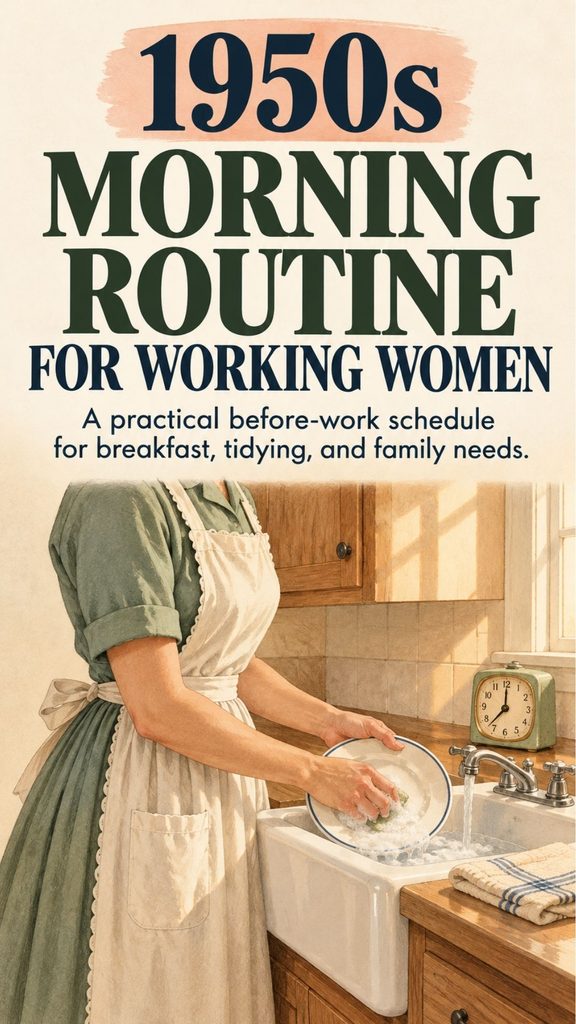
Have you ever wondered how women managed their mornings in the 1950s, especially those who had to leave the house for work?
Long before smartphones, automatic coffee makers, digital calendars, and modern household conveniences became part of everyday life, mornings often followed a carefully planned routine.
Breakfast needed preparing. Dishes had to be washed. Beds were made. The house received a quick tidy. And everything had to be finished before leaving for work.
You Might Also Like:
- Loading posts...
For women with children, the morning could be even busier.
School lunches needed packing, children had to get dressed, and everyone needed to leave home on time.
Old-fashioned homemaking guides frequently approached these responsibilities with one simple idea: A well-planned morning makes the rest of the day easier.
One vintage morning checklist for working women includes surprisingly familiar tasks: getting up, preparing breakfast, getting dressed, washing dishes, making the bed, dusting when necessary, and putting out the rubbish.
It also recommends allowing extra time to prepare children’s lunches and get them to school.
Some expectations from the 1950s were overly rigid, especially the assumption that women should manage nearly every household responsibility themselves.
But there are still practical lessons to learn from these routines.
You don’t need to wake before sunrise, clean the entire house, or prepare an elaborate breakfast to enjoy the benefits of a more organized morning.
Let’s explore the original routine and how to adapt its most useful habits for modern life.
What Was the 1950s Morning Routine for Working Women?
The vintage checklist presents a straightforward order of morning tasks.
The Original Morning Checklist
- Get up.
- Start preparing breakfast.
- Bathe and dress.
- Eat breakfast.
- Wash the breakfast dishes.
- Make the bed.
- Dust if necessary.
- Put out the rubbish and garbage.
Additional Tasks for Women With Children
The guide also recommends:
- Getting up earlier to allow sufficient preparation time.
- Preparing children’s school lunches.
- Getting children to school.
It suggests rising approximately two hours before leaving for work when children are involved, while allowing flexibility based on individual circumstances.
This is an interesting glimpse into how household responsibilities were organized.
The tasks themselves aren’t particularly unusual.
What makes the routine distinctive is the emphasis on completing household work before beginning the paid working day.
Today, we can keep the useful organizational habits while adapting the responsibilities to different families, work schedules, and personal needs.
1. Get Up With Enough Time to Avoid Rushing
The first instruction in the vintage routine is simple: get up.
But behind that straightforward advice is the importance of allowing enough time to begin the day comfortably.
A rushed morning can make everything feel more difficult.
You wake up late.
You can’t find your clothes.
Breakfast becomes an afterthought.
Someone can’t find their shoes.
And suddenly, you’re running out the door feeling stressed.
The Old-Fashioned Approach
The 1950s checklist encouraged women to allow enough time to complete their morning responsibilities before work.
For households with children, it suggested allowing approximately two hours for the morning routine.
The Modern Approach
You don’t necessarily need two hours.
Instead, work backward from the time you need to leave.
For example, if you must leave home at 8:00 a.m., consider how long you realistically need for:
- Personal hygiene
- Getting dressed
- Breakfast
- Packing necessary belongings
- Helping children prepare
- Kitchen cleanup
- Traveling to school or work
Then add a small time buffer.
A Helpful Morning Habit
Try getting up at a consistent time on workdays while protecting enough time for sleep.
Avoid sacrificing sleep simply to squeeze more cleaning into the morning.
A calm start is helpful, but adequate rest matters too.
Old-fashioned lesson worth keeping: Give yourself enough time to begin the day without unnecessary rushing.
2. Start Preparing Breakfast Early
Breakfast comes near the beginning of the original routine.
This reflects a traditional household habit: preparing a morning meal before the rest of the day’s work begins.
Today, breakfast doesn’t need to be complicated.
You can create a pleasant morning meal with just a few ingredients.
Easy Breakfast Ideas for Working Women
Oatmeal with fruit
Cook oats with milk or water and add sliced fruit, cinnamon, or nuts.
Eggs and toast
Scrambled or boiled eggs with whole-grain toast make a straightforward breakfast.
Greek yogurt and berries
Combine plain yogurt with berries and oats for a quick meal.
Peanut butter toast
Serve with sliced banana or another fruit.
Overnight oats
Prepare the oats the previous evening and refrigerate them until morning.
Prepare What You Can the Night Before
A little evening preparation can make breakfast much easier.
Try:
- Setting out clean dishes
- Preparing overnight oats
- Washing fruit
- Checking breakfast ingredients
- Preparing suitable lunch components
- Clearing kitchen counters
This doesn’t mean you have to do extra work every evening.
The goal is to prevent predictable morning delays.
Keep Breakfast Realistic
Not everyone enjoys eating immediately after waking.
Choose a breakfast routine that suits your appetite, nutritional needs, and schedule.
The important point is avoiding unnecessary morning confusion.
3. Bathe, Dress, and Get Ready for the Day
The vintage routine includes bathing and dressing before breakfast.
Personal grooming was often given considerable attention in traditional homemaking guides.
Today, this habit can be understood more simply: establish a practical personal-care routine.
A Simple Morning Grooming Routine
- Wash your face or shower if needed.
- Brush your teeth.
- Apply moisturizer or other suitable skincare products.
- Use sunscreen when appropriate.
- Get dressed.
- Brush or style your hair.
- Gather necessary personal belongings.
You don’t need an elaborate beauty routine.
A clean, comfortable outfit and a few dependable grooming habits are often enough.
Prepare Your Clothes the Evening Before
One useful habit is choosing your outfit before going to bed.
Check that your clothes are:
- Clean
- Comfortable
- Suitable for the weather
- Appropriate for your activities
- Ready to wear
Place your shoes, bag, and necessary accessories nearby.
This prevents the familiar morning problem of searching through the wardrobe while the clock is ticking.
A Note About Vintage Expectations
Old-fashioned advice sometimes placed excessive importance on women’s appearance.
Modern personal care should be about feeling comfortable and prepared, not meeting an unrealistic standard of perfection.
Old-fashioned lesson worth keeping: A simple, consistent getting-ready routine can make mornings easier.
4. Sit Down and Enjoy Breakfast
The vintage checklist distinguishes between preparing breakfast and eating it.
That’s a small detail worth noticing.
Breakfast wasn’t simply another task to rush through while cleaning the kitchen.
It had its own place in the morning schedule.
Create a Pleasant Breakfast Routine
If your schedule allows, spend a few minutes sitting down to eat.
You might:
- Enjoy your favorite mug of tea or coffee.
- Eat at the kitchen table.
- Open the curtains to let in daylight.
- Review your plans.
- Talk with family members.
- Avoid unnecessary phone scrolling.
You don’t need a beautifully decorated table every morning.
A clean space and a little time can make breakfast more enjoyable.
Keep It Simple on Busy Days
Some mornings are genuinely hectic.
Having a few reliable quick breakfasts available can be helpful.
You don’t need to prepare a full cooked meal every day.
Old-fashioned lesson worth keeping: Make room for ordinary meals instead of treating them as an inconvenience.
5. Wash the Breakfast Dishes Before Leaving
In the original routine, washing dishes comes immediately after breakfast.
This is probably one of the most useful habits to bring into modern homemaking.
A kitchen can become messy surprisingly quickly.
A few plates, cups, pans, and cooking utensils left behind in the morning may become an unpleasant job when you return home after a long working day.
The Five-Minute Kitchen Reset
After breakfast:
- Clear the table.
- Put leftover food away safely.
- Load or wash the dishes.
- Wipe obvious spills from the counter.
- Rinse the sink if needed.
- Put breakfast ingredients away.
If you have a dishwasher, you may only need a few minutes.
If you wash dishes by hand, tackle the essentials first.
Why This Habit Helps
Coming home to a reasonably tidy kitchen can make preparing dinner easier.
You won’t have to clear away the morning’s dishes before beginning the evening meal.
Don’t Expect Perfection
If you’re running late, prioritize leaving safely and on time.
A few dishes in the sink aren’t a household disaster.
The goal is consistency when practical, not rigid rules.
6. Make the Bed Every Morning
Making the bed is another classic homemaking habit.
It’s quick, simple, and can make a bedroom look more organized almost immediately.
A Basic Bed-Making Routine
- Allow bedding to air when necessary.
- Straighten the fitted sheet.
- Pull up the top sheet or duvet.
- Arrange pillows.
- Fold an extra blanket neatly if you use one.
This may take only two or three minutes.
Why It Makes a Difference
The bed is usually the largest piece of furniture in a bedroom.
When it’s neat, the rest of the room often looks more orderly.
You may also feel more comfortable returning to a tidy bedroom in the evening.
Keep Bedding Care Practical
Making the bed doesn’t replace regular washing.
Sheets, pillowcases, and other bedding still need laundering according to household needs and fabric instructions.
If bedding is damp from perspiration, allow it to dry before covering it completely.
Old-fashioned lesson worth keeping: Small tasks can make a noticeable difference in how a room feels.
7. Dust Only When Necessary
One particularly practical detail in the original checklist is the phrase “dust, if necessary.”
This is worth emphasizing.
Even the vintage routine didn’t necessarily require deep dusting every room before leaving for work.
The idea was to address visible dust when needed.
A Quick Morning Dusting Routine
Focus only on surfaces that genuinely need attention.
For example:
- Living room coffee table
- Bedside table
- Entryway shelf
- Frequently used furniture
- Visible dusty surfaces
Use a clean microfiber cloth or suitable dusting tool.
You don’t need to move heavy furniture or dust every decorative item before breakfast.
Save Deep Cleaning for Another Time
Tasks such as these can wait for designated cleaning sessions:
- Washing windows
- Dusting ceiling fans
- Cleaning behind furniture
- Washing baseboards
- Deep-cleaning upholstery
- Organizing cupboards
The Modern Lesson
Not every household chore needs to happen every day.
A good routine distinguishes between daily maintenance and occasional deep cleaning.
That’s one of the easiest ways to keep housework manageable.
8. Put Out the Rubbish and Keep the Kitchen Fresh
The vintage checklist includes putting out trash and garbage before leaving the house.
This remains useful, especially when bins contain food waste.
However, you don’t necessarily need to empty every household bin each morning.
A Simple Waste-Management Routine
Before leaving:
- Check the kitchen bin.
- Empty it if full or unpleasant-smelling.
- Separate recyclables according to local rules.
- Take out food waste when needed.
- Check collection schedules.
- Replace bin liners when necessary.
Prevent Unpleasant Kitchen Odors
Make sure bins have appropriate lids.
Clean spills promptly.
Wash reusable waste containers regularly.
If you compost, collect suitable fruit and vegetable scraps in a covered container and transfer them to your composting system regularly.
Avoid letting food waste sit for long periods in warm conditions.
Why This Was a Practical Old-Fashioned Habit
A quick rubbish check helps prevent small problems from becoming larger ones.
And it’s much nicer to return home without an overflowing bin waiting in the kitchen.
9. Prepare School Lunches When You Have Children
The original checklist adds school-lunch preparation for households with children.
This is one of the most familiar parts of the routine for modern working parents.
Packing lunches can take surprisingly long when you haven’t planned ahead.
Make School Lunches Easier
Consider preparing suitable components the previous evening.
For example:
- Wash whole fruit.
- Portion shelf-stable snacks.
- Fill reusable water bottles.
- Check that lunch containers are clean.
- Plan the main lunch item.
Refrigerate perishable ingredients promptly.
A Simple School Lunch Formula
Include a combination of:
Main food: Sandwich, wrap, pasta, rice dish, or another suitable meal.
Fruit or vegetables: Apple slices, berries, carrots, or cucumber.
Additional food: Yogurt, cheese, crackers, or another suitable option.
Drink: Water is a practical everyday choice.
Adjust for the child’s age, preferences, allergies, and school policies.
Keep Food Safety in Mind
Perishable lunches should be kept at safe temperatures.
Use an insulated lunch bag with appropriate ice packs when refrigeration isn’t available.
Share the Responsibility
Older children may be able to help prepare parts of their lunches.
Other adults in the household can participate too.
School preparation doesn’t need to fall entirely on one person.
10. Help Children Get Ready for School
The original routine concludes its additional section by reminding working mothers to get children to school.
This could involve preparing clothing, organizing school supplies, and managing transportation.
These responsibilities are still familiar to many families.
A Simple School Morning Routine
Depending on age, children may need to:
- Get dressed.
- Brush their teeth.
- Eat breakfast.
- Pack their school bag.
- Collect their lunch.
- Put on shoes and outerwear.
- Leave on time.
Create an Entryway Station
One practical way to reduce morning confusion is to keep school essentials in a designated area.
Include:
- School bags
- Shoes
- Jackets
- Lunch bags
- Water bottles
- Necessary paperwork
This reduces last-minute searching.
Encourage Age-Appropriate Independence
Children can gradually learn to handle suitable parts of their own morning preparation.
For example, a school-age child may be able to:
- Put away pajamas
- Get dressed
- Make the bed
- Pack a school bag
- Place dirty clothes in a hamper
The amount of responsibility should match the child’s age and abilities.
A good household routine helps everyone participate rather than making one adult responsible for every detail.
A Modern 1950s-Inspired Morning Schedule for Working Women
You can adapt the original checklist into a practical schedule without following every vintage expectation.
Here is an example for someone who needs to leave home at 8:00 a.m.
| Time | Activity |
|---|---|
| 6:30 a.m. | Wake up and begin the morning routine |
| 6:35 a.m. | Start breakfast or prepare a quick meal |
| 6:50 a.m. | Wash, dress, and get ready |
| 7:10 a.m. | Eat breakfast |
| 7:25 a.m. | Wash or load dishes |
| 7:35 a.m. | Make the bed and tidy the bedroom |
| 7:40 a.m. | Check rubbish and necessary household tasks |
| 7:45 a.m. | Gather keys, bag, lunch, and essentials |
| 8:00 a.m. | Leave for work |
This is only an example.
You may need more or less time depending on your schedule.
If you have children, add time for their needs and school arrangements.
If you start work at home, your routine may look completely different.
You don’t need to follow an old-fashioned timetable exactly to benefit from its structure.
A 1950s-Inspired Morning Routine for Working Mothers
For households with children, a slightly earlier start may be useful.
Here’s a sample schedule for a family with an early school departure.
| Time | Activity |
|---|---|
| 6:00 a.m. | Wake up and prepare for the day |
| 6:15 a.m. | Start breakfast |
| 6:30 a.m. | Help children begin getting ready |
| 6:45 a.m. | Eat breakfast |
| 7:00 a.m. | Finish school lunch preparations |
| 7:10 a.m. | Clear breakfast dishes |
| 7:20 a.m. | Check school bags and clothing |
| 7:30 a.m. | Make beds and complete a quick tidy if time allows |
| 7:40 a.m. | Gather belongings and prepare to leave |
| 7:45 a.m. | Leave for school or work as required |
This example assumes a particular household schedule, so adjust it to your actual school start, commute, and work hours.
The goal isn’t to complete every household chore before leaving.
It’s to organize the essential responsibilities and avoid unnecessary morning stress.
7 Things You Can Prepare the Night Before
One of the easiest ways to improve your morning isn’t necessarily waking earlier.
It’s reducing the number of decisions you need to make after waking.
1. Choose Tomorrow’s Outfit
Set out comfortable clothes suitable for your plans.
2. Check Lunch Supplies
Make sure ingredients and containers are available.
Prepare perishable foods safely and refrigerate them.
3. Clean the Main Kitchen Area
Wash dinner dishes and wipe counters so breakfast preparation is easier.
4. Review Tomorrow’s Schedule
Check appointments, school activities, meetings, and travel arrangements.
5. Place Important Items Together
Keep keys, wallet, phone, bags, and other essentials in their designated places.
6. Prepare Breakfast Ingredients
Measure oats, arrange clean dishes, or prepare suitable make-ahead breakfast foods.
7. Complete One Small Household Reset
Spend five to ten minutes putting obvious clutter away.
You don’t have to complete all seven every evening.
Choose the habits that provide the greatest benefit for your household.
How to Keep Your Home Tidy When You Work Full-Time
One challenge with older homemaking schedules is that they often expect substantial housework to be completed before and after a paid working day.
For many modern households, that isn’t realistic.
The better approach is to simplify daily maintenance and divide larger chores across the week.
Morning: Focus on Essentials
Aim for:
- Breakfast
- Basic personal care
- Essential dishes
- A quick bedroom reset
- Necessary school or work preparation
Evening: Complete a Short Reset
After dinner:
- Put away food safely.
- Wash or load dishes.
- Wipe kitchen counters.
- Prepare necessary items for tomorrow.
- Tidy one or two frequently used spaces.
Weekly: Handle Larger Tasks
Choose convenient days for:
- Laundry
- Bathroom cleaning
- Vacuuming
- Changing bedding
- Dusting
- Grocery shopping
- Meal planning
Don’t expect one person to do everything.
Responsibilities should be shared fairly according to household circumstances.
10 Old-Fashioned Morning Habits Worth Keeping
Although many 1950s expectations are outdated, some practical habits remain useful.
1. Begin the day with a plan. Know when you need to leave and what must be completed.
2. Prepare breakfast simply. A predictable meal routine makes mornings easier.
3. Get dressed and ready. A consistent personal-care routine helps create structure.
4. Eat without unnecessary rushing. Make room for a comfortable breakfast when possible.
5. Wash dishes promptly. Prevent morning messes from accumulating.
6. Make the bed. A small bedroom reset can create an immediate sense of order.
7. Clean only what’s necessary. Avoid turning mornings into daily deep-cleaning sessions.
8. Check the rubbish. Keep waste management simple and consistent.
9. Prepare school and work supplies. Reduce last-minute searching.
10. Leave a little extra time. A small buffer can help when unexpected delays occur.
These habits are useful because they simplify everyday responsibilities.
They aren’t rules for becoming a perfect homemaker.
What We Can Leave Behind From 1950s Homemaking
Old-fashioned routines can be inspiring, but they also reflect the social expectations of their time.
Some of those expectations deserve reconsideration.
The Idea That Women Must Do All the Housework
Maintaining a household is a shared responsibility among capable people living there.
A woman working outside the home shouldn’t automatically be expected to complete every domestic task as well.
The Expectation of a Perfectly Clean House Every Morning
A home doesn’t need to be spotless before everyone leaves for the day.
Essential hygiene and practical organization matter more.
The Belief That Waking Earlier Solves Every Problem
Sometimes a better solution is reducing unnecessary chores, sharing responsibilities, or preparing ahead.
Sleep shouldn’t continually be sacrificed for housekeeping.
Rigid Schedules That Ignore Real Life
Modern routines need to accommodate work, health, children, transportation, and changing responsibilities.
A schedule is a tool, not a measure of personal success.
The 15-Minute Morning Home Reset
If you’re short on time, you can simplify the vintage routine into a quick household reset.
Minutes 1–5: Kitchen
- Clear breakfast dishes.
- Put away ingredients.
- Wipe obvious spills.
Minutes 6–10: Bedroom
- Make the bed.
- Place laundry in the hamper.
- Put away a few items.
Minutes 11–15: Final Check
- Check the rubbish if needed.
- Gather work or school supplies.
- Make sure essential appliances are safely switched off.
- Check doors and keys before leaving.
This short routine won’t deep-clean your house.
But it can prevent small tasks from accumulating and make returning home more pleasant.
A Printable 1950s-Inspired Morning Checklist
Use this simple checklist in your household planner.
Before Breakfast
- Wake up with enough time.
- Wash and get dressed.
- Prepare breakfast.
- Check today’s schedule.
After Breakfast
- Clear the table.
- Wash or load dishes.
- Wipe kitchen counters.
- Put breakfast ingredients away.
Quick Household Reset
- Make the bed.
- Put away obvious clutter.
- Dust if necessary.
- Check kitchen rubbish.
- Handle any urgent household task.
If You Have Children
- Prepare school lunches.
- Help children get dressed as needed.
- Check school bags.
- Confirm school arrangements.
- Leave with enough travel time.
Before Leaving Home
- Gather keys and wallet.
- Take your phone and necessary items.
- Pack lunch or water if needed.
- Check doors and necessary appliances.
- Leave on time.
Frequently Asked Questions About 1950s Morning Routines
What Was a Typical Morning Routine for a Working Woman in the 1950s?
The vintage checklist shown includes getting up, preparing and eating breakfast, bathing and dressing, washing dishes, making the bed, dusting when needed, and putting out the rubbish.
For women with children, it also includes preparing school lunches and getting children to school.
Actual routines varied greatly according to employment, household size, income, available appliances, and family circumstances.
Did Working Women in the 1950s Really Get Up Two Hours Before Work?
The provided vintage checklist suggests allowing approximately two hours before leaving for work when children are involved, or whatever amount of time is necessary.
This was advice from a household routine, not a universal requirement followed by every working woman.
How Can I Follow an Old-Fashioned Morning Routine Today?
Start with a few practical habits.
Prepare breakfast, get dressed, tidy the kitchen, make your bed, and gather what you need for the day.
Adapt the order and timing to your actual schedule.
What Should I Clean Before Leaving for Work?
Focus on essential maintenance.
Washing breakfast dishes, wiping obvious spills, and putting away clutter are often sufficient.
Save larger cleaning projects for another time.
Is It Better to Clean in the Morning or Evening?
Both can work.
Some people prefer a morning reset because it gives them a fresh start.
Others find evening cleaning easier because mornings are busy.
Choose a schedule that supports your household.
How Can Working Mothers Make Mornings Easier?
Preparation and shared responsibility can help.
Consider organizing school supplies the previous evening, keeping lunches simple, preparing clothing ahead, and encouraging age-appropriate independence.
Can I Enjoy Vintage Homemaking Without Following Traditional Gender Roles?
Absolutely.
You can appreciate the practical routines, old-fashioned recipes, household organization, and vintage style while dividing responsibilities in a way that works fairly for your household.
Final Thoughts: The Best Part of a 1950s Morning Routine Is Its Simplicity
Looking back at a 1950s morning routine for working women offers an interesting glimpse into everyday homemaking.
There were no complicated productivity apps.
No endless collection of morning-routine products.
No need to make every morning an elaborate project.
The basic instructions were straightforward.
Get up.
Prepare breakfast.
Get dressed.
Eat.
Wash the dishes.
Make the bed.
Dust if necessary.
Take out the rubbish.
And prepare the children for school when needed.
Of course, the original expectations placed a great deal of domestic responsibility on women, even when they also had paid employment.
That isn’t something modern households need to repeat.
But the practical lesson remains.
A few small, predictable habits can help the morning run more smoothly.
You don’t need to complete every chore.
You don’t need to wake before sunrise.
And you don’t need to follow a timetable down to the minute.
Instead, create a routine that suits your life.
Prepare what you can ahead of time.
Keep breakfast simple.
Maintain the essential spaces.
Share responsibilities.
And leave enough room in the morning to begin your day comfortably.
The real beauty of an old-fashioned morning routine isn’t doing more housework before breakfast. It’s finding a simple rhythm that helps your home and your day feel a little more organized.