Have you ever cleaned the outside of your car windshield, only to notice a cloudy film, greasy streaks, or strange reflections when driving at night?
You might wipe the glass with a towel, thinking the problem is solved. But as soon as sunlight hits the windshield or headlights shine toward you, the streaks become visible again.
It’s frustrating, especially when you’ve already spent time washing the car.
You Might Also Like:
- Loading posts...
The problem is often on the inside of the windshield, not the outside.
Over time, interior automotive glass can collect dust, fingerprints, moisture residue, and a thin oily film that makes the windshield look cloudy.
Fortunately, you don’t need expensive detailing equipment to clean it properly.
With a few microfiber cloths, a suitable automotive glass cleaner, and the right technique, you can remove much of that stubborn buildup and restore clearer visibility.
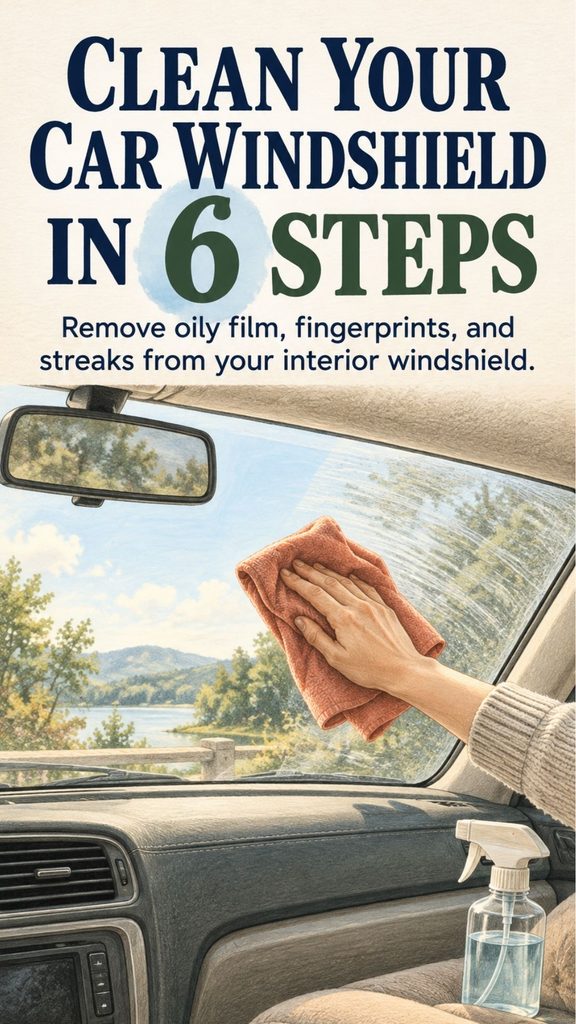
Here’s how to clean the inside of your car windshield in six simple steps, plus practical tips for preventing streaks from returning.
Why Does the Inside of Your Windshield Get So Dirty?
Before cleaning, it helps to understand why interior windshield glass develops that stubborn haze.
Unlike the outside of your car, the inside isn’t constantly exposed to rain or road dirt.
So why does it become cloudy?
Several things contribute to the buildup.
1. Interior Plastic and Vinyl Residue
Your dashboard and other interior components contain plastics, vinyl, adhesives, and protective coatings.
Some materials release small amounts of volatile compounds over time, particularly when the car becomes hot.
These compounds may contribute to a thin film that accumulates on interior glass.
This is often more noticeable in newer vehicles or cars that spend long periods parked in the sun.
2. Fingerprints and Skin Oils
Touching the glass leaves natural oils behind.
Fingerprints may not be obvious in ordinary lighting, but they can become surprisingly visible when sunlight or headlights hit the windshield.
3. Dust and Airborne Particles
Dust circulates through the interior whenever you open doors, use the ventilation system, or drive with the windows down.
Some of it eventually settles on the windshield.
4. Interior Cleaning Products
Dashboard dressings and interior protectants can sometimes leave residue on nearby glass.
Heavy sprays may also create a mist that settles onto the windshield.
5. Condensation and Moisture
Humidity, temperature changes, and condensation can contribute to a hazy appearance.
If the windshield frequently fogs up, you may also need to address moisture inside the vehicle.
Why Cleaning Matters
A dirty windshield isn’t just unattractive.
Greasy residue and streaks can make visibility worse when driving toward low sunlight or approaching headlights.
Keeping the windshield clean can help reduce distracting reflections and glare.
What You’ll Need to Clean the Inside of Your Car Windshield
Before beginning, gather everything in one place.
You don’t need a large collection of products.
Basic Cleaning Supplies
- 3–4 clean microfiber cloths
- Ammonia-free automotive glass cleaner
- Optional automotive glass-cleaning reach tool
- Optional glass-safe degreasing product for stubborn oily residue
- A clean, dry towel for final polishing
Optional Supplies
- A small detailing brush for dashboard dust
- A separate microfiber cloth for the exterior glass
- A suitable product specifically approved for treated or coated automotive glass
Why Microfiber Cloths Work So Well
Microfiber cloths are particularly useful for car windows because they can pick up dust and help remove cleaning residue without leaving much lint behind.
They also make it easier to polish the glass to a clear finish.
For best results, use cloths that are:
- Clean
- Soft
- Free from fabric-softener residue
- Free from grit
- Reserved for glass cleaning
Avoid using the same microfiber cloth you’ve already used to clean dirty wheels, greasy engine parts, or dashboard dressings.
Contaminated towels can spread oily residue or scratch surfaces if they contain abrasive debris.
Step 1: Clean the Outside of the Windshield First
Although your main goal is to clean the inside of the windshield, starting outside makes the entire process easier.
Why?
Because dirt on the exterior can make it difficult to tell whether remaining streaks are inside or outside.
How to Clean the Exterior
- Park the car safely in a shaded area.
- Make sure the windshield is cool to the touch.
- Rinse away loose dirt and debris.
- Apply an appropriate automotive glass cleaner using a clean cloth or according to the product directions.
- Wipe the windshield thoroughly.
- Dry and polish with a separate microfiber cloth.
Don’t Forget the Windshield Wipers
The rubber wiper blades can collect dirt and road residue.
If accessible, gently clean the rubber wiping edges with a damp cloth according to the vehicle manufacturer’s guidance.
Take care if lifting the wiper arms. Some vehicles require a special service position, and a spring-loaded arm can damage the glass if it snaps back.
Avoid forcing the arms into a position they aren’t designed to reach.
Why This Step Helps
Once the exterior glass is clean, you can inspect the windshield from inside the car and identify interior streaks more easily.
It also means you’ll finish with both sides of the glass looking clearer.
Step 2: Wipe the Inside With a Dry Microfiber Cloth
Before applying any cleaning liquid, remove loose dust from the inside of the windshield.
This is a simple step, but it’s worth doing.
If you immediately spray cleaner onto dusty glass, you may simply move the particles around.
How to Do It
- Sit in the passenger seat or another comfortable position.
- Take a clean, dry microfiber cloth.
- Begin near the top of the windshield.
- Wipe gently using overlapping horizontal or vertical strokes.
- Work your way toward the bottom edge.
- Pay attention to the corners near the dashboard.
Use light pressure.
There’s no need to scrub aggressively.
How to Reach the Lower Corners
The bottom of the windshield can be difficult to reach because of the dashboard angle.
Try folding the microfiber cloth into a smaller rectangle.
You can also use a windshield-cleaning reach tool fitted with a clean, soft microfiber cover.
A reach tool is especially useful in vehicles with steeply angled windshields.
Make sure the tool doesn’t have exposed hard edges that could contact the glass or surrounding trim.
A Useful Trick
Use one cloth only for this dry dust-removal step.
Keeping different cloths for dusting, washing, and polishing helps avoid transferring grime from one stage to another.
Step 3: Clean the Glass With an Automotive Glass Cleaner
Now that the loose dust is gone, it’s time to remove fingerprints, light grease, and ordinary film.
For most vehicles, an ammonia-free automotive glass cleaner is a practical choice.
Select a product compatible with your car’s glass, including any aftermarket tint or special interior coating.
Why Avoid Spraying Directly Onto the Windshield?
When you spray cleaner directly onto the glass, liquid can run down into the narrow space between the windshield and dashboard.
It may also contact:
- Dashboard materials
- Electronic components
- Speaker grilles
- Display surfaces
- Interior trim
- Window tint edges
Applying cleaner to a microfiber cloth gives you more control.
How to Clean the Glass
- Take a second clean microfiber cloth.
- Fold it into quarters.
- Apply a small amount of glass cleaner to the cloth.
- Wipe the windshield in overlapping strokes.
- Start at the top and work downward.
- Continue until you’ve covered the entire glass surface.
- Refold the cloth as necessary to expose a clean section.
You can use horizontal passes on the inside of the windshield.
If you use vertical passes on the outside, the different directions make it easier to determine which side any remaining streaks are on.
Don’t Use Too Much Cleaner
One of the biggest mistakes is oversaturating the cloth.
More cleaning liquid doesn’t automatically produce cleaner glass.
Excess solution can leave residue and take longer to remove.
The cloth should be damp enough to lift grime without dripping.
Step 4: Remove Stubborn Oily Film
Sometimes ordinary glass cleaner isn’t enough.
You may notice a stubborn, greasy haze that remains even after wiping the glass several times.
This residue can come from interior materials, fingerprints, dashboard products, and other contaminants.
First, Try a Second Gentle Cleaning
Before switching products, use a fresh microfiber cloth and repeat the glass-cleaning step.
Sometimes the first pass loosens the oily film, while the second removes the remaining residue.
What About Rubbing Alcohol?
Some car-detailing guides recommend isopropyl alcohol for stubborn oil on glass.
However, alcohol isn’t appropriate for every automotive surface or coating.
It may affect certain aftermarket tint films, protective treatments, plastics, and interior finishes.
For that reason, it shouldn’t be treated as a mandatory step.
A Safer Approach
Use a glass degreaser specifically approved for your vehicle’s windshield and any applicable coatings.
Follow the product instructions.
If you’re considering isopropyl alcohol, first confirm that the windshield’s interior surface and any film or coating are compatible.
Use it sparingly on a cloth, never near ignition sources, and work in a well-ventilated area.
Avoid letting it contact dashboard trim or electronic components.
Do not combine it with other cleaning chemicals.
How to Remove the Film
- Confirm that the product is suitable for your glass.
- Apply a small amount to a clean microfiber cloth.
- Test a small, inconspicuous area if appropriate.
- Gently wipe the greasy sections.
- Follow the product’s instructions for removing residue.
- Finish with a clean cloth and compatible glass cleaner if needed.
When Should You Skip This Step?
You may not need any special degreasing treatment if your windshield looks clear after Step 3.
Don’t add extra cleaning chemicals simply because they’re part of a detailing routine.
The fewer products you use unnecessarily, the less residue you may need to remove afterward.
Step 5: Dry and Buff the Glass Until It’s Streak-Free
This is the step that often makes the biggest visible difference.
Cleaning solution left to evaporate on the glass can sometimes create streaks.
A clean, dry microfiber cloth helps remove the remaining moisture and residue before it dries unevenly.
How to Buff the Windshield
- Take a fresh, completely dry microfiber cloth.
- Fold it into quarters.
- Start at the top of the windshield.
- Wipe using overlapping strokes.
- Work across the entire glass surface.
- Pay special attention to corners and edges.
- Inspect the glass from different angles.
Don’t press excessively hard.
Light, even pressure is usually sufficient.
The Two-Cloth Method
One of the most useful windshield-cleaning techniques is using two different cloths.
Cloth 1: Apply cleaner and lift dirt.
Cloth 2: Remove leftover moisture and polish.
This prevents a saturated cloth from repeatedly spreading cleaner over an area you’ve already washed.
Check for Remaining Streaks
Look through the windshield from the driver’s seat.
You can also inspect it from the passenger side.
Natural daylight is useful for finding missed patches.
If you notice streaks, buff the affected area with a clean section of cloth.
If the streaks remain greasy, repeat the appropriate cleaning step rather than rubbing harder.
Step 6: Clean the Rest of Your Interior Car Windows
Once your windshield looks clear, you can use the same basic technique on the other interior windows.
This includes:
- Front side windows
- Rear passenger windows
- Rear windshield
- Other accessible automotive glass
The process is simple:
- Remove loose dust with a dry microfiber cloth.
- Apply a compatible automotive glass cleaner to a second cloth.
- Wipe the glass evenly.
- Polish with a clean, dry cloth.
- Inspect for remaining streaks.
Be Careful With Tinted Windows
Many vehicles have tinted or specially treated glass.
Aftermarket window tint film is particularly important because aggressive chemicals or abrasive tools may damage it.
Use a cleaner specifically approved for the film or coating.
Avoid ammonia-based cleaners unless compatibility is explicitly established, and don’t assume alcohol or other degreasers are safe.
Cleaning the Rear Window
Some rear windows contain defroster lines.
Avoid scraping, abrasive pads, or aggressive pressure that could damage these components.
Use a soft cloth and clean gently.
If your rear window has tint film, follow the film manufacturer’s care instructions.
Why Your Windshield Still Looks Streaky After Cleaning
Sometimes you complete every step and still notice streaks.
If that happens, the problem is usually related to the cleaning technique, products, or condition of the cloth.
Here are the most common causes.
1. You’re Using Too Much Glass Cleaner
Excess cleaner can leave residue.
Try using less product and buffing immediately with a dry cloth.
2. Your Microfiber Cloth Is Dirty
A cloth that contains old cleaning product, fabric softener, grease, or dust can spread residue across the glass.
Use freshly washed cloths dedicated to glass cleaning.
3. You’re Cleaning in Direct Sunlight
Hot glass can cause cleaner to dry before you’ve removed it.
Park in a shaded location and allow the windshield to cool.
4. You’re Using the Same Cloth for Every Step
A single cloth quickly becomes saturated with moisture and grime.
Separate cloths for dry dusting, cleaning, and polishing generally work better.
5. You’re Not Removing the Greasy Film Completely
Interior haze may require more than one cleaning pass.
Try repeating the process with a fresh cloth and compatible cleaner.
6. You’re Using an Inappropriate Cleaning Product
Some household cleaners contain ingredients that leave films or aren’t compatible with automotive coatings.
Use a suitable automotive glass cleaner instead.
5 Common Windshield-Cleaning Mistakes to Avoid
Mistake 1: Spraying Cleaner Straight Onto the Dashboard Area
Cleaner can drip onto trim, vents, or sensitive surfaces.
Spray the cloth instead.
Mistake 2: Cleaning With Paper Towels That Leave Lint
Paper towels may leave fibers or break apart during cleaning.
Clean microfiber cloths are generally more convenient for polishing glass.
Mistake 3: Using Abrasive Sponges
Kitchen scrub pads and abrasive cleaning tools may scratch glass coatings or tint films.
Stick to suitable soft cloths.
Mistake 4: Using Household Ammonia Cleaners Without Checking Compatibility
Some cleaners aren’t appropriate for aftermarket window tint or interior materials.
Always verify compatibility.
Mistake 5: Cleaning a Hot Windshield
Heat can make cleaning solution evaporate too quickly.
Cool, shaded conditions make streak-free cleaning easier.
How to Prevent Windshield Haze From Coming Back
A clean windshield won’t stay spotless forever.
But a few small habits can reduce buildup.
1. Keep the Dashboard Clean
Dust the dashboard regularly with a clean microfiber cloth.
This reduces loose particles that may eventually settle on the windshield.
2. Avoid Overusing Interior Dressings
Applying too much dashboard dressing or protective spray may contribute to residue on surrounding surfaces.
Follow product directions and apply cleaners or protectants to a cloth when appropriate.
3. Clean Fingerprints Promptly
If someone touches the windshield, wipe the mark with a suitable microfiber cloth before it becomes covered with dust.
4. Maintain the Cabin Air Filter
A dirty or overdue cabin air filter can affect the ventilation system.
Replace it according to your vehicle manufacturer’s recommended schedule.
It won’t eliminate every source of windshield film, but it’s an important part of routine interior maintenance.
5. Control Excess Interior Moisture
If your car windows frequently fog up:
- Remove wet floor mats when appropriate.
- Dry damp upholstery.
- Check for water leaks.
- Use the ventilation and defogging systems correctly.
- Avoid leaving wet belongings inside unnecessarily.
Persistent moisture may indicate a leak or ventilation problem that needs attention.
6. Clean Interior Glass Periodically
You don’t necessarily need to deep-clean the windshield every week.
Inspect it during ordinary car cleaning and wash it whenever haze, fingerprints, or glare begin to affect visibility.
Regular light cleaning can prevent stubborn buildup.
How Often Should You Clean the Inside of Your Car Windshield?
There isn’t one perfect schedule for every driver.
The ideal frequency depends on:
- How often you drive
- Whether the car is parked outdoors
- Climate and humidity
- Amount of interior dust
- Vehicle age and interior materials
- Frequency of interior product use
For many vehicles, checking the glass every few weeks and cleaning it when necessary is a practical approach.
If you regularly drive at night, inspect the windshield more often for haze and reflections.
Clear visibility matters more than following a fixed cleaning calendar.
Can You Use Vinegar to Clean the Inside of a Car Windshield?
White vinegar is commonly recommended for cleaning household glass.
Its acidity can help with certain mineral deposits.
However, that doesn’t make it the best choice for automotive glass.
Vinegar can contact sensitive materials, and its compatibility with aftermarket tint films or specialized coatings shouldn’t be assumed.
For routine interior windshield cleaning, an appropriate ammonia-free automotive glass cleaner is usually a simpler choice.
If you’re dealing with stubborn mineral deposits, use a product intended for that purpose and confirm that it is compatible with the affected surface.
Can You Clean the Windshield With Just Water?
For light dust, a damp microfiber cloth and a dry polishing cloth may be sufficient.
However, water alone may struggle to remove oily interior film.
Grease and residue often require a suitable cleaner.
Start with the gentlest method that works.
There is no reason to use strong cleaning chemicals when a mild approach produces good results.
What Is the Best Cloth for Interior Windshield Cleaning?
A clean, soft microfiber cloth designed for glass is an excellent option.
Look for cloths that:
- Leave minimal lint
- Have a soft texture
- Are easy to fold
- Absorb cleaning liquid appropriately
- Are free from abrasive particles
Keep your glass cloths separate from towels used for wax, tires, and interior dressings.
How to Wash Microfiber Cloths
Follow the manufacturer’s care instructions.
In general:
- Separate heavily contaminated towels from glass-cleaning cloths.
- Use an appropriate detergent.
- Avoid fabric softener.
- Rinse thoroughly.
- Dry according to the care label.
- Store clean towels in a dust-free location.
Fabric softener and oily residue can reduce microfiber performance and contribute to streaking.
Why Does Windshield Haze Look Worse at Night?
The oily film on your windshield may be barely noticeable during the day.
But at night, approaching headlights and streetlights can make it much more obvious.
Light scatters through smudges, residue, and imperfections on the glass.
This creates distracting glare and reflections.
The same problem can happen when driving toward a low sun.
That’s one reason clean windshields are especially important for comfortable driving.
However, cleaning won’t solve every glare problem.
Scratched glass, damaged coatings, worn wiper blades, and vision-related issues may also contribute.
If glare persists despite thorough cleaning, have the windshield inspected and consider whether a vision check is needed.
A Quick 10-Minute Windshield-Cleaning Routine
If the glass isn’t heavily coated in grease, you may not need a full detailing session.
Try this simple maintenance routine.
Minutes 1–2: Prepare
Park safely in the shade.
Gather three clean microfiber cloths and a compatible automotive glass cleaner.
Minutes 3–4: Remove Dust
Wipe the inside of the windshield with a dry microfiber cloth.
Minutes 5–7: Clean
Apply a small amount of glass cleaner to a second cloth.
Wipe the glass in overlapping strokes.
Minutes 8–9: Polish
Use the third, dry cloth to remove moisture and remaining residue.
Minute 10: Inspect
Check the windshield from the driver’s seat.
Touch up any missed sections.
For heavily soiled glass, allow additional time.
Don’t rush the job if streaks are still interfering with visibility.
Interior Windshield Cleaning Checklist
Keep this checklist handy for your next car-cleaning session.
- Park in a shaded area.
- Allow the glass to cool.
- Clean the exterior windshield.
- Check the wiper blades.
- Dust the interior glass with a dry microfiber cloth.
- Apply compatible glass cleaner to a clean cloth.
- Wipe the interior windshield evenly.
- Address stubborn greasy film only if needed.
- Buff dry with a fresh microfiber cloth.
- Inspect the glass for streaks.
- Clean other interior windows.
- Put away clean detailing supplies.
Frequently Asked Questions
What Causes the Greasy Film Inside My Windshield?
Interior glass haze may come from volatile compounds released by interior materials, skin oils, cleaning product residue, dust, and other contaminants.
Heat can make certain types of buildup more noticeable.
What Is the Best Way to Clean the Inside of a Windshield Without Streaks?
Start with a dry microfiber cloth to remove dust.
Apply an appropriate automotive glass cleaner to a second microfiber cloth.
Clean using overlapping strokes, then polish with a separate dry cloth.
Can I Use Rubbing Alcohol on My Car Windshield?
Alcohol may remove some oily residue from compatible glass, but it isn’t necessary for every cleaning.
Avoid using it on unknown tint films, coatings, or nearby trim without confirming compatibility.
Use an approved automotive product when uncertain.
Should I Use Windex on the Inside of My Windshield?
That depends on the specific product and your vehicle’s surfaces.
Not all glass cleaners have identical formulas.
Choose a cleaner explicitly suitable for automotive glass and any tint or coatings.
Why Does My Windshield Look Cloudy After Cleaning?
Possible reasons include excess cleaning product, contaminated cloths, leftover grease, and cleaner drying too quickly.
A fresh microfiber cloth and another gentle cleaning pass may help.
Can I Clean Interior Windshield Glass With Paper Towels?
Paper towels can remove some dirt, but they may leave lint or break apart.
Microfiber cloths are generally a better choice for streak-free polishing.
How Do I Clean the Very Bottom of My Windshield?
Use a folded microfiber cloth or a purpose-built reach tool with a soft cover.
Avoid hard tools that could damage the glass or dashboard.
Is Ammonia-Free Glass Cleaner Better for Cars?
Ammonia-free automotive cleaners are often a convenient option, particularly for vehicles with certain window films.
Always check the product’s compatibility with your specific glass and coatings.
Can Dirty Windshield Glass Affect Night Driving?
Yes.
Smudges, oily film, and streaks can scatter light and contribute to glare from headlights and streetlights.
Keeping the glass clean helps maintain clearer visibility.
Final Thoughts: Clear Windshields Start With the Right Cleaning Method
Cleaning the inside of your car windshield is one of those small maintenance jobs that can make a surprisingly noticeable difference.
You don’t need to spend a fortune on specialized products.
And you don’t have to cover the glass in strong chemicals to make it shine.
In most cases, the process comes down to a few basic steps:
Remove loose dust.
Use a suitable glass cleaner.
Wipe with clean microfiber cloths.
Address stubborn oily buildup only when necessary.
Polish the glass thoroughly.
And check your work from the driver’s seat.
The most important details are often the simplest ones: using clean cloths, avoiding too much product, cleaning in the shade, and drying the glass before streaks develop.
A clear windshield doesn’t just make your car look better.
It also helps reduce distracting reflections and gives you a cleaner view of the road.
A few minutes of careful cleaning today can make your next drive noticeably more comfortable, especially when the sun is low or you’re traveling after dark.