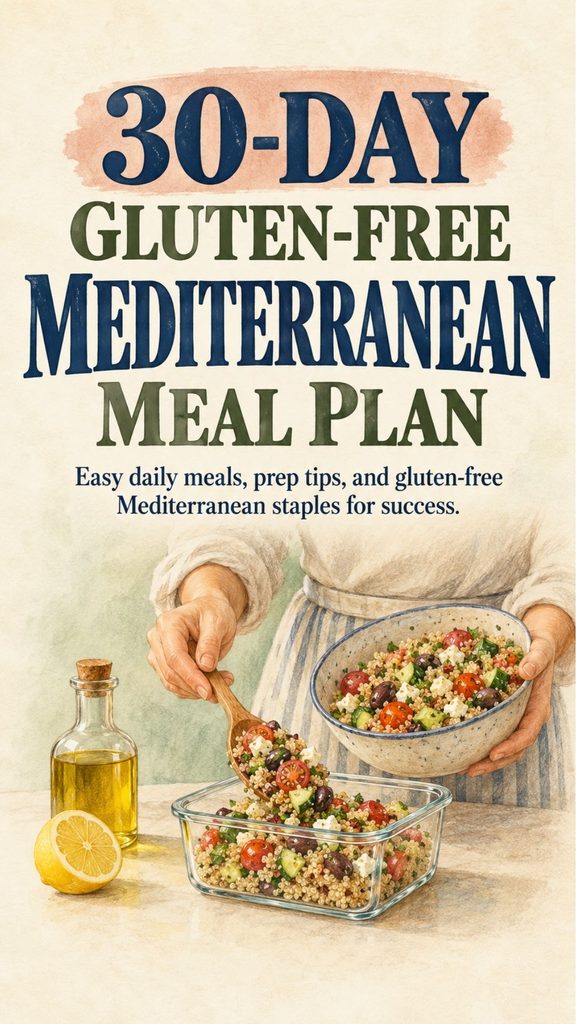
Following a gluten-free diet and eating Mediterranean-style food can work very naturally together. Many foods at the heart of Mediterranean cooking—vegetables, fruit, beans, lentils, fish, eggs, poultry, nuts, seeds, olive oil, herbs, yogurt, and naturally gluten-free grains—already contain no gluten.
The main adjustment is replacing foods made with wheat, barley, rye, and conventional couscous with safe alternatives such as quinoa, rice, buckwheat, millet, polenta, and products specifically labeled gluten-free.
This 30-day plan is designed to make that combination practical. Rather than preparing a completely different complicated meal every day, it relies on ingredients that can be cooked once and reused in salads, bowls, soups, sheet-pan dinners, and quick breakfasts.
You Might Also Like:
- Loading posts...
If you have celiac disease, gluten avoidance must be strict. Cross-contact from shared cutting boards, toasters, utensils, fryers, condiments, and preparation surfaces can matter, so ingredients and kitchen practices need more attention than simply removing ordinary bread and pasta.
If you do not have a medical reason to avoid gluten, remember that gluten-free eating is not automatically healthier. The Mediterranean pattern itself can be followed with either gluten-containing or gluten-free whole grains. This version is specifically for people who need or prefer gluten-free meals.
What a Gluten-Free Mediterranean Diet Looks Like
A Mediterranean-style pattern is primarily plant-forward. Vegetables, fruit, legumes, nuts, seeds, herbs, and olive oil appear frequently, while fish and seafood are common protein choices. Poultry, eggs, yogurt, and cheese can also fit comfortably, while red meat and sweets generally appear less often.
Making it gluten-free does not require replacing every wheat product with packaged gluten-free substitutes.
In fact, meals become simpler when you build them around naturally gluten-free ingredients.
A bowl of quinoa, roasted vegetables, chickpeas, herbs, feta, and lemon-olive-oil dressing needs no special substitute. Neither does grilled salmon with potatoes and broccoli, lentil soup, shakshuka, Greek yogurt with berries, or a chickpea salad.
The foods requiring the most attention are breads, crackers, tortillas, granola, oats, sauces, marinades, broths, processed meats, and restaurant meals, because gluten can appear in ingredients that are not immediately obvious.
A Good Pantry Makes the Month Easier
You do not need a huge specialty-food collection. A modest group of versatile ingredients can cover most of the month.
| Category | Useful Staples |
|---|---|
| Gluten-free grains | Quinoa, brown rice, buckwheat, millet, polenta, certified gluten-free oats |
| Legumes | Chickpeas, lentils, white beans, black beans |
| Healthy fats | Extra-virgin olive oil, olives, avocado, tahini |
| Nuts and seeds | Almonds, walnuts, pistachios, chia seeds, flax seeds |
| Proteins | Eggs, chicken, tuna, salmon, sardines, white fish, Greek yogurt |
| Vegetables | Tomatoes, cucumber, spinach, peppers, zucchini, eggplant, onions, carrots, broccoli |
| Fruit | Berries, apples, pears, citrus, bananas, figs, dates |
| Flavorings | Garlic, lemon, oregano, thyme, rosemary, mint, parsley, cumin, coriander, cinnamon |
| Convenient extras | Hummus, feta, goat cheese, canned tomatoes, tomato paste, certified gluten-free broth |
A few fresh ingredients added each week are usually easier to manage than buying everything for the entire month at once.
The Meal-Prep Strategy That Keeps This Plan Practical
The easiest way to follow a month-long plan is to stop thinking of every meal as a separate recipe.
Cook a batch of quinoa or brown rice at the beginning of the week. Roast one or two sheet pans of vegetables. Prepare a simple lemon and olive oil dressing. Wash salad greens. Cook a few portions of chicken or another protein. Make or buy gluten-free hummus.
Those components can become lunch bowls, salads, side dishes, wraps, and quick dinners.
Preparing ingredients rather than 21 finished meals at once also gives you flexibility. If you do not want Monday’s planned salad, the roasted vegetables and quinoa can become a warm grain bowl instead.
30-Day Gluten-Free Mediterranean Meal Plan
The meals below can be swapped freely. Portion sizes should be adjusted to your appetite, activity level, dietary needs, and any guidance you have received from a healthcare professional.
| Day | Breakfast | Lunch | Dinner | Snack |
|---|---|---|---|---|
| 1 | Greek yogurt, berries, walnuts and gluten-free granola | Quinoa salad with cucumber, tomatoes, olives, feta and herbs | Baked chicken with zucchini, peppers and onion | Hummus with vegetable sticks |
| 2 | Eggs with spinach, tomato and feta | Greek-style chicken salad | White fish with quinoa and sautéed spinach | Greek yogurt with nuts |
| 3 | Chia pudding with berries and pistachios | Brown rice bowl with chickpeas, roasted vegetables and tahini | Lamb and vegetable skewers with quinoa | Olives and goat cheese |
| 4 | Certified gluten-free oats with dates, almonds and cinnamon | Lentil soup with a green salad | Salmon, sweet potato and broccoli | Date-and-nut bite |
| 5 | Smoothie bowl with spinach, banana, yogurt and berries | Quinoa-and-turkey stuffed pepper | Chickpea, tomato, eggplant and zucchini stew | Roasted chickpeas |
| 6 | Vegetable and feta frittata | Tuna, white bean and tomato salad | Spiced chicken with roasted root vegetables and rice | Apple with almond butter |
| 7 | Eggs, tomatoes, cucumber, olives and gluten-free toast | Mezze plate with hummus, baba ganoush and vegetables | Grilled fish or chicken with roasted vegetables and Greek salad | Dark chocolate with nuts |
| 8 | Quinoa breakfast bowl with yogurt, dates and pistachios | Moroccan-style lentil and vegetable soup | Stuffed eggplant with turkey or lamb | Stuffed dates |
| 9 | Shakshuka with gluten-free bread | Chicken and brown rice bowl with tzatziki | Baked cod with tomatoes, zucchini and quinoa | Nuts and dried fruit |
| 10 | Yogurt parfait with gluten-free granola and berries | Quinoa-stuffed tomatoes with salad | Lamb chops, potatoes and Swiss chard | Baba ganoush with vegetables |
| 11 | Spinach, banana and yogurt smoothie | Gluten-free falafel bowl with quinoa and cucumber sauce | Sea bass with lemon, vegetables and rice | Cheese and olives |
| 12 | Polenta with mushrooms, spinach and a poached egg | Chickpea salad in lettuce cups | Chicken kebabs with vegetables and brown rice | Fig-and-almond bite |
| 13 | Egg muffins with vegetables and herbs | Rice-and-herb stuffed peppers | Sardines or another oily fish with quinoa salad | Yogurt, honey and pistachios |
| 14 | Quinoa, roasted vegetables, egg and avocado | White bean soup with salad | Gluten-free seafood paella | Dark-chocolate-dipped fruit |
| 15 | Chia pudding layered with yogurt and fruit | Vegetable and chickpea tagine over rice | Herb-roasted lamb with vegetables | Spiced nuts |
| 16 | Savory quinoa bowl with egg, vegetables and avocado | Roasted vegetable grain bowl with hummus | Tomato-based fish stew with polenta | Fruit with yogurt |
| 17 | Gluten-free egg wrap with spinach and feta | Lentils with vegetables and rice | Grilled seafood with vegetables and lemon | Hummus with vegetable sticks |
| 18 | Polenta porridge with fruit, nuts and cinnamon | Gluten-free Niçoise-style tuna salad | Stuffed zucchini with rice, herbs and tomato | Seed crackers with cheese |
| 19 | Green smoothie bowl with nuts and seeds | Spiced rice pilaf with grilled vegetables | Mediterranean meatballs with rice or zucchini noodles | Rice-stuffed grape leaves |
| 20 | Almond-flour pancakes with berries and yogurt | Quinoa, chickpea and tahini bowl | Whole roasted chicken with lemon, garlic and vegetables | Date-and-nut balls |
| 21 | Eggs, cheese, olives, tomatoes and gluten-free toast | Seafood and rice paella | Mezze-style dinner with hummus, vegetables and grilled protein | Fruit and cheese |
| 22 | Overnight certified gluten-free oats with yogurt and fruit | Make-ahead quinoa bowl | One-pan chicken with vegetables | Trail mix |
| 23 | Vegetable egg muffins | Batch-cooked bean and vegetable soup | Slow-cooked Mediterranean chicken or beef stew over rice | Vegetables and hummus |
| 24 | Frozen-fruit smoothie | Leftover roasted vegetable salad with chickpeas | Fish baked in parchment with vegetables | Date energy bite |
| 25 | Cold quinoa breakfast bowl with fruit and nuts | Layered jar salad with beans or chicken | Mediterranean meatballs with vegetables | Nuts and olives |
| 26 | Sweet or savory quinoa breakfast bowl | Gluten-free wrap with chicken, vegetables and tahini | Sheet-pan salmon and vegetables | Yogurt parfait |
| 27 | Eggs with tomatoes, herbs and feta | Grain-and-legume salad | Mediterranean-style chicken or fish dinner | Fresh fruit with nuts |
| 28 | Repeat your favorite breakfast | Use remaining grains, vegetables and protein in a combination bowl | Mediterranean dinner using remaining ingredients | Homemade gluten-free treat |
| 29 | Mediterranean breakfast platter | Homemade version of a favorite Mediterranean restaurant meal | Shared dinner with fish, vegetables, rice and salad | Cheese, fruit and nuts |
| 30 | Simple yogurt, fruit and nut breakfast | Repeat your favorite lunch from the month | Repeat your favorite dinner and plan next week’s meals | A simple wholesome snack |
Week One: Keep the Food Familiar
The first week should feel easy rather than dramatically different.
Greek yogurt, eggs, chicken, fish, quinoa, rice, vegetables, hummus, and fruit provide enough variety without requiring advanced cooking.
This is also the best week to learn which packaged foods require label checking. Granola, bread, crackers, broth, hummus, seasonings, and sauces can all vary by brand.
If strict gluten avoidance is medically necessary, select products labeled gluten-free and pay attention to cross-contact.
Week Two: Add More Mediterranean Flavors
During the second week, introduce meals such as shakshuka, stuffed vegetables, lentil soups, kebabs, falafel bowls, sardines, and rice-based paella.
Herbs and spices do much of the work.
Lemon, garlic, oregano, rosemary, mint, parsley, cumin, coriander, cinnamon, and tahini can make the same basic grains and vegetables taste completely different from one meal to another.
This is one of the easiest ways to prevent a healthy meal plan from becoming repetitive.
Week Three: Use More Variety
By the third week, you should have several reliable breakfast and lunch combinations.
That makes it easier to experiment at dinner.
A tomato-based fish stew, vegetable tagine, stuffed zucchini, roasted chicken, Mediterranean meatballs, or seafood plate can provide variety while still using many of the same ingredients already in the kitchen.
This is also a good week to focus on reducing waste. If you buy parsley for one recipe, use the rest in salads, grain bowls, eggs, soups, or dressings rather than allowing it to spoil.
Week Four: Make the Plan Easier to Maintain
The fourth week shifts attention away from constantly finding new recipes and toward repetition.
Make overnight oats or egg muffins ahead.
Cook extra soup and freeze portions.
Roast enough vegetables for more than one meal.
Turn dinner leftovers into lunch.
Keep a cooked grain, washed vegetables, hummus, yogurt, eggs, and fruit available so that a quick meal can be assembled without starting from zero.
This is much closer to how a sustainable eating pattern works in real life.
Two Core Recipes to Master
Mediterranean Quinoa Salad
Cook one cup of rinsed quinoa according to package directions and allow it to cool.
Combine it with chopped cucumber, cherry tomatoes, thinly sliced red onion, Kalamata olives, feta, parsley, and mint.
Dress the salad with extra-virgin olive oil, fresh lemon juice, oregano, black pepper, and a moderate amount of salt.
This works as a lunch on its own or as a side for chicken or fish. Chickpeas can be added when you want a more substantial plant-based meal.
One-Pan Mediterranean Chicken
Heat the oven to approximately 400°F or 200°C.
Arrange chicken with sliced zucchini, bell peppers, red onion, and other vegetables that roast well.
Coat everything lightly with olive oil and season with garlic, oregano, thyme, black pepper, and salt.
Roast until the vegetables are tender and the chicken reaches a safe internal temperature.
Serve with lemon and, if desired, quinoa, brown rice, or potatoes.
This is an especially useful meal-prep recipe because leftover chicken and vegetables can become lunch the following day.
Naturally Gluten-Free Foods Are Often Better Than Constant Substitutes
It is easy to build a gluten-free diet around breads, crackers, cookies, pasta, and other packaged foods designed to imitate wheat products.
Those products can be convenient, but they do not need to form the foundation of the diet.
A Mediterranean approach makes it easier to rely on foods that happen to be gluten-free naturally.
Rice does not need to imitate pasta.
Potatoes do not need to imitate bread.
Lentils and chickpeas do not need to imitate meat.
Fruit, yogurt, nuts, eggs, vegetables, fish, olive oil, quinoa, and polenta all fit naturally into satisfying meals.
Using those ingredients often makes meal planning simpler and increases variety.
Special Considerations for Celiac Disease
For someone with celiac disease, removing obvious bread and pasta is only part of the job.
Gluten can enter meals through cross-contact or less-obvious ingredients.
Certified gluten-free oats should be chosen rather than ordinary oats. Grains and packaged foods should be checked carefully. Shared toasters, cutting boards, strainers, utensils, flour-covered surfaces, fryers, condiment jars, and restaurant preparation areas may create problems.
At restaurants, explain that the meal needs to be gluten-free and ask about preparation rather than relying only on a gluten-free symbol beside the menu item.
The source specifically emphasizes label reading and preventing cross-contamination for people who must strictly avoid gluten. :chatgpt-content-reference{index=”0″}
How to Shop Without Buying an Entire Month of Food
Shop primarily by week.
Keep dry staples such as quinoa, rice, canned beans, canned tomatoes, olive oil, nuts, seeds, spices, and tahini in the pantry.
Then replenish fresh vegetables, fruit, yogurt, fish, poultry, herbs, and other perishables as needed.
During the first week, especially useful fresh foods include berries, lemons, avocado, cucumber, tomatoes, zucchini, bell peppers, spinach, salad greens, onions, garlic, carrots, eggplant, sweet potatoes, broccoli, apples, pears, and bananas. The source’s first-week plan similarly centers on these versatile ingredients. :chatgpt-content-reference{index=”1″}
Planning this way reduces waste and leaves room to change meals when plans change.
Dining Out While Gluten-Free
Mediterranean restaurants can offer many naturally gluten-free choices, but do not assume every grilled meat, salad, or rice dish is automatically safe.
Marinades may contain gluten.
Fried foods may use a shared fryer.
Salad dressings and sauces may contain unexpected ingredients.
Bread may be prepared on the same surface as otherwise gluten-free food.
For a medical gluten restriction, tell the restaurant clearly and ask about preparation.
Simple combinations such as grilled fish or chicken, vegetables, potatoes or rice, salad, olive oil, and lemon can sometimes be easier to verify than complicated mixed dishes.
What to Do After Day 30
Do not immediately search for another completely different 30-day plan.
Instead, identify what actually worked.
Choose three or four breakfasts you enjoyed, perhaps five reliable lunches, and eight to ten dinners your household would happily repeat.
That becomes your personal meal rotation.
A realistic long-term routine might contain yogurt bowls, eggs, overnight oats, grain salads, lentil soup, chicken bowls, salmon, roasted vegetables, chickpea stews, meatballs, stuffed vegetables, and occasional more elaborate meals.
Repeat the easy dishes often and experiment when you have time.
That is far more sustainable than expecting every meal to be new.
A Practical Way to Make Both Eating Styles Work Together
The gluten-free Mediterranean approach does not need to feel restrictive.
Build most meals around vegetables, fruit, legumes, fish or another protein, olive oil, nuts or seeds, and a naturally gluten-free carbohydrate such as quinoa, brown rice, potatoes, buckwheat, millet, or polenta.
Use herbs, citrus, garlic, spices, olives, feta, tahini, and yogurt-based sauces for flavor.
Prepare a few ingredients ahead.
Reuse leftovers deliberately.
Read labels where necessary.
And if you have celiac disease or another medical condition requiring strict gluten avoidance, treat cross-contact as seriously as the ingredient list itself.
After 30 days, the real goal is not to have completed a challenge. It is to have discovered a collection of meals simple enough to make again without needing a detailed plan every day.