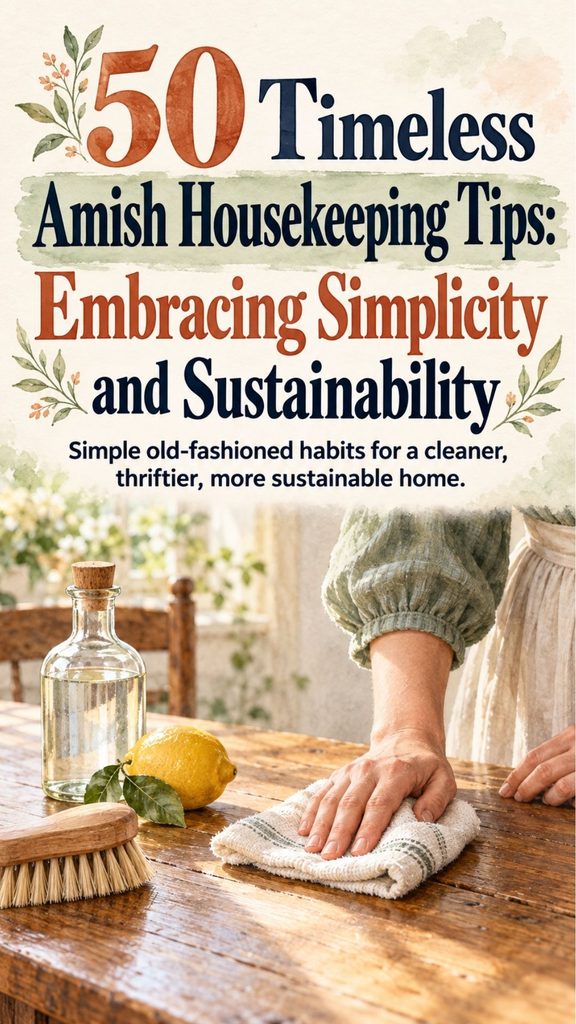
There is something appealing about a household where belongings are cared for, meals are prepared with intention, useful skills are passed between generations, and very little goes to waste.
These ideas are often associated with traditional Amish living. Although practices differ between Amish communities and individual households, many place considerable importance on family responsibilities, practical skills, community cooperation, and making thoughtful use of available resources.
You don’t need to live without electricity, grow every vegetable you eat, or abandon modern conveniences to appreciate some of these principles.
You Might Also Like:
- Loading posts...
In fact, many old-fashioned housekeeping habits work particularly well alongside modern life. Learning to mend clothing, reduce unnecessary purchases, cook affordable meals, or maintain household equipment can make everyday routines more economical and manageable.
The following 50 housekeeping ideas draw inspiration from traditional homemaking, rural resourcefulness, and simpler household practices. They offer practical ways to reduce waste, care for your belongings, and create a comfortable home without making housekeeping unnecessarily complicated.
Simple Daily Housekeeping Habits
A well-maintained home rarely stays that way because someone spends every waking hour cleaning. Consistent routines and sensible storage make ordinary household tasks easier to manage.
1. Keep Only What Your Household Needs
Before purchasing additional storage furniture, look at what is already filling your cupboards and drawers.
Donate usable items you no longer need, recycle appropriate materials, and dispose of anything broken beyond reasonable repair. Keeping fewer unnecessary belongings reduces the amount of cleaning, sorting, and organising required.
2. Give Every Item a Practical Storage Place
Frequently used belongings should be easy to retrieve and return.
Keep cooking utensils near the preparation area, cleaning cloths with household supplies, and outdoor equipment where it can be reached conveniently.
An arrangement that reflects your daily habits is usually more sustainable than one designed only to look attractive.
3. Establish a Manageable Cleaning Schedule
Instead of leaving every household chore until the weekend, distribute regular tasks throughout the week.
You might wash bedding on Monday, clean bathrooms on Tuesday, attend to floors on Wednesday, and reserve Friday for any neglected areas.
Adjust the routine according to your household size, work commitments, and personal circumstances.
4. Include Occasional Deep Cleaning
Daily tidying cannot replace every maintenance task.
Schedule time to clean inside kitchen cupboards, wash refrigerator shelves, remove dust from difficult-to-reach areas, and inspect spaces where moisture or dirt may accumulate.
These tasks do not all need to happen during one exhausting cleaning day. Rotating them throughout the month makes them much more manageable.
5. Declutter With the Changing Seasons
Seasonal transitions provide natural opportunities to reconsider household belongings.
When changing winter clothing for summer garments, check what still fits and what requires repair. Review pantry supplies, seasonal decorations, gardening equipment, and outdoor furniture at appropriate times of year.
Regular attention prevents unused possessions from accumulating indefinitely.
6. Share Household Responsibilities
Managing a home should not automatically fall on one person.
Give family members appropriate responsibilities based on their ages and abilities. Young children can put away toys or sort laundry, while older children and adults can participate in cooking, cleaning, and maintenance.
Sharing tasks also helps practical household skills become familiar rather than something learned only after leaving home.
7. Keep a Small Basket of Quick Chores
Some household jobs take only a few minutes but are easily forgotten.
Write small tasks on slips of paper and place them in a basket. Examples might include wiping a drawer, sorting a shelf, cleaning a light switch, or organising a collection of kitchen utensils.
When you have a short period of free time, choose one manageable task instead of beginning an enormous project.
8. Use Simple Cleaning Products Appropriately
You do not need a separate specialist cleaner for every surface.
Mild dish soap, water, baking soda, and vinegar can be useful for different household cleaning tasks when used correctly.
However, natural ingredients are not automatically safer for every material. Vinegar can damage acid-sensitive stone, and homemade cleaning solutions should not be assumed to disinfect surfaces.
Never mix household cleaning chemicals without checking their safety, particularly bleach with acids or ammonia.
9. Allow Fresh Air Into the Home
Opening windows when outdoor conditions permit can help reduce indoor odors and improve ventilation.
Pay particular attention to kitchens, bathrooms, laundry areas, and other places where excess moisture is produced.
During cooking, use appropriate extractor fans or ventilation systems.
Good airflow is especially valuable in preventing persistent dampness, although windows should remain closed when outdoor pollution, smoke, extreme weather, or safety conditions make opening them unsuitable.
Reduce Waste and Make Household Supplies Last
One useful principle of old-fashioned housekeeping is to avoid treating everything as disposable.
Reusable materials and careful maintenance can reduce household waste, although the best choice depends on how frequently an item is used and how much care it requires.
10. Replace Some Paper Products With Cloth
Keep washable kitchen towels, cleaning cloths, and fabric napkins available for everyday use.
Old cotton towels can often be cut into smaller cleaning rags instead of being discarded.
Wash reusable cloths appropriately, especially after contact with raw meat, heavily soiled surfaces, or other potential sources of contamination.
11. Dry Laundry Outdoors When Possible
A washing line or clothes-drying rack can reduce dependence on an electric tumble dryer.
Choose a suitable outdoor location with good airflow, and bring laundry inside before it becomes damp again.
Indoor drying is also possible, but ventilation matters because wet clothing releases moisture into the room.
12. Take Proper Care of Dishes and Kitchenware
Wash delicate kitchen items, wooden utensils, sharp knives, and products unsuitable for dishwashers by hand when recommended by the manufacturer.
However, hand washing is not automatically more efficient than using a dishwasher. Modern efficient dishwashers can use less water and energy than washing a comparable full load by hand.
Use whichever method makes sense for the item and the size of the load.
13. Find New Uses for Empty Glass Jars
Clean glass jars are useful for storing buttons, craft supplies, stationery, dried herbs, and other household items.
Suitable food-grade containers can also be reused for appropriate food storage.
Remember that an ordinary commercial food jar is not necessarily designed for home canning. Use proper canning jars and compatible lids when preserving food through heat processing.
14. Choose Reusable Alternatives to Disposable Products
Before purchasing another single-use household item, consider whether an existing washable alternative could do the same job.
Reusable shopping bags, refillable water bottles, durable food containers, washable cleaning cloths, and ordinary dinnerware are practical starting points.
The greatest value usually comes from regularly using things you already own rather than purchasing an entirely new collection of reusable products.
15. Buy Fewer, Better-Made Household Essentials
A sturdy broom, reliable saucepan, comfortable pair of work gloves, or well-constructed piece of furniture may remain useful through years of regular care.
Compare durability, repairability, and maintenance requirements before buying.
The most expensive product is not always the best, but repeatedly replacing poorly made items can become costly.
16. Consider Secondhand and Handmade Goods
Thrift shops, estate sales, local markets, and secondhand furniture stores can provide useful household items at reasonable prices.
Handcrafted goods are another option, especially when made by skilled local artisans using durable materials.
Neither handmade nor secondhand automatically guarantees a smaller environmental footprint, but choosing long-lasting items and avoiding unnecessary purchases can help reduce waste.
17. Repurpose Worn Fabrics
Clothing that can no longer be worn may still contain useful material.
Turn suitable fabric into cleaning cloths, patches, small storage bags, quilting pieces, or other household projects.
Save buttons and usable fasteners before discarding garments that cannot reasonably be repaired.
18. Consider Reusable Cloth Diapers
Cloth diapers are an option for households interested in reducing disposable diaper use.
They involve regular laundering, suitable storage, and additional time, so they are not practical for every family.
The environmental and financial benefits depend on several factors, including washing methods, energy use, water consumption, and how long the diapers remain in service.
Old-Fashioned Kitchen and Food Preservation Habits
The kitchen offers some of the most practical opportunities to reduce waste and develop useful household skills.
Cooking, gardening, and preserving food do not need to become full-time activities. Even small improvements can make a difference.
19. Prepare More Meals From Basic Ingredients
Cooking from scratch gives you greater control over ingredients, portions, and spending.
Begin with dependable meals your household already enjoys.
Simple soups, bread, roasted vegetables, casseroles, beans, rice dishes, and homemade sauces are useful foundations.
You don’t need to prepare absolutely everything yourself. A mixture of homemade meals and convenient ingredients can still work well.
20. Maintain a Useful Pantry
Keep a reasonable supply of frequently used ingredients such as flour, rice, beans, oats, pasta, canned tomatoes, herbs, and basic seasonings.
Organise shelves so older products are easy to identify and use before newer purchases.
An orderly pantry makes meal planning simpler and reduces the likelihood of purchasing ingredients you already have.
21. Buy in Bulk Only When It Makes Financial Sense
Larger packages sometimes offer lower unit prices, particularly for shelf-stable ingredients your family uses frequently.
Compare prices rather than assuming bulk purchases are always cheaper.
Consider available storage space, shelf life, and actual consumption before purchasing large quantities.
Food that spoils before it can be used is not a bargain.
22. Make Family Meals a Regular Occasion
Shared meals provide an opportunity to connect without requiring elaborate entertaining.
Choose a realistic time when household members can sit together, even if that is only possible on certain days of the week.
Keep phones and other distractions away from the table when practical.
The meal itself can be simple. The important part is having an opportunity for conversation and companionship.
23. Grow a Small Amount of Food
A vegetable garden does not need to occupy an entire backyard.
Start with crops suited to your local climate, available sunlight, and growing space.
Herbs, lettuce, beans, tomatoes, peppers, and other vegetables can be grown successfully in different types of home gardens when their needs are met.
Choose a manageable project before investing in expensive equipment or creating more garden beds than you can comfortably maintain.
24. Learn Reliable Food Preservation Methods
Freezing, dehydrating, fermenting, and canning can help extend the usefulness of seasonal produce.
However, preservation methods are not interchangeable.
For home canning, use current, tested recipes from reliable food-preservation authorities. Low-acid foods require appropriate pressure-canning procedures, and unsafe historical techniques should not be repeated simply because they are traditional.
Learning preservation properly helps reduce food waste without compromising safety.
25. Dry Herbs From Your Garden
Herbs such as rosemary, thyme, oregano, and mint can be dried for later use.
Harvest healthy leaves, remove dirt as appropriate, and use a suitable drying method that prevents prolonged dampness.
Store completely dried herbs in clean, airtight containers away from excessive heat and direct sunlight.
Label containers so you can identify their contents and harvest dates.
26. Compost Suitable Kitchen and Garden Waste
Vegetable scraps, fallen leaves, untreated plant trimmings, and other appropriate organic materials can be turned into compost.
Combine nitrogen-rich and carbon-rich ingredients, maintain suitable moisture, and provide adequate airflow.
Finished compost contributes organic matter and can improve soil structure.
Follow appropriate composting guidance, particularly when deciding which food scraps are suitable for a basic backyard compost pile.
27. Share Extra Garden Produce
If your garden produces more zucchini, tomatoes, herbs, or other crops than your household can use, consider sharing with neighbors, friends, or family.
Exchanging produce is another possibility.
Someone with an abundance of beans might appreciate receiving a few fresh herbs, apples, or other seasonal foods in return.
28. Preserve Family Recipes
Favorite recipes are valuable pieces of practical family history.
Write down ingredient quantities, cooking methods, and details that experienced family cooks might otherwise leave unexplained.
A handwritten recipe notebook, organised binder, or digital collection can help prevent familiar dishes from being forgotten.
Recipes can also be adapted when necessary to reflect current food-safety guidance.
29. Make Use of Simple Manual Kitchen Tools
A hand whisk, potato masher, manual food mill, rolling pin, or other basic kitchen tool can handle many everyday cooking tasks.
These items do not require electricity and are often easy to maintain.
There is no reason to abandon convenient electric appliances, but owning useful manual alternatives can be practical for smaller jobs.
30. Maintain Your Garden Before Problems Become Expensive
Inspect fencing, supports, raised beds, paths, and irrigation equipment regularly.
Repair small problems before they develop into larger ones.
A loose trellis, damaged garden fence, or leaking hose may be relatively simple to fix when discovered early.
Routine garden maintenance can protect plants and extend the usefulness of existing equipment.
Traditional Maintenance and Repair Skills
Housekeeping includes much more than cleaning.
Caring for household possessions, recognising damage, and learning straightforward repairs can reduce replacement costs and help belongings remain useful longer.
31. Learn Basic Hand Sewing
A needle, suitable thread, scissors, and a few simple techniques can handle many common clothing repairs.
Start by learning to replace a button, close a loose seam, repair a small tear, and secure a fallen hem.
These are practical skills that can be learned without purchasing an expensive sewing machine.
32. Repair Clothing Before Damage Spreads
A loose stitch or small hole is usually easier to address before it becomes a major tear.
Keep a small mending basket for garments that need attention.
Review it regularly so clothes are repaired and returned to use rather than disappearing into an overflowing pile.
33. Repair Household Items When Reasonable
Before discarding a damaged item, assess whether it can be safely and economically repaired.
A loose drawer handle, worn furniture pad, detached hook, or simple wooden joint may need only a modest amount of attention.
Electrical, structural, gas, and other potentially hazardous repairs should be handled by appropriately qualified professionals.
34. Care for Wooden Household Surfaces
Wooden furniture, cutting boards, utensils, and other household items require different maintenance methods depending on their intended use and existing finish.
Clean surfaces gently and avoid prolonged moisture exposure where inappropriate.
Use products designed for the particular application. Food-grade mineral oil, for example, is commonly used for wooden cutting boards and utensils.
Do not assume ordinary cooking oil or homemade vinegar-and-oil mixtures provide a durable protective seal for unfinished furniture.
35. Choose Furniture That Can Be Maintained
Durable furniture is often easier to keep for many years when individual components can be repaired, tightened, refinished, or replaced.
Solid wood can be an attractive option, although construction quality matters more than material alone.
Regular dusting, appropriate cleaning products, and protection from excessive moisture can help extend the life of furniture.
36. Fix Leaking Faucets Promptly
A dripping faucet is easy to ignore, especially when the leak seems minor.
Over time, however, unnecessary water loss can become significant.
Investigate leaks early and replace worn components when appropriate, or arrange for a plumber to make the repair.
Also inspect under sinks occasionally for moisture that might indicate a hidden problem.
37. Improve Insulation and Reduce Drafts
Heating and cooling costs can increase when conditioned air escapes through gaps around doors and windows.
Weatherstripping, suitable draft seals, and appropriate insulation improvements may help a home maintain a more comfortable indoor temperature.
Choose solutions that suit the building, and avoid blocking ventilation required for appliances or indoor air quality.
38. Make Better Use of Daylight
Arrange commonly used areas to benefit from available natural light.
Opening curtains during daylight hours can reduce the need for artificial lighting when conditions permit.
During hot weather, however, shading sunny windows may help limit unwanted heat gain.
The best approach depends on your climate, season, and the orientation of your home.
39. Reduce Unnecessary Electricity Use
Switch off lights and devices when they are no longer needed.
Some electronics continue consuming power in standby mode, so smart power strips or unplugging suitable devices may help reduce unnecessary electricity use.
Do not unplug equipment that needs continuous operation, such as refrigerators, essential medical devices, or other safety-related systems.
40. Organise Tools With Simple Wall Storage
Pegboards, sturdy hooks, shelves, and labelled containers can keep frequently used tools visible and accessible.
A well-organised utility area makes repairs easier because you spend less time searching for supplies.
Store sharp or hazardous equipment securely and keep heavy objects on appropriately rated supports.
41. Learn Safe Traditional Soap-Making Skills
Homemade soap can be an enjoyable practical craft, but different methods involve different safety requirements.
Traditional soap made from scratch involves sodium hydroxide or potassium hydroxide, both of which are caustic and require suitable protective equipment and careful handling.
Beginners may prefer melt-and-pour soap projects using a prepared soap base.
Essential oils are optional fragrance ingredients, not a guarantee that a product will be safer or suitable for sensitive skin.
42. Maintain Simple Cleaning Equipment
A sturdy broom, brush, mop, dustpan, and collection of washable cloths can manage many everyday household chores.
Natural-material cleaning tools are attractive to some households, but durability and suitability should guide your choice.
Wash reusable tools when necessary and allow them to dry properly before storage.
Well-maintained cleaning equipment usually performs better and lasts longer.
Safety, Comfort, and Community-Minded Homemaking
A comfortable household is not defined only by how clean or organised it looks.
Safety, thoughtful routines, relationships, and preparedness also contribute to a home that functions well.
43. Establish Screen-Free Family Time
Choose certain periods when household members can enjoy activities without constant phone or television interruptions.
Dinner, board games, reading, gardening, and simple evening conversations are natural opportunities.
The purpose is not to reject technology, but to ensure that digital entertainment does not automatically occupy every shared moment.
44. Make Room for Quiet Periods
Every home benefits from occasional quieter moments.
Set aside a reasonable period for reading, resting, hobbies, or other calm activities.
Quiet time can be especially valuable in busy households where work, school, domestic responsibilities, and entertainment overlap.
It doesn’t need to be rigid. A comfortable routine that suits the people living in the house is enough.
45. Bring Back Handwritten Notes
A short handwritten thank-you card, birthday message, or letter can be a thoughtful way to maintain personal relationships.
Keep a small collection of stationery, envelopes, and writing supplies in an accessible location.
Handwriting does not replace modern communication, but it offers another meaningful way to express appreciation.
46. Practice Simple Hospitality
Welcoming people into your home doesn’t require elaborate meals, perfect furniture, or expensive decorations.
A cup of tea, homemade bread, shared lunch, or relaxed afternoon conversation can be enough.
Focus on making visitors comfortable rather than creating an impressive presentation.
The pleasure of hospitality often comes from spending time together, not from how much money or effort goes into entertaining.
47. Build Supportive Relationships With Neighbors
Community cooperation can make everyday life easier.
Offering occasional help, checking on someone who needs assistance, exchanging practical knowledge, or sharing surplus garden produce are simple ways to strengthen local relationships.
Good community connections work best when assistance is voluntary, respectful, and appropriate to everyone’s circumstances.
48. Keep Basic First-Aid Supplies and Knowledge
A household should have accessible first-aid supplies appropriate to its needs.
Learn basic responses to minor injuries and understand when professional medical attention is necessary.
Check supplies periodically and replace expired products.
Consider taking an accredited first-aid course, particularly if your household includes young children, older relatives, or people with additional care needs.
49. Use Practical, Safe Pest Prevention
Keeping insects and other pests out of the home is often easier when basic prevention comes first.
Repair damaged window screens, seal appropriate entry points, store food securely, manage household waste, and remove unnecessary standing water.
Although homemade essential-oil repellents are popular, they are not automatically safe or reliably effective. For protection against biting insects, choose appropriately registered repellents and follow their labels.
50. Create Comfort With Simple Lighting and Warm Textiles
A welcoming home doesn’t require expensive decorative accessories.
Soft lighting, durable wool blankets, comfortable seating, and a few well-chosen household textiles can create an inviting atmosphere.
If you enjoy the appearance of traditional lanterns, rechargeable LED alternatives offer a convenient option without an exposed flame.
Use candles only with appropriate fire precautions and never leave them burning unattended.
How to Introduce Simpler Housekeeping Without Becoming Overwhelmed
You don’t need to adopt all 50 habits immediately.
In fact, attempting to change every household routine at once may create more work rather than less.
Begin by examining the areas where your household regularly experiences unnecessary spending, clutter, waste, or frustration.
If groceries are a concern, focus on pantry organisation, cooking more meals at home, and reducing spoiled food.
If household maintenance feels overwhelming, establish a simple repair list and work through manageable tasks.
If you want to reduce disposable products, begin with reusable kitchen towels or cloth napkins rather than replacing everything you own.
Learning one useful skill at a time is more sustainable than trying to become completely self-sufficient overnight.
It is also worth remembering that traditional housekeeping required substantial labor. Modern appliances, safe cleaning products, refrigeration, and other conveniences have improved domestic life in many important ways.
There is no advantage in making ordinary chores unnecessarily difficult simply to recreate an idealised picture of the past.
A Simpler Home Begins With Better Habits
The appeal of Amish-inspired housekeeping is not about owning fewer modern devices or performing every task by hand.
It lies in the underlying principles of resourcefulness, practical knowledge, careful maintenance, shared responsibilities, and valuing what you already have.
A repaired shirt, an organised pantry, a small vegetable garden, a useful household routine, or a meal shared with family may seem like modest accomplishments.
Yet these ordinary practices can contribute to a household that wastes less, functions more smoothly, and makes better use of its resources.
Start with the habits that make sense for your circumstances, keep what works, and adapt the rest to modern life.
Good housekeeping isn’t about recreating another era. It’s about building a home that is practical, comfortable, and worth caring for.