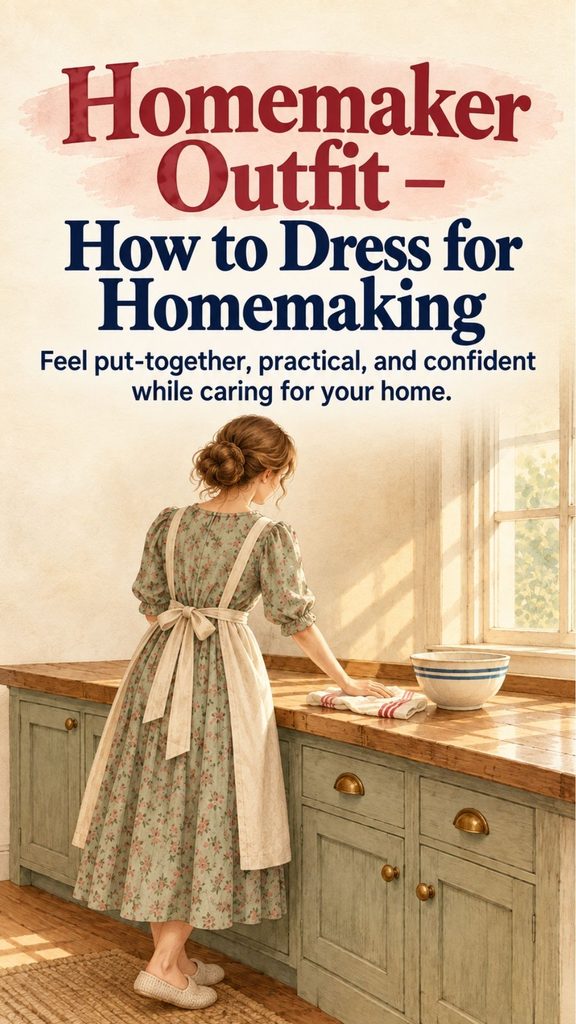
Getting dressed for a day at home can seem unnecessary when your plans involve laundry, cooking, cleaning bathrooms, gardening, or taking care of children. There is no office dress code to follow, no commute to make, and sometimes no reason to leave the house at all.
Yet clothing can still play a useful role in the rhythm of the day.
The point is not that homemakers need to look polished, wear dresses, put on makeup, or avoid comfortable clothes. A successful homemaking outfit is simply one that helps you move easily, handle the day’s work, protect yourself where necessary, and feel comfortable in your own home.
You Might Also Like:
- Loading posts...
For one person, that might be jeans and a cotton shirt. For another, it might be a loose linen dress and apron. Someone else may prefer leggings, an oversized sweater, and supportive shoes.
There is no official homemaker uniform.
The best wardrobe is the one that suits your household, climate, responsibilities, personal style, and comfort.
Why Bother Getting Dressed When You Are Staying Home?
There is nothing wrong with spending an occasional slow morning in pajamas.
But changing into daytime clothing can create a useful transition between sleeping and beginning the day’s responsibilities.
It is a small signal that the day has started.
That can be especially helpful when you work or manage a household from home because the boundaries between rest, chores, family time, and personal time can easily blur together.
Getting dressed may also make spontaneous errands easier.
If you suddenly need groceries, have a visitor, walk the dog, pick up a child, or step outside to work in the garden, you are already prepared.
This does not mean your outfit needs to be formal.
A clean, comfortable outfit that takes two minutes to put on is enough.
Comfort Should Come First
Homemaking involves a surprising amount of movement.
You may bend to load a washing machine, kneel to clean a floor, reach into cupboards, carry laundry baskets, cook at the stove, climb stairs, garden, or spend part of the day sitting at a desk.
Your clothes need to cooperate with that.
Choose pieces that:
- Allow a full range of movement
- Are appropriate for the weather
- Can tolerate regular washing
- Are not constantly slipping or needing adjustment
- Do not make you worry about every splash or stain
- Feel comfortable for several hours at a time
Beautiful clothing is not very useful if you cannot bend over comfortably in it.
Practicality and personal style do not have to compete.
Build a Simple Homemaking Wardrobe
You do not need an entire wardrobe specifically for housework.
A small collection of versatile everyday clothes is usually enough.
Useful pieces might include:
- Comfortable jeans or trousers
- Cotton or linen shirts
- T-shirts
- Loose blouses
- Casual dresses
- Simple skirts
- Cardigans
- Sweaters
- Leggings
- Aprons
- Comfortable indoor or outdoor shoes
The exact combination depends on what you enjoy wearing.
The important part is having enough pieces that work together easily.
If everything coordinates reasonably well, getting dressed becomes almost automatic.
Create a Homemaker Outfit Formula
One of the easiest ways to simplify getting dressed is to create a few outfit formulas.
An outfit formula is simply a combination you know works.
For example:
Everyday cleaning day:
Comfortable trousers + cotton shirt + apron + supportive shoes.
Cooking and baking day:
Simple dress + apron + tied-back hair + comfortable shoes.
Garden day:
Older jeans + breathable shirt + garden shoes + hat.
Errands and homemaking:
Jeans + blouse + cardigan + flats or sneakers.
Cold winter day:
Leggings or trousers + long-sleeve shirt + knitted sweater + warm socks.
You do not need to invent a completely new outfit every morning.
Repeating combinations reduces decisions and helps you identify which clothes you actually use.
Dresses Can Be Surprisingly Practical
A casual dress can work beautifully for homemaking, particularly if you enjoy a traditional or cottage-inspired style.
Loose cotton and linen dresses can be comfortable, breathable, and easy to move in.
They also require very little coordination because one garment creates most of the outfit.
Practical house dresses tend to have features such as:
- Comfortable necklines
- Washable fabric
- Loose or gently fitted waists
- Useful pockets
- Midi or knee-length hems
- Sleeves that stay out of the way
- Enough room for movement
Avoid dresses with very long sleeves, dragging hems, excessive ties, or loose decorative details when cooking or working around equipment.
A dress can be attractive and practical at the same time.
But it is an option, not a requirement.
Jeans and Trousers Work Just as Well
Some homemaking jobs are simply easier in trousers.
Gardening, carrying firewood, cleaning low cupboards, moving furniture, and working outdoors may all be more comfortable in jeans or sturdy work trousers.
You may prefer softer trousers for indoor work.
Look for fabrics with enough flexibility to move comfortably.
You can still make the outfit feel intentional with a blouse, fitted T-shirt, cardigan, or simple accessories.
There is no reason comfortable everyday clothing has to feel careless.
Leggings and Loungewear Have a Place Too
There is no need to declare certain clothes inappropriate for homemakers.
Leggings, joggers, and other comfortable clothes can be perfectly practical.
The difference is often in how they are used.
If an outfit makes you feel comfortable, capable, and ready for the day, it is doing its job.
If staying in sleepwear leaves you feeling as though the day never really started, changing into daytime clothes may help.
That distinction is personal.
Someone else’s preferred homemaking outfit does not need to become yours.
The Apron Is Still One of the Most Useful Homemaking Garments
There is a reason aprons remained household staples for generations.
They protect the clothing underneath while allowing you to wear ordinary clothes around messy jobs.
An apron can be helpful while:
- Baking
- Cooking
- Washing dishes
- Preparing preserves
- Cleaning
- Gardening
- Crafting
- Doing messy household projects
A full apron offers more protection than a waist apron, while a waist apron can be convenient when you mainly want pockets.
Large pockets are particularly useful for temporarily carrying clothespins, a cleaning cloth, seed packets, or small household items as you move through the home.
One caution is important: an apron is not a potholder or oven mitt.
Ordinary apron fabric does not provide reliable heat protection and may even catch fire near an open flame. Use proper dry oven mitts or potholders when handling hot cookware.
Keep More Than One Apron
If you use aprons regularly, having two or three makes practical sense.
One can be in the wash while another is being worn.
You may even prefer different aprons for different jobs.
For example:
- A clean kitchen apron
- A heavier cleaning apron
- An older gardening or workshop apron
This helps prevent soil, cleaning residue, or outdoor dirt from being transferred into food-preparation areas.
Wash aprons whenever they become noticeably dirty or contaminated.
Choose Fabrics That Can Handle Real Life
Homemaking clothes should generally be easy to care for.
Natural fibers such as cotton and linen are popular because they are comfortable and breathable, but blends and modern performance fabrics can also be practical.
Think about:
- Washability
- Drying time
- Durability
- Comfort
- Stain resistance
- Climate
- How frequently the garment will be worn
Very delicate fabrics may be better saved for days when your work is lighter.
For everyday household clothing, it is useful to own pieces that can survive repeated washing without requiring special treatment.
Keep a Few Clothes Specifically for Messy Jobs
You do not have to ruin your favorite clothes to prove that you dress intentionally at home.
Keep one or two older outfits for jobs such as:
- Painting
- Deep cleaning
- Working with soil
- Cleaning a garage
- Handling greasy equipment
- Messy DIY projects
This allows you to protect better clothing without spending the entire week in clothes that make you feel uncomfortable or untidy.
A practical wardrobe includes both presentable everyday clothing and work clothes.
Think About Safety While Cooking
Certain clothing choices matter around a stove.
Loose, flowing sleeves can reach burners or flames.
Dangling scarves, long necklaces, and loose fabric can also get too close to cooking equipment.
When working around heat:
- Roll or secure loose sleeves.
- Keep long hair tied back when necessary.
- Avoid dangling fabric around open flames.
- Use proper oven mitts.
- Wear shoes that protect your feet from hot spills when appropriate.
Comfort matters, but so does choosing clothes suited to the task.
Choose Shoes Based on the Work
Footwear is often overlooked in discussions about homemaking clothes.
If you spend hours standing on hard floors, comfortable shoes can make a noticeable difference.
Some people prefer supportive indoor shoes.
Others are comfortable barefoot or in socks, depending on the household and activity.
For gardening, heavy cleaning, workshops, or outdoor chores, choose footwear that protects your feet.
Avoid slippery shoes when floors are wet.
If you are moving heavy objects or using tools, more protective footwear may be appropriate.
The best house shoe depends on what you are actually doing.
Keep Hair Practical
Hair does not need to be elaborately styled every morning.
But keeping it comfortable and out of the way can make cooking, cleaning, gardening, and other work easier.
Simple options include:
- Ponytail
- Bun
- Braid
- Hair clip
- Headband
- Scarf
If you have long hair, securing it while cooking or working near tools is often the practical choice.
The goal is not to look styled for an audience. It is simply to prevent hair from becoming an annoyance while you work.
Makeup Is Completely Optional
Makeup has nothing to do with someone’s ability to keep a home.
If putting on a little makeup is an enjoyable part of your morning routine, do it.
If you prefer a clean face and moisturizer, that is equally valid.
The same applies to jewelry, perfume, styled hair, and other parts of personal grooming.
Use what helps you feel comfortable and like yourself.
An intentional morning routine should support your day rather than create another standard you feel obligated to meet.
Prepare Outfits Ahead of Time
If mornings tend to be chaotic, choose clothes the night before.
This can take less than a minute.
Check the weather and think about what you will be doing.
If tomorrow involves gardening, put out gardening clothes.
If you have errands and appointments, choose something that works both at home and outside.
If you are spending the day baking, set out your apron.
Removing one small decision from the morning can make getting started easier.
Create a Small Seasonal Capsule
A simple homemaking wardrobe works particularly well as a loose capsule wardrobe.
You do not have to follow strict minimalist rules.
Simply choose clothes that combine easily.
For example, a warm-weather collection might contain:
- 3–5 comfortable tops
- 2 pairs of trousers or jeans
- 2 casual skirts or shorts
- 2–3 everyday dresses
- 1 lightweight cardigan
- 2 aprons
- Comfortable shoes
A winter version might add:
- Sweaters
- Long-sleeve shirts
- Warm trousers
- Tights
- Thick socks
- A heavier cardigan
The exact number is not important.
What matters is that the clothes are regularly worn.
Let Personal Style Into Your Everyday Clothes
Practical clothes do not have to be boring.
If you love vintage style, wear floral dresses.
If you prefer cottagecore, try linen, cardigans, embroidered blouses, and natural colors.
If you prefer a clean modern wardrobe, wear simple trousers and fitted tops.
If you enjoy bright colors, use them.
Homemaking takes up a significant part of the day for many people. There is little reason to reserve every garment you love for occasions that happen only occasionally.
Clothing is meant to be worn.
Just choose versions appropriate for the work you are doing.
Do Not Save Everything “Nice” for Later
Many wardrobes contain clothes that rarely leave the hanger because they are considered too nice for ordinary life.
Obviously, a formal dress does not need to become cleaning attire.
But an attractive cotton dress, favorite blouse, good cardigan, or comfortable pair of jeans does not need to wait for a special occasion.
Wear your clothes.
Protect them with an apron when cooking or cleaning.
Wash and mend them properly.
Enjoy them while they still fit and suit your life.
A garment sitting untouched in a closet is not providing much value.
Dress for the Day You Actually Have
The most practical question each morning is not, “What should a homemaker wear?”
It is:
What am I doing today?
A day of garden work needs different clothes from a quiet day of paperwork.
Cleaning the garage is different from hosting lunch.
Canning tomatoes is different from running errands.
Choose clothes based on the day’s work.
This is much more useful than trying to follow a single homemaking aesthetic.
Getting Dressed Should Never Become a Measure of Worth
There is an important distinction between intentionally getting ready and believing that appearance determines whether someone is hardworking, disciplined, or caring.
It does not.
Someone can manage a household beautifully in leggings.
Someone can accomplish very little in a perfectly pressed dress.
There will also be days when illness, pregnancy, a newborn, exhaustion, disability, caregiving, or difficult circumstances make getting fully dressed a very low priority.
That is normal.
Clothing can support a routine, but it should never become another way of judging yourself or other homemakers.
Create a Five-Minute Getting-Ready Routine
If you like the feeling of being dressed before beginning household work, keep the routine simple enough to repeat.
A basic routine could be:
- Wash your face or complete your normal morning hygiene.
- Get dressed.
- Brush or secure your hair.
- Put on comfortable shoes if needed.
- Add an apron when the day’s work begins.
Anything beyond that is optional.
You do not need an hour-long routine to feel prepared for the day.
The Best Homemaker Outfit Is the One That Supports Your Life
There is something enjoyable about putting on clothes you genuinely like, tying on an apron, and beginning the work of the day.
But there is no need to recreate the 1950s, abandon comfortable trousers, or dress for an imaginary audience.
A useful homemaking wardrobe should make daily life easier.
It should give you freedom to cook, clean, garden, care for children, run errands, sit down for paperwork, or welcome someone at the door without constantly thinking about your clothes.
Keep your wardrobe washable.
Choose comfortable fabrics.
Protect clothes during messy work.
Wear appropriate shoes.
Secure loose fabric around heat and equipment.
Save a few older pieces for truly dirty jobs.
And wear the everyday clothes you love instead of keeping them permanently tucked away.
Getting dressed for homemaking is ultimately less about looking a certain way and more about beginning the day with clothes that help you feel comfortable, capable, and ready for whatever needs doing.