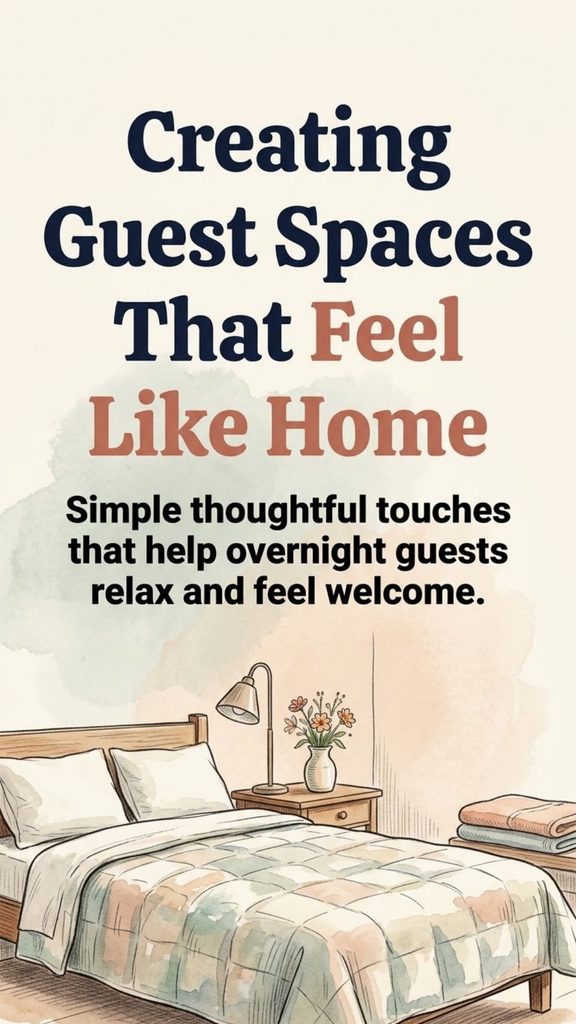
A welcoming guest space does not need to look like a boutique hotel. In fact, rooms that are too polished can sometimes make visitors more cautious rather than comfortable. People relax more easily when they understand how the house works, know where basic things are, and feel free to settle in without asking permission every few minutes.
That means good hospitality is less about impressing people and more about removing small sources of uncertainty.
A comfortable bed matters, of course. So do clean towels and a tidy room. But what guests often remember most is whether they felt at ease. Could they make coffee without searching through cabinets? Did they know where to put their suitcase? Could they grab an extra blanket without feeling awkward? Was there somewhere to sit quietly for a few minutes?
You Might Also Like:
- Loading posts...
A thoughtful guest space answers those questions before they need to be asked.
Aim for Comfortable, Not Perfect
Preparing for visitors can make even relaxed homemakers suddenly notice every scratch, stack, stain, and unfinished project in the house.
It is natural to want everything to look its best, but trying to make a home appear untouched can backfire. Guests do not need to feel as though they have entered a showroom where every cushion must remain perfectly positioned.
A better goal is a room that feels clean, cared for, and easy to use.
That may mean leaving a few books on the nightstand instead of clearing every surface. A quilt that has been washed many times can feel more inviting than an immaculate decorative throw no one is supposed to touch. A sturdy bedside table, reading lamp, water glass, and chair are often more useful than elaborate styling.
The room should communicate one simple message: you are welcome to live here for a while.
Give Guests the Basics Without Making Them Ask
One of the quickest ways to make visitors uncomfortable is to make them ask where everything is.
Most guests do not want to interrupt their host for a fresh towel, Wi-Fi password, hair dryer, extra blanket, or glass of water. Even when the host genuinely does not mind, the guest may still feel as though they are creating extra work.
A little preparation removes that friction.
Before guests arrive, consider leaving the most commonly needed items somewhere obvious:
- Fresh bath and hand towels
- An extra blanket
- One or two spare pillows
- Tissues
- A wastebasket
- A water glass or reusable bottle
- Basic toiletries
- An accessible outlet or charging spot
- The Wi-Fi name and password
- A small amount of drawer or hanging space
You do not need to build an elaborate welcome basket. The goal is independence, not luxury.
A guest who can find what they need without asking will usually relax faster.
Make the Bedroom Easy to Use
A beautiful guest bedroom can still be inconvenient if there is nowhere to put anything.
Look at the room from the perspective of someone arriving with a suitcase, phone, shoes, and a few personal belongings. Where will the luggage go? Is there an empty hook? Is the dresser completely full? Does the bedside lamp require crawling behind furniture to turn it on?
Simple improvements can make a big difference.
Clear at least one surface near the bed. Leave a few empty hangers if there is a closet. If the room has drawers, make it clear which ones guests can use. A bench, luggage rack, sturdy chair, or open section of floor can keep suitcases from taking over the bed.
Lighting also matters more than many people realize. A guest should ideally be able to turn off a bedside light without crossing a dark room. A small lamp is useful for reading and helps the room feel softer in the evening.
If there is a window, make sure curtains or blinds provide reasonable privacy.
These details are not glamorous, but they are what turn a spare room into a functional guest space.
Include a Few Signs of Real Life
A welcoming room can still have personality.
You do not need to remove every personal object before someone arrives. A few carefully chosen items can make the space warmer and more memorable.
Try adding things that feel natural rather than staged. A small vase of garden flowers, a favorite novel, a framed family photograph, a handmade quilt, or a simple ceramic dish for jewelry can all make the room feel connected to the rest of the home.
The key is moderation. Too many personal belongings can make guests feel like they are sleeping in someone else’s storage room. Too few can make the space feel impersonal.
A guest room usually feels most comfortable somewhere in the middle: tidy enough to feel prepared, but warm enough to feel human.
Create a Simple Coffee and Breakfast Setup
Mornings are one of the easiest times for guests to feel uncertain.
They may wake earlier than the household. They may not know whether it is acceptable to make coffee. They may feel uncomfortable opening cupboards or searching through the refrigerator.
A simple self-serve setup solves much of this.
Keep mugs close to the coffee maker or kettle. Put coffee, tea, sugar, and anything else commonly used in a visible place. Let guests know whether milk, fruit, bread, cereal, or another easy breakfast option is available.
This does not require a dedicated coffee bar. Even one clearly arranged section of the kitchen counter can work.
The same principle applies to snacks. If there are things guests are welcome to eat, say so clearly. People are more likely to help themselves when they know they are not accidentally taking something reserved for dinner.
Good hosting often comes down to removing uncertainty.
Make Shared Bathrooms Straightforward
A shared bathroom deserves special attention because guests may feel especially awkward asking questions about it.
Start with the obvious basics: clean towels, toilet paper, hand soap, and an empty place for toiletries.
If the bathroom door has an unusual lock, explain how it works. If towels are stored somewhere unexpected, leave them out. If hot water takes a long time to arrive or the shower has a confusing control, mention it before the guest discovers that at 7 a.m.
A few spare essentials can also be useful, such as:
- Toothpaste
- An unopened toothbrush
- Shampoo and conditioner
- Body wash or soap
- Cotton swabs
- A hair dryer
You do not need to predict every possible need. The idea is simply to prevent the most common inconveniences.
Give People Somewhere to Be Besides the Guest Room
Hosting is easier when visitors do not feel as though they must either sit with everyone or disappear into the bedroom.
If possible, create a few comfortable places around the house where someone can settle without becoming the center of attention.
A chair near a window can become a quiet reading spot. A stool near the kitchen can let someone chat while meals are being prepared. A porch chair, garden bench, or small table outside gives guests another place to spend time.
Even in a small home, seating arrangement matters.
Avoid filling every chair with bags, laundry, decorative pillows, or household clutter. Guests are unlikely to move your belongings themselves because they may assume the seat is not meant for them.
It also helps to avoid seating that forces everyone into constant face-to-face conversation. Some people enjoy sitting nearby while reading, scrolling on their phone, knitting, or simply listening.
Comfortable hospitality leaves room for both conversation and quiet.
Make Alone Time Feel Normal
Even close friends and relatives usually need occasional privacy.
This becomes especially important during longer visits. Constant togetherness can become tiring, even when everyone gets along well.
Guests should feel free to take a walk, sit outside, read in their room, nap, or spend time alone without worrying that they are being rude.
You can make this easier by creating obvious quiet spaces. A single chair beside a window, a comfortable bedroom corner, or an accessible porch can provide a natural retreat.
Privacy does not always require a separate room. Sometimes it is simply a space slightly removed from the busiest part of the house.
Hosts can also help by avoiding the expectation that every hour must be filled with activities. Leaving gaps in the day allows everyone to recharge.
People often enjoy social time more when they know they are also allowed to step away from it.
Think About How Guests Move Through the House
A good guest experience is partly about layout.
Try walking through your home as though you have never been there before.
Can someone reach the bathroom at night without tripping over furniture? Is there a light switch near the hallway? Are stairs clear? Is it obvious which door leads outside? Can a guest enter the kitchen without feeling as though they are invading a private workspace?
Small adjustments can make the house easier to navigate.
Night-lights are helpful in unfamiliar hallways. Keeping pathways clear reduces awkwardness and makes the space safer. A place near the entrance for shoes, coats, or bags prevents belongings from drifting all over the house.
If your home has any quirks, mention them. Perhaps the bathroom door sticks, the back step is uneven, or the porch light switch is in an unexpected place.
Information helps people feel confident.
Keep Food Expectations Flexible
Meals can become one of the most stressful parts of hosting if too much pressure is placed on making everything impressive.
Guests generally appreciate thoughtful food more than complicated food.
Before the visit, ask about important dietary restrictions or allergies. Beyond that, simple meals are often enough. Soup and bread, sandwiches, baked pasta, eggs and toast, salads, casseroles, or a casual breakfast can all be perfectly welcoming.
It is also helpful to keep some easy options available between meals.
Guests may be hungry at different times than you are, especially if they have traveled or are adjusting to a different schedule.
Again, make it clear what they can help themselves to.
Hospitality should not require the host to spend the entire visit cooking.
Do Not Overfill the Room With Guest Supplies
There is a temptation to anticipate every possible need and cover the room with baskets, bottles, snacks, decorative signs, candles, magazines, and extra products.
Too much preparation can make a small room feel cluttered.
Focus first on what is genuinely useful. Comfortable bedding, towels, lighting, storage space, drinking water, Wi-Fi information, and access to the bathroom matter more than a collection of miniature toiletries.
Leave enough empty space for guests to bring their own belongings into the room.
An empty tabletop can be more valuable than another decorative arrangement.
Prepare the House, Then Stop Fussing
One of the kindest things a host can do is relax.
If you constantly apologize for the house, adjust pillows, wipe counters while guests are talking, or worry aloud about everything that is unfinished, visitors may begin to feel uncomfortable too.
Do the necessary cleaning before they arrive. Freshen the bathroom. Put clean sheets on the bed. Clear obvious clutter. Make sure essential areas are functional.
Then allow the house to be lived in.
A meal can leave dishes behind for a little while. Children may bring toys into the room. Someone may spill coffee. Towels will get used.
That is what hospitality looks like in a real home.
A Welcoming Home Is About Ease
The most memorable guest spaces are rarely the most expensive or perfectly decorated ones.
They are the homes where people know where to find a towel. Where the coffee is easy to make. Where there is a lamp beside the bed, a comfortable chair nearby, and room to put a suitcase. Where guests can join the conversation or quietly step away without feeling awkward.
Creating that kind of atmosphere requires thought, but not extravagance.
The goal is not to convince visitors that your home is flawless. It is to help them forget, for a little while, that they are visitors at all.
When people feel free to help themselves, rest, wander into the kitchen, take a quiet moment, and settle into the rhythms of the household, hospitality begins to feel natural.
And that is what makes a guest space feel like home.