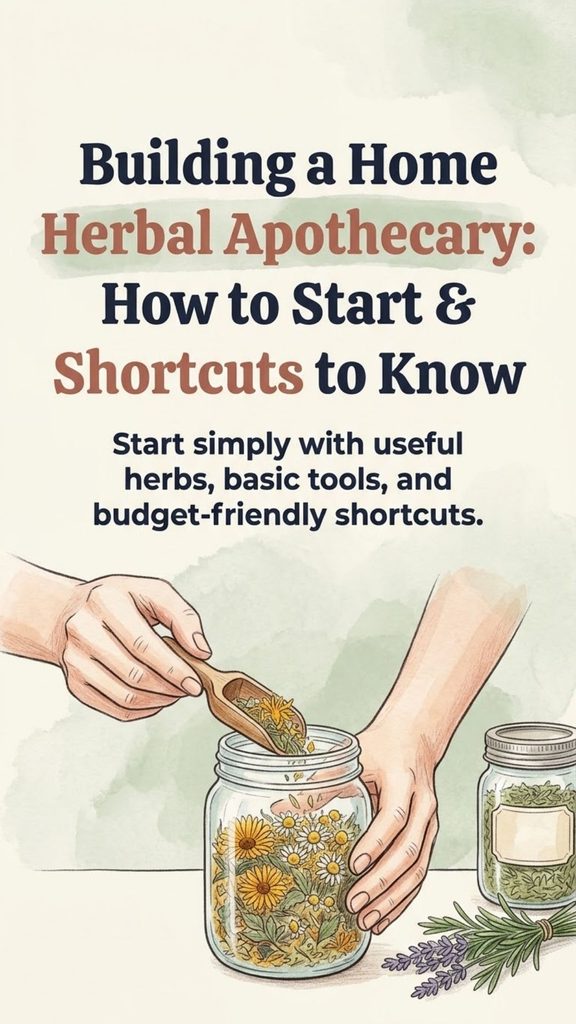
A home herbal apothecary does not need to begin with dozens of mysterious jars, expensive equipment, or an overflowing cabinet of remedies. In fact, starting too big is one of the easiest ways to end up with herbs you never use.
A better approach is to build your collection around a small number of plants you understand well. Start with familiar culinary herbs and gentle herbal teas, learn what each one can and cannot reasonably do, and expand only when you have a clear reason to add something new.
That approach is less expensive, easier to organize, and safer. It also turns an herbal cabinet into something practical rather than decorative.
You Might Also Like:
- Loading posts...
The goal is not to create a miniature pharmacy that replaces medical care. Think of a home herbal apothecary as a collection of carefully chosen herbs and supplies for simple preparations, everyday comfort, cooking, and traditional home use.
Start With Uses, Not With a Long Shopping List
Before buying herbs, think about what you would actually reach for.
Perhaps you want a few soothing teas. Maybe you enjoy ginger when your stomach feels unsettled, chamomile as an evening drink, or peppermint after a meal. You may also want culinary herbs that can move easily between the kitchen and your herbal cabinet.
A useful beginner collection might cover a few broad purposes:
- Digestive comfort
- Relaxing evening teas
- Simple cold-season drinks
- Culinary herbs with traditional herbal uses
- Gentle topical preparations for healthy skin
- A few convenient teas for travel or busy days
You certainly do not need twenty herbs for each category.
Choosing one or two versatile plants and learning them thoroughly is more useful than owning thirty jars whose contents you barely remember.
Safety Comes Before Stocking the Cabinet
Herbs can seem harmless because they are plants, but “natural” does not automatically mean risk-free.
Herbal supplements can interact with prescription and over-the-counter medicines, and some may affect bleeding, sedation, drug metabolism, or other processes in the body. The FDA advises discussing dietary supplements with a health professional, particularly when you take medicines or have medical conditions.
Extra caution is sensible for children, pregnancy and breastfeeding, people preparing for surgery, and anyone taking regular medication.
There is also an important difference between using an herb in ordinary food amounts and taking concentrated extracts, tinctures, capsules, or essential oils. A garlic clove added to soup, for example, is not equivalent to taking a concentrated garlic supplement every day.
Garlic supplements can increase bleeding risk, especially when combined with anticoagulants or other medicines that affect clotting. Raw garlic placed directly on the skin can also cause significant irritation or burns.
This is why a good herbal apothecary is built on knowledge rather than quantity.
Begin With Familiar Kitchen Herbs
Some of the easiest herbs to learn are probably already in your kitchen.
Ginger
Ginger is one of the most practical starter herbs because it is easy to buy fresh and dried and has a long history of culinary use.
A few slices can be steeped in hot water for a strong, warming drink, or ginger can simply remain part of everyday cooking.
Ginger has also been studied for certain types of nausea. Research suggests it may help with mild nausea and vomiting during pregnancy, although anyone considering concentrated ginger supplements during pregnancy should discuss them with a health professional.
For a beginner apothecary, there is no need to start with an elaborate tincture. Fresh ginger root and dried ginger are inexpensive, useful, and easy to understand.
Garlic
Garlic belongs in the kitchen first and the apothecary second.
Research on garlic supplements suggests that they may produce small reductions in cholesterol or blood pressure in some people, but that does not make garlic a replacement for prescribed treatment. Evidence supporting garlic supplements for preventing or treating common colds remains limited.
Keeping garlic on hand for cooking is the simplest approach. If you are considering concentrated supplements, the safety considerations become more important.
Thyme
Thyme is another excellent crossover herb because it is useful in soups, roasted vegetables, sauces, broths, and herbal infusions.
Thyme has a long history of traditional herbal use, particularly in preparations associated with respiratory and digestive comfort. However, traditional use should not be confused with proof that ordinary thyme tea will treat respiratory infections.
Keeping dried thyme in the pantry gives you a useful culinary ingredient without requiring a separate specialty product.
Rosemary
Rosemary is similarly useful as both a culinary herb and an aromatic plant.
It works well in breads, roasted potatoes, beans, soups, meats, and infused culinary preparations. A simple rosemary infusion can also be enjoyed as an herbal drink by people who like its strong flavor.
There is no need to turn every useful herb into a concentrated remedy. One of the best habits a beginner can develop is appreciating herbs as food and beverages first.
Add a Few Simple Herbal Teas
Tea is one of the easiest ways to begin using herbs because it requires almost no equipment and encourages you to work with relatively simple preparations.
Chamomile
Chamomile is a classic evening tea with a long tradition of use for relaxation.
Its reputation as a sleep remedy is stronger than the clinical evidence behind it. Research has not conclusively shown that chamomile treats insomnia, although some preliminary research has examined chamomile preparations for anxiety.
For most people, ordinary amounts used in tea are considered likely safe. However, chamomile can trigger allergic reactions, particularly in people sensitive to related plants such as ragweed, daisies, chrysanthemums, or marigolds. It may also interact with some medications.
Those details make chamomile a useful example of why even familiar herbs deserve respect.
Peppermint
Peppermint tea is inexpensive, pleasant, and easy to find.
Peppermint leaf tea is generally considered safe, but research on peppermint leaf itself is limited. Much of the better evidence concerns specific enteric-coated peppermint oil capsules, which may provide modest short-term relief for some symptoms of irritable bowel syndrome. Peppermint oil can also cause side effects such as heartburn.
That distinction matters. A cup of peppermint tea and a concentrated essential-oil capsule are not interchangeable remedies.
For a beginner, peppermint tea is usually the simpler item to keep in the cupboard.
Lemon Balm
Lemon balm has a mild lemony aroma and is commonly used in relaxing herbal tea blends.
It is also a rewarding garden plant, although members of the mint family can spread enthusiastically. Growing it in a pot can make it easier to control.
Rather than buying large quantities immediately, try a small amount first. If you genuinely enjoy drinking it, it may deserve a permanent place in your cabinet.
Lavender
Lavender is another herb often associated with relaxation.
Research into lavender products for anxiety and sleep is still developing, and results vary depending on the form used. Some studies of particular oral lavender-oil products have suggested possible benefit for anxiety, but evidence for lavender aromatherapy and sleep is less certain.
Culinary lavender can be used sparingly in tea or food, while dried flowers can also be placed in sachets for their fragrance.
Essential oil is far more concentrated than dried lavender and should not be treated as though the two products are equivalent.
Consider Elderberry, but Understand Its Limits
Elderberry has become one of the most popular additions to home herbal cabinets, especially during cold season.
Some preliminary research suggests that black elderberry preparations may reduce symptoms or duration of certain upper respiratory illnesses, but the evidence is based on a relatively small number of studies and is not strong enough to treat elderberry as a proven antiviral medicine.
There is also an important preparation issue.
Raw or unripe elderberries and other parts of the elder plant can contain compounds capable of producing cyanide and causing nausea, vomiting, or diarrhea. Appropriate cooking removes the toxin from berries.
For a beginner who does not know how to identify and prepare elder safely, purchasing a reputable prepared elderberry product can be simpler than harvesting wild plants.
What About Echinacea?
Echinacea frequently appears in cold-season herbal collections.
Research has produced mixed results. Current evidence suggests it might slightly reduce the likelihood of catching a cold in some circumstances, but it remains uncertain whether it meaningfully shortens a cold once someone is ill. Products also vary greatly in species, plant parts, and preparation methods.
Echinacea can also cause allergic reactions, including potentially significant reactions in susceptible people.
This is a useful reminder that an herbal apothecary should not be built around promises such as “boosts immunity” or “fights viruses.” Those phrases can make uncertain evidence sound far more conclusive than it is.
Calendula Makes a Useful Garden Addition
Calendula is popular among herb gardeners because it is attractive, productive, and relatively easy to grow.
Its bright flowers are traditionally used in topical herbal preparations such as infused oils, balms, and salves. It is also sometimes included in teas.
If you want to learn to make topical herbal products, calendula is a reasonable plant to study because it introduces several useful skills: growing, harvesting, drying, infusing, labeling, and storing.
Do not apply homemade products to deep wounds, serious burns, infected skin, or conditions that need medical evaluation. Simple herbal skin products are best thought of as personal-care preparations rather than substitutes for wound treatment.
Be Much More Careful With Foraged Herbs
Plantain, yarrow, violets, dandelion, nettles, goldenrod, chickweed, cleavers, linden, self-heal, and other wild plants frequently appear in home-apothecary collections.
Learning wild plants can be rewarding, but identification must come first.
Never harvest a plant because it resembles a photo on social media or because a phone application says it is probably safe. Some edible or medicinal plants have dangerous look-alikes, and identification can depend on features that are difficult to see in a photograph.
Before consuming a wild plant, confirm its identity using reliable regional references and, ideally, instruction from an experienced local forager or botanist.
Also consider where the plant is growing. Avoid harvesting from areas that may have been sprayed with herbicides or pesticides, contaminated with animal waste, exposed to heavy roadside pollution, or located on land where you do not have permission to forage.
A beginner apothecary does not need wild-harvested herbs at all. They can be something you learn later.
The Easiest Shortcut: Keep Quality Tea Bags
Loose herbs are wonderful, but convenience matters.
If someone wants an herbal drink in the middle of a busy evening or while traveling, individually packaged tea bags can be far more useful than six jars that need to be measured and blended.
Keeping a small selection of teas such as ginger, peppermint, chamomile, lemon balm, or simple blends gives you ready-to-use options without requiring a large collection.
Tea bags are also an inexpensive way to discover which herbs you actually enjoy before purchasing them by the pound.
The best apothecary is not the biggest one. It is the one you actually use.
Buy Herbs in Small Quantities at First
Bulk herbs may appear economical, but a large bag is a poor bargain if most of it loses freshness before you use it.
For your first purchase, choose modest amounts.
Look for herbs that:
- Have a recognizable color and aroma
- Are clearly labeled with the plant name
- Identify the plant part when relevant
- Come from a seller with good storage and sourcing practices
- Are protected from excess moisture and contamination
Once you discover which herbs you use regularly, larger quantities may make sense.
It is also useful to record when you purchased or harvested them. Dried herbs gradually lose aroma, flavor, and quality, particularly when exposed to heat, light, moisture, and air.
A Simple Starter Apothecary
Instead of buying thirty ingredients, a beginner could build a very capable cabinet around six or seven items:
Ginger for cooking and warming tea.
Peppermint for an easy after-meal herbal drink.
Chamomile for a gentle evening tea.
Thyme for cooking, broth, and traditional herbal infusions.
Rosemary as a culinary and aromatic herb.
Calendula if you want to begin learning about simple topical herbal preparations.
Lemon balm or lavender if relaxing herbal teas and aromatic herbs appeal to you.
You can always add elderberry, echinacea, nettle, tulsi, dandelion, or other herbs later.
Starting small gives you enough time to learn how each plant looks, smells, tastes, stores, and is traditionally prepared.
Basic Tools You Actually Need
An herbal apothecary does not require specialized equipment.
For tea and dried herbs, the essentials are simple:
- A kettle or saucepan
- Tea strainer or infuser
- Heat-safe cups or a teapot
- Clean glass jars with secure lids
- Labels and a permanent marker
- A fine-mesh sieve
- Small measuring spoons
If you begin drying herbs from your garden, a drying rack or clean mesh screen can be useful. Good air circulation is essential because herbs need to dry thoroughly before storage.
If you later make infused oils, tinctures, or salves, you may eventually want funnels, cheesecloth, dropper bottles, additional jars, carrier oils, and beeswax.
There is no reason to purchase all of those supplies on day one.
Label Everything
Never rely on memory when storing herbs or homemade preparations.
At minimum, label dried herbs with:
- Common name
- Botanical name when known
- Plant part
- Date purchased or harvested
For preparations containing several ingredients, write down every ingredient and the preparation date.
This becomes increasingly important as your collection grows. Two jars of dried leaves can look remarkably similar several months later.
Good recordkeeping is one of the least glamorous but most valuable herbal skills.
Be Careful With Essential Oils
Essential oils deserve their own category because they are highly concentrated plant extracts.
A few drops of essential oil can represent far more plant material than a cup of herbal tea. They should not automatically be swallowed, rubbed undiluted on the skin, used around the eyes, or applied to children simply because the original plant is familiar.
Peppermint oil, for example, should not be applied to the face of infants or young children because inhaled menthol can cause serious problems.
For a beginner herbal apothecary, essential oils are optional. You can learn a great deal about herbs without owning any.
Know When Home Herbal Care Is Not Enough
An herbal cabinet is best suited to ordinary, low-risk situations and personal comfort. It should not delay medical care for potentially serious symptoms.
Seek appropriate medical attention for problems such as difficulty breathing, severe allergic reactions, uncontrolled bleeding, significant burns, serious wounds, persistent high fever, severe dehydration, poisoning, severe or unexplained pain, or symptoms that are rapidly worsening.
Likewise, herbs should not replace prescribed medicines without guidance from the health professional managing the condition.
This is especially important because dietary supplements are regulated differently from medicines in the United States and are not FDA-approved before being marketed in the same way prescription and over-the-counter drugs are.
Build Your Apothecary Slowly
There is no finish line for a home herbal apothecary.
Begin with the plants already familiar to you. Make ginger tea. Learn how chamomile smells when it is fresh. Grow thyme on the windowsill. Dry a little rosemary. Label your jars. Read about contraindications before trying something unfamiliar.
After several months, notice what you actually use.
Perhaps ginger, peppermint, thyme, and chamomile disappear quickly while five other herbs remain untouched. That information should guide your next purchases far more than somebody else’s list of “must-have” remedies.
A useful herbal apothecary grows from knowledge and repetition. You learn one plant, then another. You discover which preparations fit naturally into your household and which ones do not. Gradually, a few jars and tea tins become a carefully chosen collection that makes sense for your home.
That is a better goal than having shelves packed with remedies: fewer herbs, understood well, stored carefully, and used thoughtfully.