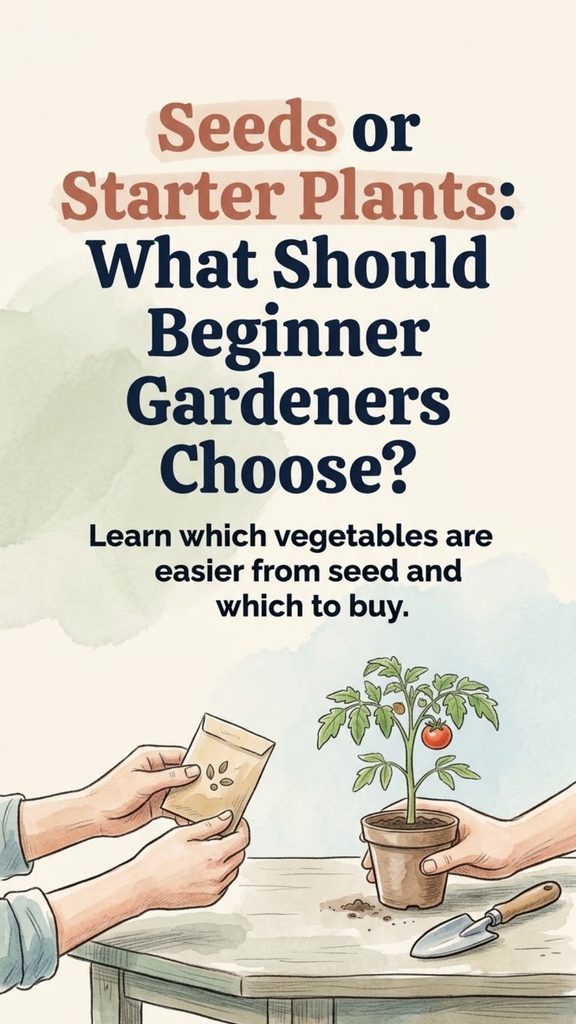
One of the first decisions new gardeners face is whether to grow vegetables from seed or buy young starter plants from a nursery. There is no single answer that works for every crop. Some vegetables prefer to be planted directly where they will grow, while others are much easier to manage when you begin with an established seedling.
Vegetables That Are Usually Best Grown From Seed
Certain crops do not like having their roots disturbed, or they grow so quickly that buying starter plants offers little advantage.
These vegetables are usually good candidates for direct sowing:
You Might Also Like:
- Loading posts...
- Carrots – Their long taproots develop best when seeds are planted directly in loose garden soil.
- Radishes – They germinate and mature quickly, making nursery plants unnecessary.
- Beans – Beans usually sprout readily once the soil is warm and generally establish well when directly sown.
- Peas – Peas are normally planted from seed directly in the garden during cool growing conditions.
- Corn – Corn grows quickly from seed and is usually planted directly in blocks or rows where it will mature.
For crops like these, buying seedlings often costs more without providing much benefit.
Vegetables That Are Often Easier as Starter Plants
Other vegetables need a longer growing season or take considerably more time to reach transplanting size. For beginners, purchasing healthy nursery-grown plants can make the process much simpler.
Good examples include:
- Tomatoes
- Peppers
- Eggplant
Starting these crops indoors from seed is certainly possible, but young plants need enough light, warmth, watering, and time before they are ready for the garden. Buying sturdy transplants allows you to skip much of that early work.
Many herbs are also convenient to buy as starter plants, particularly when you only need one or two plants. However, herbs vary considerably. Basil, cilantro, dill, and several other herbs can also be grown successfully from seed.
Seeds Save Money
The biggest advantage of seeds is cost.
A single seed packet may contain enough seeds to grow many plants, while nursery seedlings are usually sold individually or in small packs. If you have a large vegetable garden, growing from seed can reduce the cost considerably.
Seeds also give you access to a much wider range of varieties. Garden centers may carry only a handful of tomato or pepper varieties, while seed catalogs often provide many more choices in size, color, flavor, and growth habit.
The trade-off is time. Seeds need to germinate, develop roots, grow their first true leaves, and become established before they resemble the plants you see at a nursery.
Starter Plants Save Time
Starter plants cost more, but someone else has already handled the earliest and often most delicate stage of growth.
Instead of waiting weeks for a tomato or pepper seedling to become large enough for the garden, you can purchase a healthy transplant and begin with an established plant.
That can be particularly helpful for beginners who do not yet have an indoor seed-starting setup.
Starter plants can also help gardeners with shorter growing seasons. Crops such as peppers and eggplants need plenty of warm growing weather, so beginning with an established transplant gives them a useful head start.
Buying Plants Does Not Guarantee Success
Starter plants can make gardening easier, but they do not eliminate every problem.
Choose compact, healthy-looking plants rather than assuming the tallest plant is the best one. Avoid plants with severely yellowing leaves, obvious pest damage, broken stems, or heavily tangled roots growing from the bottom of the container.
A young, vigorous transplant often adapts better than an oversized plant that has been sitting in its pot too long.
After bringing seedlings home, they may also need a gradual adjustment to stronger sunlight and outdoor conditions before being planted permanently.
The Simplest Approach for Beginners
You do not have to choose between seeds and starter plants for your entire garden. Using both is often the easiest approach.
Plant fast-growing, direct-sown vegetables such as beans, peas, carrots, radishes, and corn from seed. Then purchase healthy starter plants for slower-growing warm-season vegetables such as tomatoes, peppers, and eggplant.
This gives you some of the savings and variety that come with seeds while still allowing you to skip the more demanding seed-starting process for crops that take longer to establish.
As your gardening skills grow, you can experiment with starting more plants from seed.
The goal is not to grow everything the hardest possible way. It is to give each crop a good start while making gardening manageable and enjoyable.