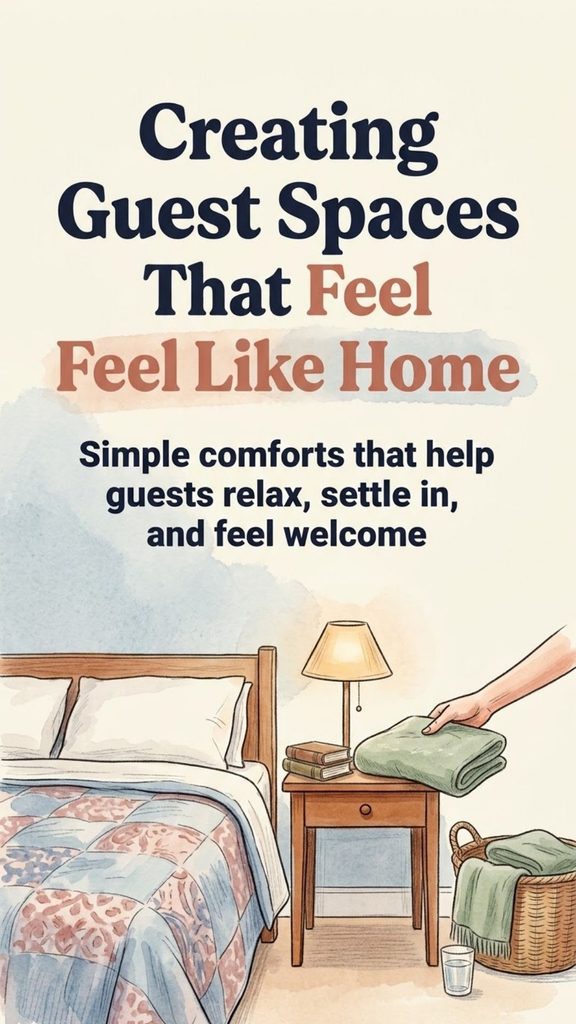
A guest room does not need matching furniture, hotel-style towels, or a tray of carefully arranged amenities to make someone feel welcome. In fact, rooms that are too polished can sometimes make visitors hesitant to relax. They may worry about disturbing the pillows, moving something out of place, or using an item that looks decorative rather than practical.
What most guests need is much simpler: a clean place to sleep, a little privacy, clear access to everyday essentials, and the feeling that they are allowed to settle in.
The most comfortable guest spaces usually feel like part of a real home. They are tidy without being stiff, thoughtful without being elaborate, and practical enough that visitors do not have to ask permission for every small thing.
You Might Also Like:
- Loading posts...
Good hospitality is less about impressing people and more about removing the little uncertainties that can make staying in someone else’s home uncomfortable.
Start With Comfort, Not Appearance
It is easy to prepare for guests by thinking about how the room looks first.
You straighten every surface, hide ordinary household items, add decorations, and try to make the space look as polished as possible.
But appearance is only one part of comfort.
A guest is far more likely to remember whether the bed was comfortable, whether they could find the bathroom at night, or whether they knew where to put their suitcase than whether the bedside table matched the dresser.
Before decorating, look at the room from a visitor’s point of view.
Ask yourself:
- Is there a comfortable place to sleep?
- Can someone easily reach a lamp from the bed?
- Is there somewhere to put a glass of water?
- Is there space for a suitcase or bag?
- Can clothing be hung somewhere?
- Are extra blankets easy to find?
- Does the room feel private enough?
- Can the guest control the temperature reasonably well?
These small practical details often matter more than decorative ones.
A room that works well will usually feel more welcoming than a beautiful room that leaves a guest unsure how to use it.
Keep the Room Lived-In, but Not Cluttered
A welcoming guest room does not have to feel empty.
In fact, a few signs that the room belongs to a real home can make it warmer.
A stack of books, a favorite quilt, a framed family photograph, a small plant, or a comfortable chair can make the space feel relaxed and familiar.
The key is leaving enough open space for the guest.
Try not to fill every tabletop, chair, shelf, or dresser with your own belongings. A visitor needs somewhere to put a phone, glasses, a book, medication, toiletries, or other personal items.
Aim for a room that feels cared for rather than staged.
A few useful touches might include:
- A lamp that is easy to reach
- A coaster or small tray
- A box of tissues
- A few books or magazines
- A wastebasket
- An empty hook or hanger
- A chair that is actually available to sit on
- A blanket folded within easy reach
A guest should not feel as though they are staying inside a display.
They should feel free to sit down, move a pillow, open a book, and make themselves comfortable.
Make Everyday Essentials Easy to Find
One of the easiest ways to help visitors relax is to reduce the number of questions they have to ask.
Guests often hesitate to request simple things because they do not want to create extra work for the host.
They may wonder where the towels are, whether they can make coffee, where they should put used linens, or whether it is acceptable to take a snack.
You do not need to provide everything imaginable. You simply need to make the basics clear.
A few thoughtful preparations can make a large difference.
Leave fresh towels somewhere visible rather than hiding them in a linen closet.
If there are empty drawers or closet space available, tell the guest they may use them.
If the Wi-Fi password is difficult to remember, write it down.
If your heating, fan, blinds, television, or shower has an unusual control, explain it briefly before the guest has to ask.
If you keep extra blankets in a cupboard, point them out.
The goal is not to turn your home into a hotel. It is to make ordinary needs easy to handle.
Give Guests Some Independence
Most people feel more comfortable when they can take care of a few basic needs without asking permission.
Food and drinks are a good example.
A guest may want water after everyone else has gone to bed. They may wake up before the household and want coffee. They may feel hungry between meals but be reluctant to ask for something.
You can make this easier without setting up an elaborate snack station.
Show guests where glasses and mugs are kept. Let them know where to find tea, coffee, or drinking water. If there are foods they are welcome to eat, say so clearly.
Simple phrases such as “Help yourself to anything on this shelf” remove uncertainty.
If mornings in your house are informal, explain that too. Guests often feel much more relaxed when they understand the household rhythm.
Independence makes people feel less like visitors who must constantly be served and more like temporary members of the home.
Make the Bed Genuinely Comfortable
A beautiful guest room cannot compensate for an uncomfortable bed.
Fresh, clean bedding should be the priority.
Wash the sheets, check that the mattress and pillows are in reasonable condition, and provide enough bedding for the season.
If possible, offer more than one type of pillow. Some people prefer firm support, while others sleep better with something softer.
An extra blanket is also useful because sleeping temperatures vary widely from person to person.
Keep it somewhere obvious. A visitor should not have to wake you in the middle of the night because the room feels cold.
Do not overwhelm the bed with decorative pillows that must be removed before sleeping. One or two decorative cushions can make a room attractive, but a mountain of pillows quickly becomes another thing the guest has to manage.
Comfort should always come before presentation.
Provide a Place for Personal Belongings
Guests arrive with more than a suitcase.
They may have chargers, shoes, toiletries, medication, coats, handbags, books, and clothing.
Even a small guest room should provide some obvious places for these things.
You do not need to empty an entire wardrobe. A few hangers and one clear shelf may be enough for a short stay.
A folding luggage rack is convenient if you have one, but a bench, sturdy chair, or clear section of the floor can work just as well.
The important thing is to avoid forcing guests to keep everything piled on the bed.
A bedside surface should also be reasonably clear so they can keep nighttime essentials nearby.
These details are easy to overlook because permanent residents already know where everything goes. Visitors do not.
Giving their belongings a place helps them settle in surprisingly quickly.
Create Seating That Feels Natural
Hospitality extends beyond the guest bedroom.
Think about the places where people will actually spend time together.
Formal seating arrangements can sometimes feel awkward, especially when everyone must sit facing one another and maintain constant conversation.
More relaxed arrangements allow guests to participate without feeling trapped.
A chair near the kitchen can be especially useful. It lets someone talk with you while you cook without standing in the middle of the work area.
In living spaces, make sure chairs are actually usable. Remove laundry, decorative baskets, laptops, or other items that regularly collect on spare seats.
If possible, arrange seating so people have choices. One person may want to sit near the conversation, while another prefers a quieter spot.
Small side tables are also helpful. Guests often want somewhere to put a drink, phone, or book without asking.
Comfortable gatherings usually happen when people can move naturally rather than feeling assigned to a formal position.
Make Room for Quiet Time
Even very sociable visitors sometimes need a break.
Travel itself can be tiring. Guests may also be adjusting to unfamiliar routines, different meal times, children, pets, noise, or a busier household than they are used to.
Providing a little privacy can make the entire visit more enjoyable.
A quiet place does not need to be an entire room.
It might be:
- A chair beside a bedroom window
- A small reading spot
- A porch chair
- A bench in the garden
- A comfortable corner away from the television
- A desk where someone can read or use a laptop
A single chair can send an important message: it is completely acceptable to sit alone for a while.
This can be especially valuable during longer visits.
Guests who know they can step away usually feel less pressure to participate in every conversation or activity.
Think About the Bathroom Before Guests Arrive
A shared bathroom can create more uncertainty than almost any other part of a visit.
Cleanliness is the obvious priority, but organization matters too.
Place fresh towels where guests can see them. Make sure there is toilet paper available without someone having to search cabinets. Empty the wastebasket. Check that soap is available.
If guests will share the bathroom with your household, provide a small area where they can leave toiletries if practical.
It can also help to provide a few inexpensive basics in case something was forgotten. A spare toothbrush, unopened bar of soap, cotton swabs, or travel-size toothpaste can be useful.
There is no need to create a full hotel toiletry display. Keep it simple.
Privacy matters as well. A door that closes securely and a lock that is easy to understand can spare guests unnecessary discomfort.
Give Clear Information About Household Routines
Every home has unwritten rules.
Guests do not know them.
They may wonder whether shoes are worn indoors, when breakfast usually happens, whether doors should be locked, where used towels go, or how late people normally stay awake.
Do not make visitors guess.
A short, casual explanation when they arrive can remove much of this uncertainty.
You might mention:
“Extra towels are in this basket.”
“Coffee is here. Please make some whenever you wake up.”
“We usually eat breakfast around eight, but there is no need to wait for us.”
“Just leave used towels on the bathroom hook.”
These details sound small because they are familiar to you. To someone entering a new household, they make the environment much easier to understand.
Do Not Overschedule the Visit
Hospitality does not mean entertaining people every minute.
It is tempting to fill a visit with meals, outings, sightseeing, and planned activities because you want guests to have a good time.
But too much structure can become tiring.
Leave some open space in the schedule.
People may want to sleep later, take a walk, read, call home, or simply sit and talk.
This is especially important during visits lasting several days.
A comfortable guest should be able to say, “I think I’ll rest for a little while,” without feeling that they are disappointing the host.
The best visits often contain ordinary moments alongside special ones.
Cooking dinner together, sitting over coffee, walking around the neighborhood, or talking after everyone else has gone to bed can become more memorable than a tightly planned itinerary.
Prepare Enough, Then Stop Fussing
One of the most overlooked parts of good hospitality is the host’s own behavior.
If you constantly apologize for your home, point out imperfections, or keep cleaning around your visitors, they may begin to feel uncomfortable.
You do not need to say:
“Sorry the house is such a mess.”
“I wish I had bought new towels.”
“The guest room really needs decorating.”
“I meant to clean that corner.”
Most guests would never have noticed these things until they were mentioned.
Prepare the house reasonably well, then let it be a home.
A few toys may be visible. There may be dishes drying beside the sink. Dinner may not come out perfectly.
These things rarely ruin a visit.
A tense host trying desperately to maintain perfection is far more noticeable than an imperfect house.
What Guests Usually Remember
People rarely leave a visit thinking about the exact color of the bedding or whether the guest bathroom had matching containers.
They remember how the home felt.
They remember whether they could relax.
They remember being offered coffee in the morning, finding an extra blanket without having to ask, sitting in the kitchen while dinner was prepared, or having a quiet place to retreat when they needed one.
That is the real goal of a guest space.
You are not trying to create a temporary hotel room inside your house. You are allowing another person to share your home comfortably for a little while.
Clean sheets matter. Fresh towels matter. Privacy matters. Practical preparation matters.
But the final ingredient is permission: permission to sit down, get comfortable, pour another cup of coffee, pick up a book, take a nap, and live normally.
When visitors feel they do not have to perform the role of “guest,” your home begins to feel like home to them too.