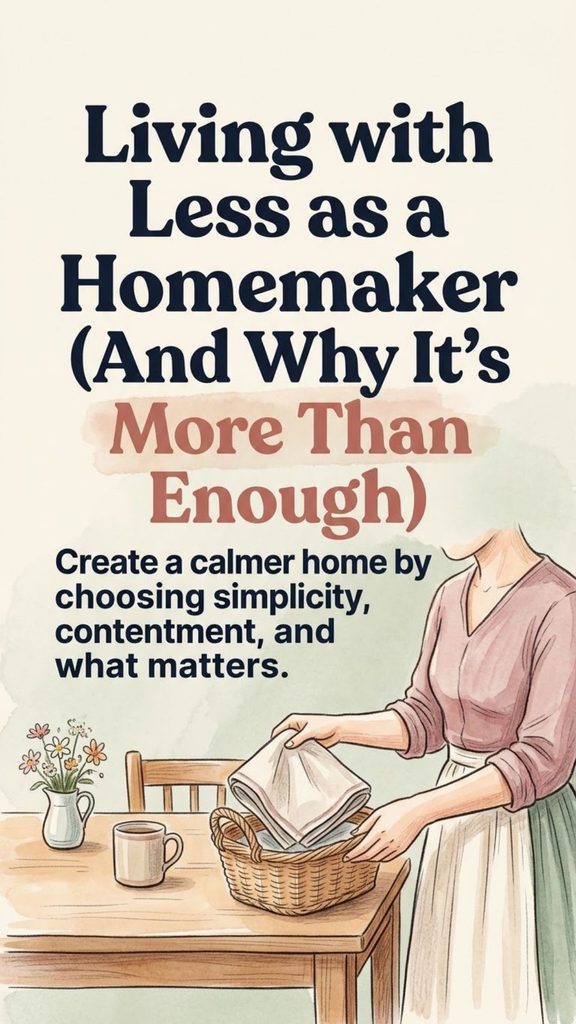
A home can feel crowded long before it runs out of space. Sometimes the pressure comes from clutter in the cupboards. Sometimes it comes from unopened bins, overstuffed drawers, or the quiet feeling that there is always one more thing you should buy, organize, replace, or improve.
For many homemakers, the weight of “more” is not only physical. It can also show up as mental noise. More decor to keep up with, more pantry items to manage, more gadgets to store, more expectations to meet. It is easy to believe that a better home is hiding on the other side of the next purchase. Yet many people discover the opposite: peace often grows when the household needs less, not more.
Living with less does not have to mean bare shelves, empty rooms, or a strict minimalist lifestyle. It can simply mean choosing enough on purpose. It means building a home that serves the people who live there instead of constantly demanding more money, more upkeep, and more attention. For a homemaker, that shift can be deeply freeing.
You Might Also Like:
- Loading posts...
Redefine What “Enough” Means in Your Home
One of the hardest parts of simple living is not letting go of objects. It is deciding what “enough” actually means.
Without that definition, it is easy to keep collecting things for imagined future needs. Extra dishes for guests who rarely come. More storage baskets for clutter that does not need to stay. Another kitchen tool because it promises to save time. Another decorative item because the room still does not feel finished.
Enough looks different in every home. For one homemaker, enough may mean a practical kitchen with only the tools she uses every week. For another, it may mean a cozy living room with a few meaningful decorations and no desire to fill every wall. The point is not to copy someone else’s standard. It is to choose one that fits your real life.
When you decide what is enough for your family, you stop measuring your home by trends, advertisements, or other people’s expectations. That decision brings clarity. It also makes future choices easier.
A Lighter Home Creates Space for Real Life
Too much stuff does not just sit quietly in the background. It asks for attention. It must be cleaned, stored, moved, sorted, repaired, or felt guilty about. Even useful things can become a burden when there are too many of them.
Letting go of excess creates more than empty shelves. It creates breathing room.
A home with less visual noise often feels calmer. Daily tasks become simpler when you are not constantly working around clutter. It takes less effort to tidy the kitchen, fold laundry, wipe surfaces, or set the table when the home is not packed with things that have no clear purpose.
That extra space can be used for what many homemakers actually want more of:
- Time to cook a nourishing meal
- A quiet hour for reading, sewing, or prayer
- A peaceful afternoon cup of tea
- More ease when guests stop by
- Rest without the feeling that there is always another pile waiting
Living with less is not about doing less that matters. It is about doing less of what drains you so you can do more of what supports your home and your well-being.
Use What You Already Have Before Bringing in More
Many homes already contain enough beauty, usefulness, and comfort. It is simply hidden under habit.
Before buying something new, it helps to pause and ask: do I already own something that could do this job? Could the room feel different if I rearranged it? Could the table look inviting with a bowl of fruit, a simple cloth, or flowers from the yard? Could a bedroom feel refreshed just by changing the bedding, rotating a quilt, or clearing the surfaces?
This approach is sometimes called “shopping your home,” but at its heart it is about seeing your home with fresh eyes. Instead of assuming improvement requires spending, you start with what is already in your care.
That mindset does two useful things. First, it protects the budget from unnecessary buying. Second, it teaches contentment. You learn to notice what you already have instead of always focusing on what is missing.
A Homemaker’s Peace Is Easily Disturbed by Comparison
Comparison quietly fuels a lot of household dissatisfaction. A room may have felt warm and comfortable until it was measured against a styled photo online. A pantry may have been perfectly serviceable until someone else’s matching jars made it seem unfinished. A simple life can begin to feel lacking when it is constantly compared to curated images.
The problem is not beauty itself. The problem is letting outside images define what your home should be.
A well-loved home does not need to look like a showroom to be a good home. It needs to work for the people who live in it. It needs to support meals, rest, conversation, learning, and daily life. It needs warmth more than performance.
Sometimes living with less means protecting your mind as much as your shelves. That may mean unfollowing accounts that stir up dissatisfaction. It may mean spending less time consuming inspiration and more time caring for the home you already have. Contentment grows best where comparison is given less room to speak.
Choose Rhythms Over Rigid Perfection
A simple homemaking life is often more sustainable when it is built around rhythms instead of strict, punishing routines.
Rhythms are gentle patterns that support the day. They leave room for life to be human. A morning tidy, opening the curtains, starting laundry, prepping dinner early, watering porch plants, or resetting the kitchen in the evening can all become steady anchors. These actions give shape to the home without turning every day into a test of productivity.
Rigid routines often collapse when life becomes busy, tiring, or unpredictable. Rhythms bend more easily. They allow a homemaker to stay grounded without feeling as though a missed task has ruined the whole day.
Living with less can support this kind of rhythm. Fewer clothes mean less laundry backlog. Fewer dishes mean less buildup in the sink. Fewer decorations mean fewer things to dust and shift around. A simpler home often makes simple routines more realistic.
Let Gratitude Shape the Atmosphere of the Home
One of the most meaningful parts of living with less is learning to notice more.
Gratitude changes the tone of homemaking. It helps you see beauty in ordinary things: clean sheets drying on the line, soup simmering on the stove, sunlight across the kitchen table, worn wooden furniture that still serves well, or a living room that welcomes tired family members at the end of the day.
Gratitude does not require pretending everything is perfect. A home can be small, unfinished, noisy, or imperfect and still be a place of genuine blessing. The shift happens when attention moves from endless lack to quiet appreciation.
That outlook also shapes spending habits. When you are thankful for what is already there, you are less vulnerable to every passing trend or promise of improvement.
Build Your Home Around Values, Not Consumption
A home becomes more coherent when it is shaped by values instead of impulse buying.
If you value hospitality, you may choose open table space, extra seating, or a simple way to serve tea rather than shelves crowded with decorative clutter. If you value nourishment, you may spend on pantry staples, good storage for food, or tools you truly use instead of novelty gadgets. If you value creativity, perhaps you keep room for sewing, journaling, baking, or garden work. If you value rest, you may simplify rooms so they feel calmer and easier to maintain.
Values act like a filter. They help you decide what belongs in your home and what does not. That does not mean every purchase must be serious or purely practical. It simply means the home begins to reflect the life you actually want to live.
When values lead, possessions stop being random. They become supportive.
The Old-Fashioned Way Often Has a Quiet Wisdom
Many homemakers are drawn to slower, older ways of doing things, and not only because they are charming. These practices often encourage attention, patience, and a steadier pace.
Hanging clothes outside, writing a grocery list by hand, mending instead of discarding, baking from basic ingredients, and washing a few dishes by hand can all become small rituals that connect a person more closely to the home. These tasks may not always be faster, but speed is not the only measure of value.
Some old-fashioned habits also naturally support living with less. They emphasize care, maintenance, resourcefulness, and stewardship. Instead of constantly replacing or upgrading, you learn to use things well, make them last, and appreciate the ordinary work that keeps a home functioning.
That approach does not require rejecting every modern convenience. It simply means choosing slower methods when they add peace, meaning, or practicality to daily life.
A Simple Home Will Never Be a Perfect Home
One of the most freeing truths in homemaking is that simplicity is not the same as flawlessness.
A home can be thoughtfully kept and still have unfolded laundry on a chair, mismatched mugs in the cupboard, fingerprints on the door, or a few dusty corners. Living with less does not remove the realities of daily life. It just makes those realities easier to manage.
Trying to “finish” a home can become exhausting because a home is never really finished. It is lived in. Meals happen there. Children grow there. People rest there, recover there, celebrate there, and make messes there. The goal is not a picture-perfect result. The goal is a place where people are cared for.
That perspective matters. A homemaker who makes peace with imperfection is often able to enjoy her home more fully.
How to Begin Living With Less
This kind of homemaking does not need a dramatic reset. Small changes are often more lasting.
A helpful place to begin is with a few simple questions:
- What in my home creates the most stress right now?
- What do I keep managing that I do not truly need?
- Which areas of my home support the life I want?
- What do I already have that is enough?
- What values do I want my home to reflect?
From there, start gently. Clear one shelf. Simplify one drawer. Stop buying duplicates. Use what you have before replacing it. Remove things that do not serve your household or bring any real enjoyment. Keep what is useful, beautiful, or meaningful. Let the rest go.
Small steps are often enough to change the feeling of a home.
Less Can Be a Form of Contentment
Living with less as a homemaker is not about proving that you need almost nothing. It is about refusing the constant pressure to believe that more is always better. It is about building a home that feels peaceful, usable, and honest.
A home does not become rich because it is full. It becomes rich when it holds what matters: warmth, care, nourishment, beauty, rest, and room for the people inside it to live well.
That is why less can be more than enough. Not because less is automatically noble, but because a home built with intention has a quiet kind of abundance that clutter and constant striving rarely provide.