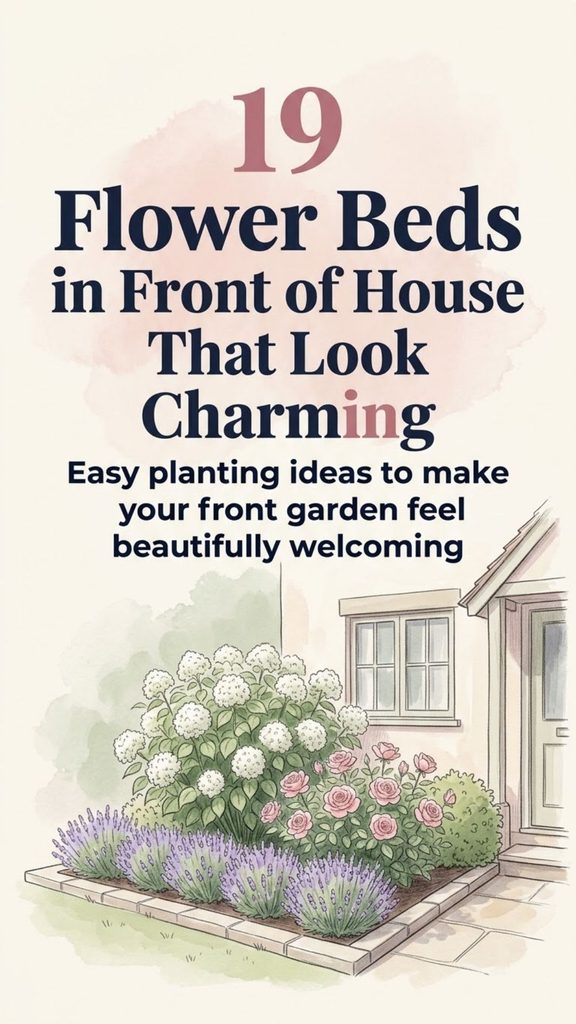
A front flower bed does more than fill the space between the lawn and the house. Good planting can soften hard architectural lines, draw attention toward the entrance, add seasonal color, and make even a simple exterior feel established and welcoming.
The most attractive front gardens are not necessarily the ones with the most plants. They usually succeed because the plants suit the conditions, repeat a few colors and shapes, and have enough room to reach their mature size.
Before choosing anything because it looked beautiful in a photograph, look closely at your own front yard. A bed that receives hot afternoon sun needs a very different planting plan from a north-facing border that stays shaded for much of the day. Soil drainage matters just as much. Matching plants to the site’s light, moisture, soil, and available space is one of the most reliable ways to create a landscape that continues looking good after the first season.
You Might Also Like:
- Loading posts...
Here are 19 front-of-house flower bed ideas that can be adapted to cottages, farmhouses, brick homes, suburban houses, and small entry gardens.
Start With a Simple Front-Bed Plan
Before looking at individual combinations, three design choices make almost any flower bed feel more intentional.
Build in layers
Instead of planting everything at the same height, arrange plants so the bed rises gradually toward the house.
A useful pattern is:
- low edging plants at the front
- medium-height flowering perennials through the middle
- shrubs, tall perennials, or ornamental grasses toward the back
Layering creates depth and also prevents shorter plants from disappearing behind larger ones.
Remember to design for mature size rather than the size of the plants at the garden center. Shrubs placed too close to walls, windows, paths, or one another eventually become a maintenance problem.
Repeat a limited palette
You do not need to avoid color. You simply need repetition.
White with blue, blush with cream, or purple with silver foliage can look more coherent than ten unrelated colors scattered across the bed. If you love a multicolored cottage garden, repeat several plants throughout the border so the eye has something familiar to follow.
Give the bed a clear edge
Stone, brick, metal edging, gravel, or a crisp hand-cut lawn edge separates the flower bed from the surrounding landscape.
This small detail is especially effective with informal planting. Flowers can spill and mingle inside the border while the defined perimeter keeps the overall garden looking cared for.
1. Create a Hydrangea-Led Foundation Border
Large hydrangeas can give the front of a house a soft, established appearance without requiring dozens of different plants.
Use several hydrangeas as the main flowering shrubs, then add a restrained evergreen structure between or behind them. A low-growing edging plant can finish the front of the bed.
This design works especially well where there is enough room for the shrubs to develop naturally rather than being constantly cut back to fit beneath windows.
Do not assume every hydrangea wants the same amount of sunlight. Requirements vary by species and climate, although many appreciate protection from intense afternoon sun and consistently moist but well-drained soil.
A simple combination of green foliage, white flowers, and one darker evergreen is often enough.
2. Frame the Entrance With Climbing Roses
If your front garden has very little ground space, use the vertical surface of the house instead.
A climbing rose can be trained beside an entrance, over an arch, or across wires fixed to a suitable wall or sturdy trellis. Rather than allowing every cane to grow straight upward, tying major stems more horizontally encourages flowering side shoots.
Keep the planting beneath it understated. A small group of low perennials or a clipped evergreen can be more effective than competing with the rose.
The support matters as much as the plant. Install something strong enough for the mature rose before the stems become large and difficult to reposition.
3. Try a Blue-and-White Flower Bed
Blue and white is one of the easiest color combinations to use around a front entrance because it feels bright without becoming visually busy.
You might combine:
- blue or violet salvia
- white flowering annuals
- pale hydrangeas
- green or silver foliage
The vertical salvia spikes provide contrast against rounder flowers, while white blooms help connect the different plant shapes.
Choose the annuals according to the amount of sun the bed actually receives. Traditional bedding impatiens generally perform better in shade, while some newer interspecific types tolerate considerably more sun.
4. Design an All-White Garden Beneath the Windows
An all-white bed can be surprisingly dramatic, particularly against brick, stone, dark siding, or a painted cottage exterior.
Rather than using one type of white flower, combine different shapes and flowering periods. Peonies, daisylike perennials, flowering shrubs, and a white clematis or rose can create layers while maintaining the restrained palette.
Foliage becomes especially important in a monochromatic garden. Mix broad leaves, fine leaves, upright forms, and mounded plants so the bed still has texture after individual flowers fade.
5. Plant a Soft Pink-and-Cream Cottage Border
For a romantic cottage-style entrance, work with a small family of related colors rather than every shade available.
Try a combination of blush roses, pale peonies, creamy flowers, and soft green foliage. Add a fern or another foliage plant where the light conditions allow it.
The goal is not symmetry. Cottage planting often looks better when groups overlap slightly and flowers appear to drift from one section into the next.
What keeps the bed from looking chaotic is repetition. If you plant one pale pink flower on the left, echo that same color somewhere farther along the border.
6. Keep It Simple With Petunias and Salvia
A front flower bed does not have to contain expensive shrubs or a large perennial collection.
For a sunny seasonal display, a broad ribbon of petunias paired with upright salvia can produce a strong effect from only two main plant forms.
Use the petunias as the lower flowering mass and salvia for vertical punctuation. A hedge, evergreen shrub, or even the house wall itself can provide the background.
Seasonal plantings like this are particularly useful if you are still deciding what you eventually want in the bed. Annuals let you test colors and layouts without committing the entire space to permanent plants.
7. Grow Hollyhocks Against a Cottage Wall or Fence
Few flowers create height as quickly and dramatically as hollyhocks.
Instead of putting them at the front of a border, place them toward the back where their tall flower stems can rise above lower plants. A wall, fence, or sturdy neighboring planting also gives them visual support.
Hollyhocks fit naturally with old-fashioned gardens, especially alongside roses, catmint, hardy geraniums, or other relaxed flowering plants.
Depending on the type and conditions, hollyhocks may behave as biennials or short-lived perennials, and some self-seed readily. Rather than counting on every original plant to remain permanently, allow a little space for future seedlings if you want the informal cottage effect.
8. Pair Hydrangeas and Lavender—But Give Them Different Conditions
Large white hydrangeas behind a low row of purple lavender make a beautiful visual pairing: rounded white flower heads above, narrow purple spikes below.
From a design perspective, it is excellent.
From a horticultural perspective, it needs more planning.
Lavender prefers full sun and very free-draining soil and is relatively drought tolerant once established. It performs poorly in persistently wet soil. Hydrangeas generally appreciate more consistent moisture, and many varieties prefer some relief from intense afternoon sun.
If you want this combination, avoid treating the entire bed as though both plants have identical needs. A wide bed with lavender toward the sunnier, drier front edge and hydrangeas farther back can work better than planting the two tightly together in uniformly moist soil.
9. Fill a Front Porch With a Repeating Hydrangea Row
Repetition can be more powerful than variety.
If you have a long porch and sufficient planting depth, consider using one type of hydrangea repeatedly instead of mixing many shrubs.
A continuous row creates large clouds of flowers during bloom while the repeating foliage gives the planting unity.
Before planting, check the mature dimensions carefully. A shrub that looks appropriately small in a nursery pot may eventually block porch openings or windows if planted too close.
Also check how your particular hydrangea flowers before pruning. Different groups bloom on old wood, new wood, or both, so one universal pruning schedule does not fit every hydrangea.
10. Use Raised Planters Where You Cannot Dig
Not every front yard has usable soil. There may be pavement beneath a window, compacted ground, buried utilities, or a rental property where creating a permanent bed is not practical.
Raised planters can solve the problem.
Place one or two substantial containers beneath windows or beside an entrance and treat each as a miniature flower bed. You can combine an upright focal plant, a medium-height filler, and something trailing over the edge.
Large planters are generally easier to manage than tiny pots because they hold more growing medium and do not dry quite as quickly.
Whatever material you choose, drainage holes are essential. Also remember that containers may expose roots to greater temperature swings than the surrounding ground, so permanent shrubs need to be chosen carefully for your climate.
11. Build a Shady Hydrangea and Impatiens Bed
A front garden that receives only morning sun or filtered light can still be full of color.
Hydrangeas can provide the larger structure while shade-tolerant impatiens create a lower flowering carpet beneath them.
This approach is particularly effective because the two layers perform different jobs: the shrubs create height and permanence, while annuals fill gaps and provide color close to the path.
If impatiens downy mildew has been troublesome in your area, look for resistant varieties rather than automatically purchasing the first bedding impatiens you see. Disease-resistant selections are now available.
12. Turn an Empty Corner Into a Feature Bed
The corners of driveways, paths, porches, and lawns often become awkward leftover spaces.
Instead of extending a long border into the corner, turn it into a deliberate focal point.
Start with one strong anchor such as a flowering shrub or compact ornamental tree. Surround it with a mound-forming perennial or annual, then finish the edge with a lower ring of flowers or foliage.
A circular or gently curved edge helps distinguish the feature from the rest of the front yard.
This is also a sensible place to start if you are new to landscaping. A small corner bed is easier and less expensive to redesign than an entire foundation border.
13. Combine Peonies, Salvia, and Strong Foliage
Flowers are temporary. Good foliage is what keeps a perennial bed interesting between bloom periods.
A layered combination of peonies, upright salvia, hostas where shade permits, and other mounded foliage plants can create a front garden that looks full even when nothing is at peak bloom.
The contrast in shape does most of the work:
- large peony foliage
- vertical salvia
- broad hosta leaves
- soft mounding companions
Use this idea as a framework rather than a fixed plant list. If your front yard is too sunny for hostas, replace them with a foliage plant suited to your conditions.
14. Mix Peach Roses With Creamy Flowers
Warm peach and apricot tones look especially attractive against white, beige, weathered brick, and many gray exteriors.
Train a peach-toned climbing rose vertically and repeat the lighter side of its color palette below with cream or white perennials.
Peonies can provide beautiful spring flowers, but remember that the rose and peonies may not reach peak bloom at exactly the same time. Include foliage or another flowering perennial to bridge seasonal gaps instead of designing the whole bed around one photograph-perfect week.
15. Use Pink, Purple, and Silver for a Fuller Border
If you enjoy a bed filled with several species, keeping the palette controlled prevents it from becoming visually messy.
Pink hydrangeas or roses can form the main flowering mass. Purple flowers can weave through the middle, while silver-leaved plants provide a visual pause between brighter colors.
Repeating the silver foliage several times through the border is more effective than placing a single silver plant in one corner.
This is a useful technique for almost any mixed planting: repeat color and texture, not necessarily the exact same arrangement.
16. Frame a Window With a Climbing Rose
Climbing plants do not have to cover an entire facade.
Training a rose around one carefully chosen window can create a strong architectural feature while leaving the rest of the exterior relatively simple.
Install horizontal support wires or another appropriate framework, leaving enough room for maintenance and air circulation. Tie stems to the support rather than forcing them around window hardware or allowing them to grow behind gutters and siding.
Roses trained across walls generally flower better when major stems are guided outward rather than being allowed to grow only vertically.
The surrounding ground-level bed can then be kept simple with low white flowers, catmint, or compact shrubs.
17. Create an Easygoing Annual Cottage Bed
If you want an abundant cottage look without waiting years for shrubs and perennials to mature, use annuals to create much of the first-season impact.
Choose three or four types with compatible growing needs rather than buying a random mixture.
For example, in a sunny bed you might use:
- petunias
- annual salvia
- annual geraniums
- another compact flowering annual suited to your climate
Plant in small groups instead of alternating one plant of each type. Drifts of three, five, or more plants usually look more natural from the street.
You can gradually replace sections with permanent perennials as your garden develops.
18. Make Roses the Entire Theme
A rose bed does not need many companion plants if the roses themselves provide enough variation.
Use several shades within one color family—perhaps soft blush through medium pink—and repeat them along a long border. Add one or two restrained companion colors, such as white or lavender-blue, rather than introducing every possible flower color.
Stone edging works particularly well with an abundant rose border because the hard material contrasts with the loose flowers and provides a clear boundary.
Before buying several roses, compare mature size, disease resistance, flowering habit, and climate suitability. Choosing plants because their photographs look alike is not enough if one remains compact while another quickly outgrows the bed.
19. Combine Evergreens, Perennials, and Seasonal Flowers
One of the most practical front-bed designs is also one of the least dependent on a particular style.
Build the planting in three layers:
Permanent structure: evergreen or deciduous shrubs that look good for much of the year.
Returning flowers: perennials such as peonies, salvia, catmint, or other locally suitable choices.
Seasonal color: annuals added to bare areas when you want additional summer impact.
This keeps the front yard from becoming completely empty outside the main flowering season.
It also lets you change part of the color scheme every year without digging up the entire garden.
A Few Mistakes to Avoid Around the Front of the House
Beautiful flower beds can become frustrating very quickly if practical details are ignored.
One of the biggest mistakes is buying plants first and finding somewhere to put them later. Study the bed before shopping. Note approximately how many hours of direct sun it gets, whether the soil remains wet after rain, how wide the bed is, and where windows, paths, vents, and downspouts are located.
Also avoid packing shrubs against the building simply because a young plant looks small. Landscape plants should be chosen with their mature height and width in mind.
Be particularly careful with moisture near the house. Your flower bed should not interfere with proper drainage around the building, and irrigation should be directed toward plant roots rather than constantly wetting walls.
Finally, do not force two plants together just because their flowers look beautiful in the same photograph. Lavender and moisture-loving plants are a good example. A successful planting combination needs compatible growing conditions as well as compatible colors.
Let the Garden Become Better Over Time
You do not need to install all 19 ideas—or even complete one entire border—in a weekend.
A well-designed front garden often looks better when it develops gradually. Start with the permanent structure: perhaps two shrubs, one climbing plant, or a small group of perennials. Give them the space they will eventually need. Then use annuals to fill the temporary gaps while the permanent planting matures.
Watch where the sun falls throughout the season. Notice which sections stay moist and which dry quickly. See which colors look best against the exterior of your house.
Then adjust.
The charming front flower beds that look effortless are usually built on a few simple principles: the right plant in the right location, repetition instead of clutter, enough room for plants to mature, and a structure that still makes sense after the first flush of flowers has faded.
Start with those fundamentals, and even a small patch beside the front door can become one of the most inviting parts of your home.