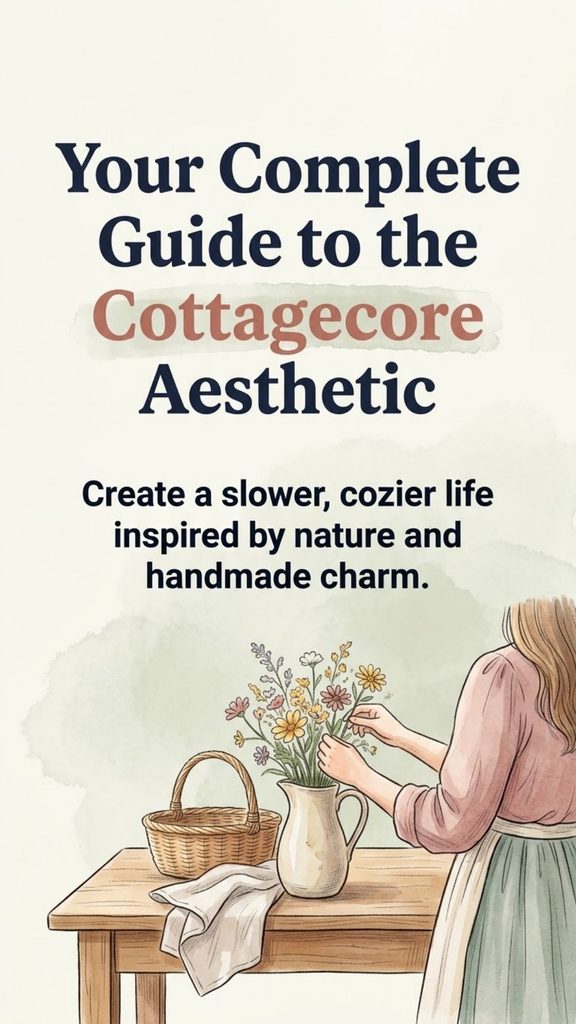
Cottagecore is easy to recognize in photographs: wildflowers in old pitchers, linen curtains moving beside an open window, handmade bread cooling on a wooden table, floral dresses, baskets, books, gardens, and rooms filled with well-loved objects. But the appeal of cottagecore goes deeper than creating a pretty country-inspired home.
At its best, cottagecore is about making everyday life feel calmer, more tactile, and more connected to the natural world. It encourages activities that modern routines can easily push aside—cooking from scratch, tending plants, repairing belongings, making things by hand, spending time outdoors, and enjoying a home that develops character rather than constantly chasing new trends.
You do not need a countryside cottage, a large garden, or an entirely vintage wardrobe to enjoy it. Cottagecore can work in an apartment, a suburban home, or a busy city. The most convincing version is usually not the most elaborate one. It is the one built around habits and surroundings that genuinely make daily life feel more comfortable and meaningful.
You Might Also Like:
- Loading posts...
What Is Cottagecore?
Cottagecore is an aesthetic and lifestyle idea inspired by an idealized version of rural domestic life. Common themes include nature, traditional crafts, gardening, home cooking, vintage interiors, practical clothing, and slower household routines.
Visually, it tends to favor softness over sleekness and character over perfection. You might see:
- floral fabrics
- weathered or natural wood
- handmade pottery
- woven baskets
- vintage furniture
- dried or fresh flowers
- books and botanical prints
- linen and cotton textiles
- knitted clothing
- garden-inspired colors
The lifestyle side is just as important. Baking bread, mending a shirt, arranging garden flowers, visiting a farmers’ market, growing herbs on a windowsill, or spending an afternoon reading outdoors can all fit naturally into cottagecore.
That does not mean recreating the hardships of historical rural life. Cottagecore is better understood as borrowing useful and beautiful elements from traditional domestic life while keeping the conveniences that make modern life safer and easier.
Cottagecore Is More Than Decorating
It is possible to create a cottagecore-looking room simply by buying floral cushions, antique-style lamps, and wicker baskets. That can be fun, but buying a collection of themed objects misses part of what makes the aesthetic appealing.
A more thoughtful cottagecore home develops gradually.
You might keep a solid wooden table instead of replacing it because of a few scratches. You could display inherited dishes rather than purchasing matching decorative sets. A basket might hold sewing supplies because you actually sew. Herbs could grow near the kitchen because you cook with them.
These details make a home feel lived in rather than staged.
Cottagecore also works particularly well with secondhand shopping, repairing, repurposing, and keeping useful objects for longer. You do not need to transform your entire home at once.
How to Create a Cottagecore Home
A cottagecore room should feel comfortable first and decorative second. Start with materials, lighting, texture, and useful objects before worrying about small accessories.
Choose Natural Materials
Wood, cotton, linen, wool, stone, ceramic, rattan, and wicker naturally suit cottage-inspired interiors because they introduce texture without making a room feel overly polished.
Easy additions include:
- linen or cotton curtains
- wooden cutting boards
- woven storage baskets
- ceramic mugs and bowls
- cotton tablecloths
- wool throws
- wooden shelves or furniture
There is no need for every material to be natural. Modern homes contain plenty of practical materials, and replacing functional belongings simply to achieve an aesthetic creates unnecessary expense.
Use natural textures where they make sense.
Bring in Florals Carefully
Floral patterns are one of the strongest cottagecore elements, but they are most effective when they do not overwhelm the room.
Try introducing flowers through one or two features:
- a floral cushion
- curtains
- bedding
- wallpaper on a small wall
- embroidered fabric
- vintage botanical artwork
Small-scale prints often create a traditional feel, while larger florals can make a stronger decorative statement.
You can also bring flowers into a room without patterns at all. A small vase of garden flowers or seasonal branches can provide the same connection to nature.
Mix Old and New Instead of Making Everything Vintage
A cottagecore home does not need to resemble a museum.
Modern appliances, comfortable mattresses, efficient lighting, and contemporary storage can live comfortably beside antique furniture and vintage accessories.
The trick is avoiding a showroom appearance.
Older pieces are particularly effective when they have a purpose. Consider searching secondhand shops, flea markets, family storage, or local marketplaces for things such as:
- wooden side tables
- ceramic serving dishes
- framed landscapes
- old mirrors
- baskets
- candlesticks
- quilts
- embroidered linens
- hardcover books
Inspect secondhand items carefully for damage, odors, pests, unsafe wiring, or deteriorated finishes before bringing them into your home.
Use a Soft, Nature-Inspired Color Palette
Cottagecore does not have one official color scheme, but shades found outdoors usually work well.
Think of:
- cream
- warm white
- moss and sage green
- muted blue
- dusty rose
- faded yellow
- clay and terracotta
- warm brown
These colors do not all need to appear in one room. A restrained palette usually feels calmer.
For example, a cream room with wooden furniture, sage textiles, and small touches of faded floral print can feel distinctly cottagecore without becoming overly themed.
Make Lighting Warm and Layered
Lighting changes the feeling of a room more than many decorative accessories.
Instead of depending entirely on a bright ceiling light, use several smaller sources where practical:
- table lamps
- floor lamps
- bedside lamps
- candles
- string lights used sparingly
Warm, indirect light creates the intimate atmosphere associated with cottage interiors.
Candles can contribute beautifully, but they should never be left unattended or placed near curtains, dried flowers, books, or other flammable materials. Flameless candles can provide a similar effect in areas where an open flame would be impractical.
Bring Plants and Seasonal Nature Indoors
Cottagecore interiors often blur the boundary between home and garden.
Houseplants are one way to achieve this, but choose plants according to the actual light and conditions in your home rather than simply buying varieties that look attractive online.
Other natural decorations require almost no maintenance:
- branches in a vase
- pinecones
- autumn leaves
- dried seed heads
- cut herbs
- seasonal flowers
Rotating natural displays through the year can also prevent your home from feeling visually static.
Keep the Home Functional
Clutter can easily disguise itself as cottagecore.
Shelves covered with dozens of jars, books, baskets, plates, candles, and ornaments may photograph beautifully but become frustrating to clean and use.
A better principle is to keep useful things visible and decorative things intentional.
A row of frequently used pottery mugs can be both practical and attractive. Ten purely decorative mugs taking up valuable kitchen space probably are not.
Cottagecore should make domestic life more pleasant rather than more difficult.
How to Dress in Cottagecore Style
Cottagecore fashion tends to be soft, practical, slightly romantic, and influenced by traditional clothing.
You do not need to wear long floral dresses every day to participate in the style. The wardrobe can be adapted easily to ordinary life.
Start With Comfortable Shapes
Common cottagecore silhouettes include:
- loose dresses
- midi skirts
- simple blouses
- knitted cardigans
- relaxed trousers
- overalls
- roomy sweaters
Comfort matters because the lifestyle imagery behind cottagecore often involves walking, gardening, cooking, crafting, or simply spending time outdoors.
Clothing that looks rustic but cannot survive normal daily life quickly becomes costume rather than wardrobe.
Choose Natural-Looking Textures
Cotton, linen, wool, corduroy, denim, crochet, and knitted fabrics fit especially well.
Look for details such as:
- embroidery
- small floral prints
- lace trim
- simple checks
- gathered sleeves
- textured knits
- wooden or understated buttons
You do not need all of these elements at once. One or two usually create enough character.
Keep the Colors Soft
Earthy and muted colors are easy to combine and tend to suit the aesthetic:
cream, olive, brown, rust, mustard, muted blue, dusty pink, burgundy, and soft green.
Neutral basics also make a cottage-inspired wardrobe easier to wear beyond a single season.
Choose Accessories That Are Useful
Practical accessories often look more natural than decorative ones added only to complete an outfit.
Try:
- woven bags
- leather or simple fabric bags
- scarves
- understated jewelry
- comfortable flats
- sturdy boots
- warm socks
- simple hair ribbons
Buying secondhand can be particularly useful for cottagecore clothing because older garments often feature the textures, cuts, and details associated with the style.
Before buying anything, ask whether it will work with several pieces you already own. Cottagecore does not require constant shopping.
How to Live a Cottagecore Lifestyle
The lifestyle side is where cottagecore becomes more personal.
You can enjoy the aesthetic without changing your routine, but some of the most satisfying elements come from doing rather than decorating.
Spend More Time Outside
You do not need access to a forest or farm.
Walk through a neighborhood park. Eat lunch outside. Visit a public garden. Take a book to a quiet green space. Grow herbs on a balcony.
Regular contact with nature can be built from small habits.
Instead of treating outdoor time as a special event, make it part of ordinary life whenever possible.
Cook More Things From Basic Ingredients
Homemade food is strongly associated with cottagecore because cooking turns an everyday necessity into a practical creative skill.
That might mean learning to make:
- soup
- bread
- biscuits
- muffins
- simple cakes
- preserves
- seasonal vegetable dishes
There is no requirement to make everything from scratch.
A cottage-inspired kitchen can still use frozen vegetables, canned beans, modern appliances, and convenient ingredients. The goal is not to make domestic work unnecessarily difficult. It is to enjoy making things when the process itself adds value.
Learn One Traditional Skill
Trying to master several crafts at once usually leads to abandoned supplies.
Choose one skill that genuinely interests you.
Possibilities include:
- sewing
- embroidery
- knitting
- crochet
- gardening
- bread making
- preserving food safely
- flower arranging
- basic furniture restoration
Give yourself enough time to become reasonably comfortable before moving on to another craft.
Practical skills make the cottagecore lifestyle more satisfying because the objects around you begin to reflect things you have actually made, repaired, or cared for.
Grow Something
A productive vegetable garden is wonderful, but it is not a requirement.
Start with what your space allows.
A windowsill might hold basil, parsley, or another herb suited to the available light. A balcony might support containers. A small garden could include flowers, herbs, vegetables, or fruit.
Growing even one plant teaches the seasonal rhythm that cottagecore often celebrates.
It also introduces an important reality missing from idealized photographs: gardening involves insects, weather, failed plants, pruning, watering, and patience.
That imperfection is part of the experience.
Shop Locally and Secondhand When It Makes Sense
Farmers’ markets, antique shops, charity shops, craft fairs, flea markets, and local makers can all fit naturally into cottagecore living.
But supporting local businesses should not become another expensive rule.
Buy what you genuinely need or love. Sometimes the most sustainable decision is simply to continue using something you already own.
Create Technology-Free Pockets of Time
Cottagecore is often associated with stepping away from constant digital stimulation.
You do not need to abandon technology. It is far more practical to create small periods when it is not the center of your attention.
You might:
- leave your phone indoors while gardening
- read before bed instead of scrolling
- cook without watching a screen
- take a walk without headphones occasionally
- spend an hour crafting
- eat meals without devices
The point is not rejecting modern life. It is making space for slower activities that require attention.
Cottagecore on a Budget
One of the easiest mistakes is believing you must purchase an entirely new collection of cottagecore belongings.
You probably already own useful pieces.
Before shopping, look around your home for:
- plain glass jars
- wooden furniture
- baskets
- old books
- neutral blankets
- ceramic dishes
- cotton linens
- inherited items
- unused picture frames
Rearranging what you have can change a room considerably.
If you do shop, secondhand stores can be useful because cottagecore works especially well with objects that are mismatched and slightly worn.
A room assembled slowly usually has more personality than one purchased all at once.
Common Cottagecore Mistakes
The aesthetic is flexible, but several habits can make it feel forced.
Buying Too Much Decor
A home filled with decorative clutter is harder to maintain. Leave enough empty space for rooms to function comfortably.
Trying to Make Everything Look Old
A few vintage pieces create contrast. If every object is distressed, floral, antique-looking, or rustic, the effect can become theatrical.
Ignoring Practicality
A beautiful chair that hurts to sit on, delicate clothes that cannot be washed easily, or dozens of open shelves that constantly collect dust may not improve everyday life.
Copying Images Instead of Building Your Own Style
Cottagecore looks different for everyone. One home may lean toward English country style, another toward rustic farmhouse, gardening, handmade crafts, or romantic vintage interiors.
Keep the pieces that genuinely appeal to you.
Make Cottagecore Part of Real Life
The most appealing cottagecore spaces are not perfect. They contain things being used: a half-read book, herbs drying in the kitchen, a cardigan thrown over a chair, muddy gardening shoes by the door, bread waiting to cool.
That is what separates cottagecore as a lifestyle from cottagecore as decoration.
Start small. Grow an herb. Learn to mend something. Replace harsh evening lighting with a table lamp. Visit a local market. Bake a familiar recipe. Bring flowers indoors. Spend an afternoon reading outside.
Over time, those choices can create something more satisfying than a perfectly styled cottagecore room: a home and routine that feel comfortable, useful, creative, and genuinely your own.