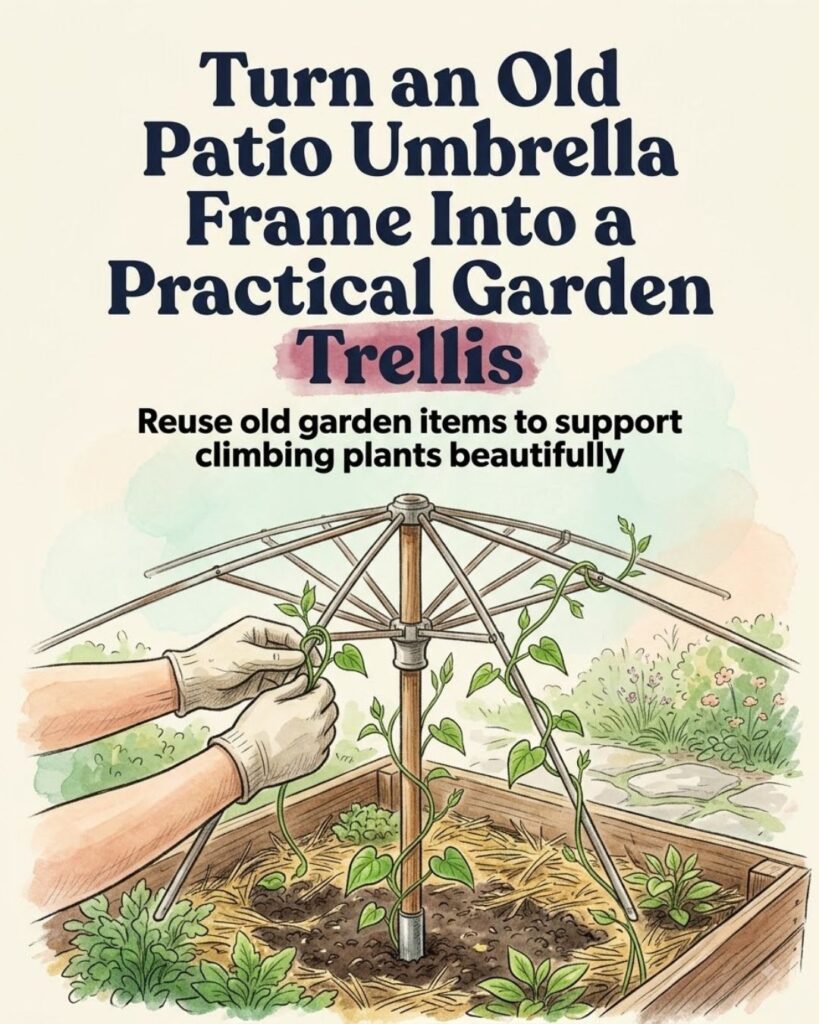
An old patio umbrella can look like pure trash once the fabric rips, fades, or tears away from the ribs. The frame, however, may still have plenty of life left in it. With the canopy removed, many umbrella frames already have the basic shape of a garden support: a strong central pole with metal ribs spreading outward in a cone or dome.
That makes an old umbrella frame surprisingly useful for climbing vegetables and flowering vines. Instead of buying a new trellis, you can reuse something you already have and turn it into a vertical growing structure for cucumbers, pole beans, peas, or lightweight ornamental vines.
The project is simple, but there are a few important details that determine whether it works well. Stability matters most. An umbrella frame has a large shape that can catch wind, especially after vines cover it, so the pole must be anchored securely. Plant spacing also matters, because too many vines can create a dense tangle with poor airflow.
You Might Also Like:
- Loading posts...
Used thoughtfully, an old umbrella frame can become an inexpensive and attractive feature in a raised bed or garden plot.
Why an Umbrella Frame Works So Well as a Trellis
Climbing plants naturally look for something to grab as they grow. Some use tendrils, while others twine their stems around supports. Without a trellis, many of these plants spread across the ground, where leaves and fruit can become harder to see, harvest, and manage.
An umbrella frame provides several useful features automatically.
The central pole gives the structure height and support. The ribs create multiple climbing paths, allowing vines to spread outward instead of piling onto one narrow stake. The sloping shape also gives the plant room to climb gradually toward the top.
Vertical growing can be especially useful in smaller gardens because it keeps more of the plant above ground rather than allowing long vines to occupy valuable bed space.
A reused umbrella frame also costs little or nothing if you already have one waiting to be discarded.
What You Need
You do not need many materials for this project. Most of the work is already done by the umbrella frame itself.
You will need:
- An old patio umbrella frame
- A raised bed, large container, or garden area
- Garden twine, soft plant ties, or garden clips
- Mulch such as straw, shredded leaves, or another suitable material
- Climbing plants
- Optional stakes, brackets, or anchors for extra stability
Before using the frame, inspect it carefully. Rust on the surface is not necessarily a problem, but severely weakened, cracked, bent, or sharp metal can make the structure unsafe or unreliable.
If the mechanism still opens and closes, you can usually leave the frame in its fully opened position. If it no longer moves, that may not matter as long as the ribs are positioned securely.
1. Remove All of the Old Umbrella Fabric
Start by taking off the damaged canopy.
Cut away the fabric carefully, making sure you remove loose cords, plastic clips, staples, or pieces of material that could later catch on plants.
Wear gloves if the frame is rusty or has sharp edges.
Once the fabric is gone, inspect the ribs more closely. Any exposed wire ends or jagged metal should be bent inward, covered, or removed so they do not damage plants or scratch your hands during harvesting.
This is also a good time to wash off loose dirt and debris if the umbrella has been stored outside for a long period.
2. Make Sure the Frame Is Structurally Sound
A garden trellis does not need to look perfect, but it does need to remain upright.
Check the main pole first. It should not be badly cracked, deeply rusted through, or loose at the connection points.
Next, examine the ribs. Slight bends may be harmless, but badly damaged ribs can collapse under the weight of mature vines.
Keep in mind that plants become much heavier than they look. A cucumber or bean plant covered with foliage, fruit, and rainwater can put considerable stress on a lightweight frame.
If several ribs are loose or broken, the umbrella may no longer be worth using as a trellis.
3. Choose the Right Garden Location
Place the frame according to the needs of the plants you intend to grow.
Cucumbers, pole beans, and many other fruiting vegetables generally perform best with plenty of direct sunlight, although specific requirements vary by crop and climate.
Also consider the shadow created by the trellis.
A tall umbrella frame covered with vines can shade nearby plants, particularly later in the season. Position it where that shade will not interfere with sun-loving crops.
In a raised bed, the trellis often works best toward the side that minimizes unwanted shading for the rest of the bed.
Leave enough room around the structure to walk, water, inspect leaves, and harvest produce.
4. Anchor the Central Pole Securely
This is the most important part of the project.
Do not simply place the umbrella pole a few inches into loose soil and assume the vines will hold it in place.
Push the pole deeply into the soil if the design allows it, or secure it using a sturdy ground anchor, stake, bracket, or other support.
Raised beds may require extra reinforcement because the soil is often loose and the bed itself may not be deep enough to stabilize a long pole.
Wind becomes a bigger concern as plants climb the frame. Dense foliage can act almost like a sail, catching gusts that would have passed easily through the bare metal ribs.
Check the frame periodically during the growing season. If it begins leaning, reinforce it before the plants become large and difficult to move.
5. Plant Around the Base
Once the frame is secure, plant your climbers around the outside of the structure.
Avoid crowding every rib with a plant simply because the space is available. Proper spacing depends on the crop variety and growing conditions, so follow the recommendations on the seed packet or plant label.
Good airflow is important in vegetable gardens. A thick mass of overlapping leaves can remain damp longer after rain or watering and may make it more difficult to notice insects, damaged leaves, or developing fruit.
Distribute plants evenly around the structure so they have separate routes upward.
Good Plants for an Umbrella Trellis
Several climbing vegetables can work well on this type of frame.
Cucumbers
Vining cucumber varieties are natural candidates because their tendrils readily grab supports.
Growing cucumbers upward can also make fruit easier to spot and harvest.
Not every cucumber is a vigorous climber, however. Bush varieties stay more compact and may gain less from a tall trellis.
Pole Beans
Pole beans are excellent vertical growers and can quickly cover a tall structure.
Unlike bush beans, pole varieties are bred to climb and generally need substantial support throughout the season.
Their twining stems often need little encouragement once they find the ribs.
Peas
Peas climb with tendrils and can use the smaller sections of an umbrella frame effectively.
Because peas are commonly grown during cooler parts of the growing season, they may finish before warm-season vines take over the garden, depending on your climate.
Lightweight Flowering Vines
Annual flowering vines can turn the umbrella into a decorative garden feature.
Choose plants appropriate for your local conditions, and avoid using aggressive or invasive species that may spread beyond where you want them.
6. Add Mulch Around the Plants
Once your seedlings are established, mulch can help reduce evaporation from the soil and limit weed growth.
Straw is one option, but other suitable garden mulches can work just as well.
Keep thick mulch slightly away from the stems of young plants rather than piling it directly against them.
Mulch will not eliminate the need for watering, but it can help the soil stay more evenly moist during warm weather.
How often you need to water depends on temperature, rainfall, soil type, plant size, and whether the bed is raised or in the ground.
7. Guide Young Vines Onto the Ribs
Some climbing plants immediately find the umbrella ribs. Others wander across the soil until you point them in the right direction.
Guide young stems gently toward the nearest rib.
Soft garden twine, reusable plant ties, or clips can hold a vine loosely in place until it begins climbing on its own.
Never tie the stem tightly. As plants grow, stems expand, and a tight string can cut into the plant.
Check the ties occasionally and loosen or remove them when they are no longer necessary.
You can also run additional twine between the umbrella ribs if the gaps are too wide for young tendrils to reach.
Avoid Overloading the Frame
It can be tempting to cover every inch of the structure, but more vines are not always better.
A lightweight patio umbrella frame may not be designed to support the combined weight of dozens of mature plants and their produce.
Large squash, pumpkins, melons, and other heavy-fruiting vines deserve particular caution. The vine itself may climb, but large fruit hanging from a lightweight rib can bend or break the metal.
A stronger purpose-built trellis is usually more appropriate for very heavy crops.
If you grow cucumbers or other moderate-weight fruiting vines, keep an eye on both the plants and the frame as the season progresses.
Watch for Heat and Sharp Metal
Metal trellises can become warm in direct summer sun, although healthy climbing plants generally use metal supports successfully.
The more immediate concern is damaged metal.
After years outdoors, umbrella ribs can develop rough edges, broken joints, or protruding wires. Inspect these before planting and again during the season.
You do not want a sharp edge cutting through a vine that has taken weeks to grow.
What to Do at the End of the Season
Once the plants finish producing, remove dead vines rather than leaving a thick mass wrapped around the frame indefinitely.
This makes it easier to inspect the metal for damage before the next growing season.
Cut vines away carefully instead of yanking them from the ribs. Pulling aggressively can bend thinner metal pieces.
If the umbrella frame is still solid, it can remain in the garden or be stored somewhere dry.
A movable trellis also makes crop planning more flexible. You can place it in a different bed the following year if that suits your garden layout.
A Simple Way to Reuse Something You Already Own
Not every old household object deserves to be saved, but an intact patio umbrella frame has a shape gardeners normally pay money to recreate.
Remove the ruined canopy, inspect the metal, anchor the pole securely, and give climbing plants several clear paths upward. Add mulch around the base and help young vines find the ribs until they begin climbing on their own.
The most important rule is stability. A bare frame may feel secure on a calm day, but mature vines add both weight and wind resistance. A strong anchor turns the project from a clever idea into a practical garden structure.
Instead of sending an old umbrella frame straight to the trash, it may be worth looking at those metal ribs one more time. They could be exactly what your cucumbers, beans, peas, or flowering vines need.