
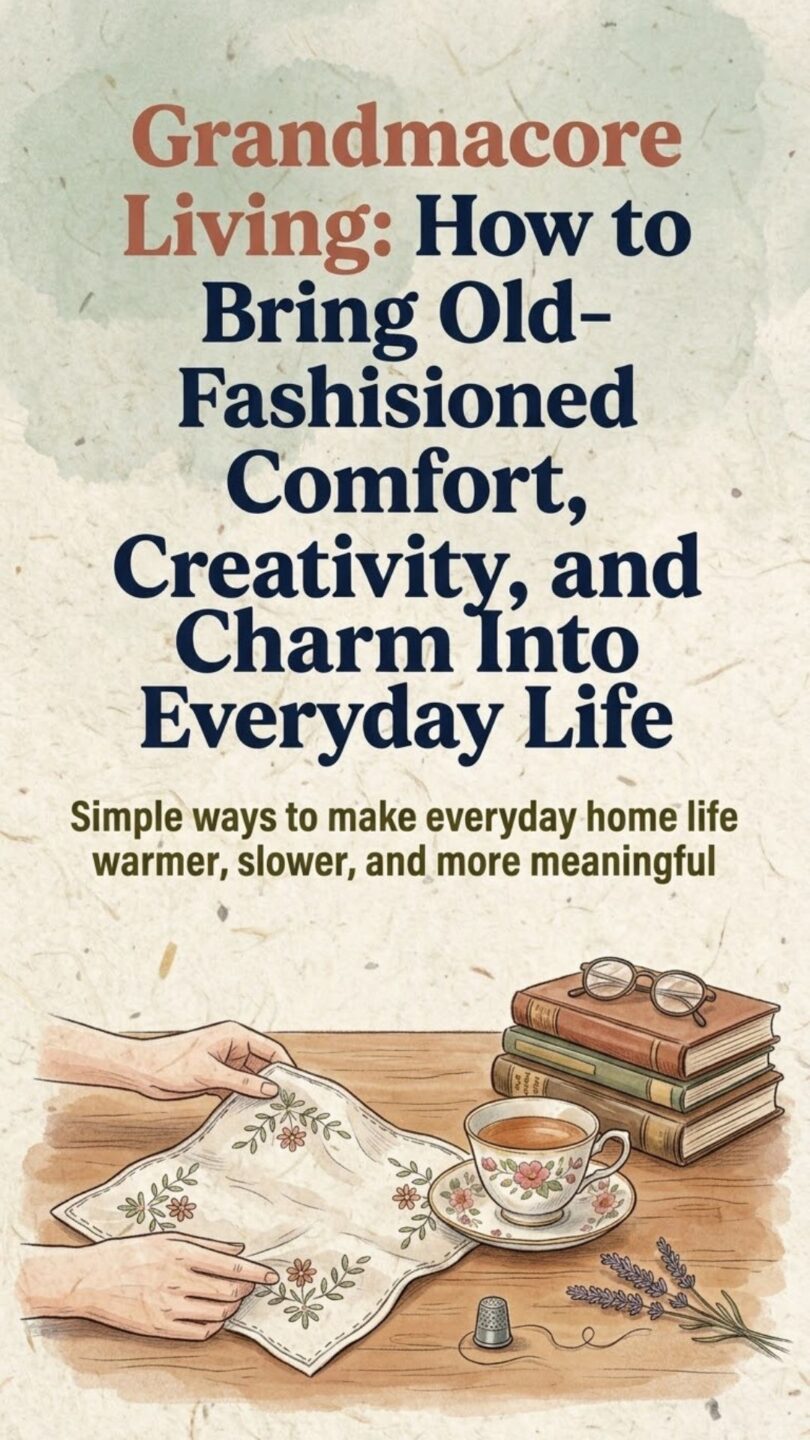
Grandmacore is less about recreating a grandmother’s house exactly and more about recovering the qualities that made many traditional homes feel welcoming: useful objects kept for years, handmade touches, comforting food, familiar routines, shelves filled with books, and rooms designed for living rather than impressing.
The aesthetic draws inspiration from older domestic styles and traditional hobbies such as baking, sewing, gardening, knitting, collecting, and preserving food. Visually, it favors floral patterns, wooden furniture, vintage crockery, embroidered linens, quilts, baskets, old books, and pieces that look as though they have acquired a story over time.
Yet the most appealing part of grandmacore may have little to do with decoration. At its heart, it offers permission to value ordinary pleasures again—to mend something instead of replacing it, bake for the pleasure of sharing, sit with a book in the afternoon, grow herbs on a windowsill, or make a home feel comfortable without worrying whether everything matches.
You Might Also Like:
- Loading posts...
What Grandmacore Really Means
Grandmacore is a modern name for an aesthetic inspired by things commonly associated with older generations, especially traditional homemaking and leisure activities.
There is no official rulebook. One grandmacore home might feature floral wallpaper and antique furniture, while another may simply have thrifted dishes, a handmade blanket, houseplants, and a well-used recipe box.
The lifestyle side is equally flexible. It can include:
- Baking from scratch
- Knitting or crocheting
- Sewing and mending
- Gardening
- Embroidery
- Quilting
- Reading
- Collecting vintage objects
- Making jams or preserves
- Hosting simple meals or afternoon tea
- Caring for possessions so they remain useful longer
The common thread is appreciation for things that feel personal, practical, familiar, and unhurried.
Grandmacore should not be confused with trying to reject modern life altogether. You can enjoy contemporary technology, appliances, and conveniences while still choosing a slower or more traditional approach to certain parts of your day.
Creating a Grandmacore Home Without Making It Look Like a Theme
A convincing grandmacore interior usually feels collected rather than purchased as a matching set.
That distinction matters.
Buying twenty newly manufactured “vintage-style” decorations at once can make a room feel staged. A more natural approach is to build the atmosphere gradually with objects you actually enjoy using.
Start with comfort. A home inspired by this style should invite people to sit down.
A deep armchair, a worn wooden table, a soft blanket, or a reading lamp may contribute more to the feeling than an entire shelf of decorative accessories.
Mix Old, New, Handmade, and Inherited Pieces
Your furniture does not need to be genuinely antique. A practical combination often works best.
Try pairing:
- A modern sofa with vintage cushions
- A secondhand sideboard with contemporary lighting
- An inherited china plate with everyday dishes
- A handmade quilt with simple modern bedding
- An old wooden table with newer chairs
The goal is not historical accuracy. It is creating a room that feels layered and lived in.
Thrift stores, flea markets, estate sales, family cupboards, and secondhand marketplaces can be useful places to find older items, but inspect used furniture, fabrics, and kitchenware carefully before bringing them home.
Use Pattern Without Making the Room Overwhelming
Florals are closely associated with grandmacore, but they are not the only option.
Gingham, checks, stripes, small botanical prints, lace, and embroidered fabrics can all work. Instead of covering every surface in pattern, use them in layers.
A dining area might have a gingham tablecloth, plain wooden chairs, a floral arrangement, and mismatched plates. A bedroom could combine a small floral quilt with striped pillowcases and neutral walls.
Limiting the number of strong patterns in a single area helps prevent the room from becoming visually chaotic.
Soft cream, faded green, dusty blue, warm brown, muted pink, mustard, and other gently aged-looking colors often suit this style, but there is no required grandmacore palette.
Display Useful Things Instead of Hiding Everything Away
Grandmacore interiors tend to celebrate everyday objects.
Books can remain visible on shelves. Wooden spoons may sit in a crock by the stove. Yarn can be stored in woven baskets. Teacups can be displayed on open shelving. Quilts might be folded over a chair instead of packed away.
This creates warmth because the room reveals how it is actually used.
There is still value in organization, however. “Cozy” and “cluttered” are not the same thing.
A basket filled with current knitting supplies looks intentional. Six overflowing baskets of forgotten materials may simply create stress. Keep the items that are useful, beautiful, meaningful, or genuinely enjoyable to you.
Bring Handmade Details Into Everyday Rooms
Handmade objects are especially suited to grandmacore because they naturally carry individuality.
You might introduce:
- Embroidered tea towels
- Crocheted blankets
- Knitted cushion covers
- Quilts
- Cloth napkins
- Handmade aprons
- Sewn curtains
- Pot holders
- Dried flower arrangements
- Framed needlework
You do not need to make everything yourself. Handmade pieces from relatives, local makers, thrift stores, or vintage markets can create the same sense of character.
And imperfections are often part of the appeal. A handmade object does not need the uniform finish of a factory-made product to be useful or beautiful.
Grandmacore Hobbies Worth Rediscovering
Grandmacore becomes much more interesting when it moves beyond decoration.
Traditional hobbies can produce useful skills as well as beautiful objects, and many can be adapted easily to modern schedules.
Knitting and Crochet
Knitting and crochet can be used to make scarves, hats, blankets, dishcloths, sweaters, bags, and decorative pieces.
Beginners do not need to start with a complicated cardigan. A simple scarf, square dishcloth, or basic granny square is usually a more manageable first project.
The practical advantage of fiber crafts is that projects can often be completed gradually during quiet periods rather than requiring an entire uninterrupted afternoon.
Sewing and Mending
Basic sewing is one of the most useful old-fashioned skills to learn.
Being able to replace a button, repair a small seam, shorten a hem, or patch a torn garment can extend the useful life of clothing.
Once those skills become comfortable, you can move into projects such as aprons, pillow covers, tote bags, skirts, or simple garments.
Grandmacore does not require making an entire handmade wardrobe. Knowing how to repair what you already own fits the philosophy just as well.
Embroidery and Quilting
Embroidery transforms basic fabric with decorative stitching. Small projects such as napkins, handkerchiefs, tea towels, or cushion covers can be approachable starting points.
Quilting usually requires more planning because it involves joining fabric pieces and constructing several layers. It can nevertheless be an enjoyable way to use fabric scraps or turn meaningful textiles into something functional.
Baking
Few activities capture old-fashioned domestic comfort as effectively as baking.
Simple cakes, pies, biscuits, breads, fruit crumbles, muffins, and cookies fit naturally into a grandmacore kitchen.
You do not need an antique recipe collection. Family recipes can be wonderful when available, but established modern recipes work perfectly well too.
If you do inherit handwritten recipes, remember that older instructions sometimes assume techniques, ingredient sizes, or oven behavior that are different from modern standards. Read them carefully before preparing them.
Gardening
Gardening connects beautifully with the slower, practical side of grandmacore.
A large cottage garden is unnecessary. A few pots of herbs, strawberries, flowers, or salad greens on a balcony can provide the same satisfaction.
For an old-fashioned appearance, consider plants commonly associated with traditional cottage gardens, such as roses, lavender, daisies, foxgloves, sweet peas, or herbs. Choose plants according to your local climate, light conditions, available space, and safety needs rather than appearance alone.
Preserving Seasonal Food
Jam, jelly, chutney, pickles, and other preserved foods are frequently associated with traditional homemaking.
This is one area where nostalgia should never replace modern safety practices.
Some preservation methods require carefully tested recipes, correct acidity, proper processing times, and suitable equipment to prevent dangerous microbial growth. If you want to learn home canning, use current instructions from reputable food-safety authorities rather than relying entirely on an old family recipe.
Freezing and refrigerator preserves can be easier alternatives for beginners, depending on the food.
Collecting With Purpose
Collections are another classic element of grandmacore style.
Teacups, botanical prints, postcards, old cookbooks, ceramic plates, tins, sewing notions, vintage linens, and books can all become decorative features.
The trick is choosing a category you genuinely enjoy instead of collecting simply because it fits an aesthetic.
A small collection displayed thoughtfully usually has more impact than filling every surface.
Plate collections can be arranged on a wall. Teacups can live in a glass-front cabinet. Vintage cookbooks can occupy one kitchen shelf. Postcards can be framed instead of stored indefinitely in drawers.
Give collections a home so that they remain pleasurable rather than becoming another form of clutter.
Dressing in a Grandmacore Style
Grandmacore clothing favors comfort, modest nostalgia, texture, and pieces associated with classic everyday dressing.
Common choices include:
- Floral or printed dresses
- Midi and long skirts
- Knitted cardigans
- Pullovers
- High-waisted trousers
- Cotton blouses
- Simple T-shirts
- Quilted jackets
- Denim jackets
- Loafers
- Simple sneakers
- Silk or patterned scarves
- Straw hats
- Wool hats
- Structured handbags
- Basket-style bags
- Simple pearl or understated metal jewelry
Natural fibers such as cotton, linen, silk, and wool are often associated with this look, although they are not automatically more durable or easier to care for than every synthetic fabric. Durability depends heavily on fiber quality, construction, use, and maintenance.
There is also no reason to replace an existing wardrobe simply to adopt the aesthetic.
Start with what you own. A cardigan over a plain dress, a scarf tied around a handbag, or a vintage brooch on a simple blouse can suggest the style without requiring an entirely new closet.
Secondhand shopping can be particularly useful because older silhouettes, knitwear, leather accessories, and unusual prints are often easier to find there.
Small Rituals Matter More Than Buying More Things
One of the easiest mistakes with any aesthetic trend is turning it into another shopping project.
Grandmacore is more convincing—and arguably more rewarding—when it changes what you do rather than merely what you buy.
Try creating small rituals.
Make tea in a proper pot instead of rushing through it.
Sit at the table for breakfast occasionally.
Write recipes you want to keep in a notebook.
Borrow a library book and spend an evening reading.
Put fresh or garden flowers in a simple jar.
Mend a loose button instead of leaving the garment unworn.
Bake something to share with a neighbor.
Call a relative instead of only sending a quick message.
Turn off background entertainment while you work on a craft.
None of these activities requires a perfectly decorated home.
They simply bring greater intention to familiar parts of the day.
Books That Fit the Grandmacore Mood
Classic fiction can complement the aesthetic because many older novels devote considerable attention to family life, domestic routines, gardens, friendships, community, and seasonal change.
Three especially fitting choices are:
Little Women by Louisa May Alcott follows the four March sisters as they grow through family challenges, relationships, ambitions, and changing circumstances.
Anne of Green Gables by L. M. Montgomery centers on imaginative Anne Shirley and her life after arriving at Green Gables on Prince Edward Island.
The Secret Garden by Frances Hodgson Burnett follows Mary Lennox and the transformation surrounding a neglected garden, friendship, and renewed engagement with life.
These books are not “grandmacore books” in a formal literary sense. They simply contain settings and themes that many readers associate with the aesthetic.
Grandmacore vs. Cottagecore
Grandmacore and cottagecore overlap considerably, which is why the terms are sometimes used almost interchangeably.
Both may feature gardening, baking, handicrafts, floral fabrics, old furniture, handmade items, nature, and a slower approach to everyday life.
The difference is mainly one of emphasis.
Grandmacore tends to draw more directly from grandparents’ homes, traditional domestic skills, heirlooms, vintage collections, practical crafts, and familiar household rituals.
Cottagecore typically centers more strongly on an idealized rural or cottage life, with imagery involving gardens, fields, country kitchens, wildflowers, handmade food, and closeness to nature.
Cottagecore does not necessarily require living sustainably or becoming self-sufficient, just as grandmacore does not require owning antiques or following every traditional homemaking practice.
Think of them as overlapping aesthetics rather than rigid lifestyle categories.
How to Start Grandmacore Living Simply
You do not need to redesign your house in a weekend.
Choose one or two changes that would genuinely improve daily life.
You could create a comfortable reading corner with a lamp and blanket. Learn one basic sewing repair. Start growing herbs. Display dishes that have been sitting unused in a cupboard. Bake something from a family recipe. Visit a thrift shop for one well-made wooden piece. Start a small embroidery project.
Then live with those changes before adding more.
Grandmacore works best when a home develops slowly. Objects gain meaning because they are used. Skills become satisfying because they improve with practice. Traditions become special because they are repeated.
The real charm of grandmacore is not pretending to live in another century. It is recognizing that some older habits still have value in a modern home: caring for what you own, creating things with your hands, making time for people, developing useful skills, and allowing ordinary moments to feel worth enjoying.
A home does not need to look like your grandmother’s to carry that spirit.
It simply needs to feel lived in, cared for, useful, and unmistakably yours.

Leave a Comment