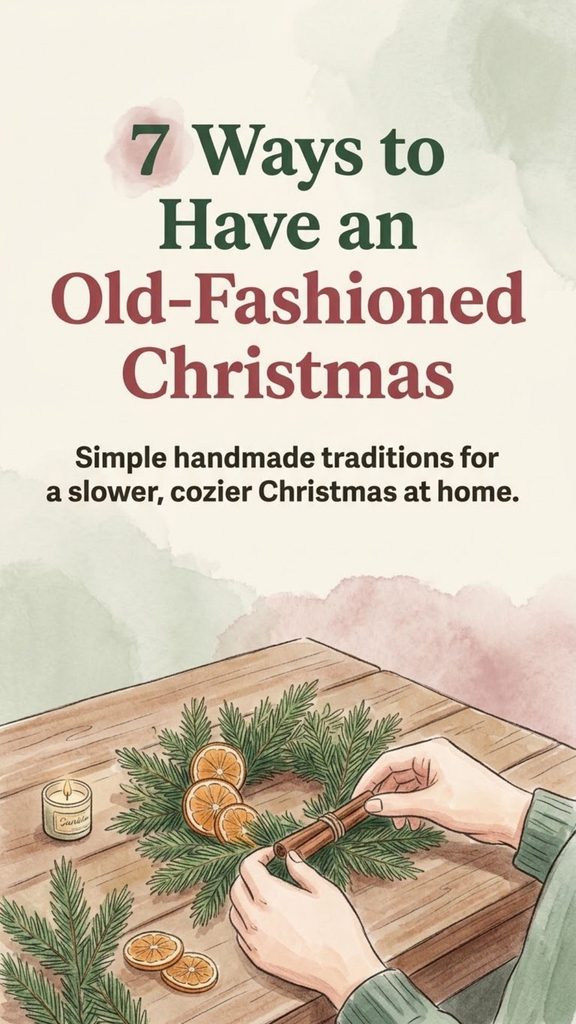
An old-fashioned Christmas is less about recreating a particular decade and more about changing the pace of the season. Instead of filling December with constant shopping, elaborate decorating, and a packed calendar, it focuses on simple pleasures: greenery gathered from outdoors, homemade food, handmade decorations, familiar music, candlelight, and uninterrupted time with people you care about.
You do not need an antique farmhouse, a wood-burning stove, or a house full of vintage decorations to create that feeling. Many traditional Christmas activities are inexpensive and surprisingly easy to bring into a modern home.
The goal is not to reject convenience or pretend the past was perfect. It is simply to borrow the parts of older holiday traditions that still make sense: making things instead of automatically buying them, appreciating what you already have, creating with your hands, and making time for traditions that people will actually remember.
You Might Also Like:
- Loading posts...
Here are seven ways to bring some of that slower, nostalgic Christmas feeling into your home.
1. Decorate With Natural Christmas Materials
One of the easiest ways to give your home an old-fashioned Christmas atmosphere is to decorate with materials from nature.
Long before shelves were filled with plastic garlands and matching ornament collections, seasonal decorating often relied on what was readily available. Evergreen branches, pinecones, fruit, nuts, berries, and simple handmade decorations could transform an ordinary home for the holidays.
You can bring that same idea into your own decorating without trying to make everything perfectly coordinated.
Useful natural decorations include:
- Evergreen branches
- Pinecones
- Dried orange slices
- Cinnamon sticks
- Apples or citrus fruit
- Bare branches
- Nuts in their shells
- Popcorn garlands
- Dried flowers or berries
A few branches in an old pitcher can be enough to make a table feel festive. Pinecones can fill a bowl or basket. Dried orange slices can be threaded into garlands or hung individually from the tree.
If you use fresh greenery indoors, remember that it dries out over time. Keep it away from fireplaces, candles, heaters, and other heat sources, and replace it once it becomes brittle.
A real Christmas tree can add fragrance and natural irregularity that many people associate with traditional holidays, but it is not necessary. If you already own an artificial tree, there is no reason to replace it simply for the sake of appearing more old-fashioned. Adding natural garlands, dried fruit ornaments, handmade decorations, and warm lighting can create much of the same atmosphere.
The point is to use what you have thoughtfully rather than feeling that Christmas decorating requires a new collection every year.
2. Make Some of Your Christmas Decorations by Hand
Handmade decorations have a charm that perfectly manufactured ornaments rarely reproduce.
They do not have to be complicated. In fact, some of the most nostalgic Christmas decorations are made from very ordinary materials.
Children can make paper chains, salt dough ornaments, paper snowflakes, or simple drawings to hang around the house. Adults may enjoy sewing fabric ornaments, tying ribbon bows, drying citrus slices, making wreaths, or decorating jars with greenery and twine.
A popcorn garland is another classic project. It takes longer than pulling garland from a storage box, but that is part of the appeal. It gives everyone something to do together.
Try turning decoration-making into an evening activity rather than another item on a Christmas checklist. Put on music, make something warm to drink, spread supplies across the table, and let the decorations be imperfect.
That imperfection often becomes what makes them special.
A child-made ornament with crooked writing may eventually mean far more than an expensive ornament bought because it matched the tree.
You can also save handmade decorations from year to year. Over time, your Christmas collection becomes a record of family life instead of simply a collection of seasonal objects.
3. Give Homemade Food as Christmas Gifts
Food has always been closely tied to Christmas because it does several things at once: it feeds people, gathers them together, and gives the maker an opportunity to offer something personal.
Homemade treats also make excellent gifts.
You do not need to spend several weeks preparing complicated pastries. Choose two or three recipes that you can make reliably and in larger batches.
Good options include:
- Cookies
- Fudge
- Chocolate bark
- Candied or spiced nuts
- Homemade granola
- Caramel popcorn
- Quick breads
- Brownies
- Jam or preserves you already made
- Hot cocoa mix
Presentation does not need to be expensive either. A reused glass jar, a simple box lined with parchment paper, or a paper bag tied with string can look warm and thoughtful.
Another useful idea is a baking mix in a jar. Layer the dry ingredients for a favorite cookie, pancake, muffin, or quick-bread recipe and include clear instructions explaining what fresh ingredients need to be added.
Just make sure to label homemade food when allergens may be a concern. If something contains nuts, dairy, eggs, gluten, or another common allergen, say so rather than leaving the recipient to guess.
The value of a homemade food gift is not that it costs nothing. Ingredients, packaging, and time still have value. Its appeal comes from the care involved and the fact that it was prepared specifically to be shared.
4. Make Gifts Instead of Buying Everything
A handmade gift can slow Christmas down in a good way because it requires you to think about the person before thinking about the store.
That does not mean every present needs to be homemade. Trying to make twenty complicated gifts in December can create exactly the kind of stress a simpler Christmas is supposed to avoid.
Choose projects that match your skills and available time.
Simple handmade Christmas gifts might include:
- Knitted or crocheted dishcloths
- Homemade candles
- Sewn napkins
- A framed family photograph
- Homemade spice blends
- A small basket of baked goods
- Handwritten recipe cards
- A jar of granola
- A homemade ornament
- A small scrapbook
- A child’s drawing framed for a grandparent
Children can participate too. Handmade cards, painted ornaments, decorated picture frames, or drawings allow them to experience Christmas as givers rather than only recipients.
There is also nothing wrong with combining handmade and purchased gifts. A purchased mug filled with homemade cocoa mix, for example, still feels personal without requiring hours of work.
Old-fashioned gift giving works best when the emphasis is on thoughtfulness rather than quantity.
5. Protect Time for Simple Christmas Traditions
One of the easiest ways for Christmas to become exhausting is to say yes to too much.
Parties, school events, shopping trips, decorating projects, visits, baking, travel, and gift wrapping can fill every open space on the calendar. By Christmas Day, everyone may be too tired to enjoy the holiday they spent weeks preparing for.
A slower Christmas needs some empty space.
One practical approach is to ask each person in the household to choose one or two traditions that matter most. Put those on the calendar first.
They might choose:
- Baking Christmas cookies
- Driving around to see Christmas lights
- Watching a favorite Christmas movie
- Making gingerbread houses
- Going ice skating
- Taking an evening winter walk
- Playing board games
- Visiting relatives
- Reading Christmas stories
- Making ornaments
- Cooking a special breakfast
- Sitting together with hot chocolate
Once the meaningful activities are chosen, resist filling every remaining evening.
Children often remember repeated family rituals more clearly than complicated one-time events. The same pancakes every Christmas morning or the same box of ornaments brought out each December can become surprisingly important over the years.
Tradition does not need to be impressive. It needs to be repeated and enjoyed.
6. Bring Music Back Into the Home
Christmas music can easily become background noise playing in stores, cars, and advertisements throughout December. An old-fashioned approach makes music an activity again.
Before recorded music was available at the touch of a screen, families and communities often made more of their own entertainment. You can recreate a little of that atmosphere without needing professional musicians in the family.
If someone plays piano, guitar, violin, or another instrument, gather around and sing familiar seasonal songs.
If nobody plays an instrument, sing along with recordings. You can also create an evening around favorite Christmas albums rather than leaving music playing unnoticed all day.
Children especially enjoy simple instruments such as bells, shakers, or tambourines. The result does not need to sound polished.
You might also ask older relatives which Christmas songs they remember from childhood. Music has a remarkable way of carrying memories, and sharing familiar songs can connect generations more naturally than many planned activities.
Some families enjoy traditional carols, while others prefer secular Christmas standards or a mixture of both. Choose music that reflects the traditions and atmosphere you want in your own home.
7. Create Quiet Evenings With Candlelight and Simple Comforts
Modern Christmas can be visually loud. Flashing lights, phones, television, advertising, notifications, and constant activity make it difficult to experience much quiet.
One evening by softer light can completely change the feeling of the season.
Turn off the overhead lights. Light the fireplace if you have one, switch on the tree lights, or use candles safely around the room. Make cocoa, tea, cider, or another warm drink and spend some time without rushing anywhere.
You could read aloud, listen to music, play cards, work on a puzzle, wrap gifts, or simply talk.
If you use real candles, keep them on stable surfaces and well away from curtains, dried greenery, paper decorations, pets, and children. Never leave burning candles unattended. Flameless candles are a sensible alternative if open flames are not suitable for your household.
The purpose is not historical accuracy. It is creating a deliberate contrast to the bright, busy pace that can dominate December.
A little quiet can make Christmas feel surprisingly different.
Keep the Traditions That Give Christmas Meaning to Your Family
An old-fashioned Christmas is also a good opportunity to think about why your household celebrates in the first place.
For Christian families, that may mean attending church, reading the Nativity account, displaying a manger scene, singing religious carols, or setting aside time to reflect on the birth of Jesus.
Other families may place greater emphasis on family heritage, generosity, gratitude, community, cultural traditions, or simply being together.
There is no need to fill December with traditions that have no significance to you simply because someone else considers them essential.
Choose the ones that carry meaning in your household.
That might include making a grandparent’s cookie recipe every year, serving the same Christmas Eve meal your parents served, donating food or gifts, calling relatives who live far away, bringing treats to neighbors, or spending an evening looking through old family photographs.
Meaningful traditions make Christmas feel rooted rather than manufactured.
An Old-Fashioned Christmas Doesn’t Need to Be Expensive
Perhaps the most useful lesson to borrow from older Christmas traditions is resourcefulness.
Look around before you shop.
Use ribbon saved from another year. Decorate with branches from the yard. Bake from pantry ingredients. Bring out ornaments you already own. Mend the tree skirt instead of replacing it. Wrap a gift in plain paper and dress it up with twine and a sprig of greenery.
None of these choices need to be made from guilt. There is nothing wrong with buying a beautiful decoration or giving someone a store-bought present they genuinely want.
The difference is intention.
Instead of allowing Christmas to become a month-long cycle of buying and preparing, decide what actually adds warmth to the season and let some of the rest go.
A memorable Christmas does not require the most decorations, the largest pile of presents, or a calendar packed with activities. Often, the details people remember are much smaller: the smell of something baking, the ornament they made as a child, a familiar song, the lights glowing after everyone else has gone to bed, and the traditions that return year after year.
That is the heart of an old-fashioned Christmas: making room for simple things to matter again.