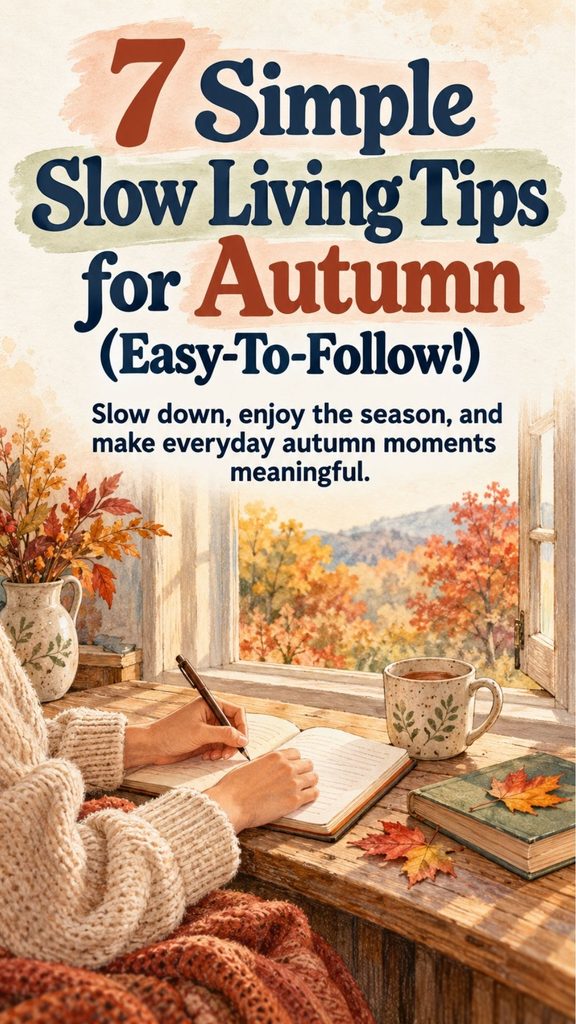
Autumn naturally invites a slower rhythm.
The days begin to shorten. Mornings feel cooler. Trees change color, evenings arrive earlier, and the busy energy of summer gradually gives way to a quieter season.
That makes fall a wonderful time to become a little more intentional about everyday life.
You Might Also Like:
- Loading posts...
Slow living does not mean doing everything at a painfully slow pace or abandoning responsibilities. It means paying more attention to how you spend your time, choosing what matters, and leaving enough room in the day to actually notice your life while you are living it.
You do not need to move to the countryside, delete every app from your phone, or completely change your schedule.
A few small seasonal habits can make autumn feel calmer and more meaningful.
Here are seven simple ways to begin.
1. Spend Time Outside While the Weather Is Still Pleasant
One of the best parts of early autumn is the overlap between warm afternoons and cooler mornings.
Instead of rushing immediately into indoor winter routines, enjoy the comfortable days while they last.
Take breakfast outside.
Drink your afternoon coffee on the porch.
Eat lunch in the garden.
Sit on a park bench.
Open the windows when the weather allows.
If you have a yard or balcony, place a chair somewhere you can comfortably sit for ten or fifteen minutes without needing to accomplish anything.
The purpose is not productivity.
It is simply to notice the season.
Pay attention to:
- The changing light
- Cooler air
- Birds
- Leaves beginning to turn
- The sound of wind through trees
- Earlier sunsets
You do not need an elaborate autumn outing every weekend.
Sometimes sitting outside with a cup of tea is enough.
Enjoy Daylight Without Turning It Into Another Task
There is no need to chase a certain number of minutes outdoors simply because autumn has arrived.
Go outside because it feels good.
Daylight, movement, and fresh air can all be pleasant parts of the day, but slow living works best when those things are not transformed into another rigid checklist.
Enjoy the last warm afternoons without trying to optimize them.
2. Take a Slow Walk
Walking is perhaps one of the simplest slow-living habits because it requires almost nothing.
You do not need a destination.
You do not need to track the distance.
You do not need to make it a workout unless you want to.
Choose a familiar road, quiet neighborhood, garden path, woodland trail, or park and walk at a comfortable pace.
Leave enough time that you are not constantly checking the clock.
Notice what is changing.
Perhaps one tree has already turned red while the others are still green.
Maybe acorns are beginning to cover the ground.
Perhaps the garden that looked full and bright in July is beginning to fade.
Autumn changes quickly, and walking gives you a chance to actually witness that transition.
Try Walking Without Constant Distraction
You do not necessarily need music, a podcast, or a phone conversation every time you go outside.
Occasionally, let the walk be quiet.
Listen to the sounds around you.
Notice the weather.
Pay attention to where you are instead of mentally rushing toward whatever comes next.
Slow living is largely about becoming more present in ordinary moments.
A walk is an easy place to practice that.
3. Cook With Seasonal Foods
Autumn brings a different style of cooking.
Light summer meals begin giving way to roasted vegetables, baked fruit, warm grains, stews, bread, and comforting dinners.
Depending on where you live, seasonal produce might include:
- Apples
- Pears
- Pumpkins
- Winter squash
- Potatoes
- Sweet potatoes
- Carrots
- Cabbage
- Kale
- Chard
- Cauliflower
Seasonality varies considerably by region, so pay attention to what is actually being harvested locally rather than following a generic fall produce list.
Seasonal food is not automatically organic, and locally grown food is not automatically better in every respect.
But choosing produce that is abundant where you live can be a practical way to bring more seasonal rhythm into the kitchen.
Visit a Market Without Rushing
If you have access to a farmers’ market or farm stand, autumn can be a pleasant time to visit.
Instead of treating the trip like another chore, walk around and see what is available.
Buy foods you know you will use.
A bag of apples can become:
- Snacks
- Oatmeal topping
- Applesauce
- Baked apples
- Apple crisp
A winter squash can become:
- Soup
- Roasted vegetables
- Pasta sauce
- A side dish
Slow living does not require complicated recipes.
Often it means using a few ordinary ingredients well.
4. Make a Pot of Soup
There is something wonderfully practical about soup in autumn.
It is warm.
It is flexible.
It often makes enough for more than one meal.
And it gives you a way to use vegetables that might otherwise be forgotten in the refrigerator.
Start with simple combinations.
You might make:
- Lentil soup
- Vegetable soup
- Chicken soup
- Pumpkin or squash soup
- Potato soup
- Bean soup
- Tomato soup
- Beef and vegetable stew
A large pot can provide dinner tonight and lunch tomorrow.
Some soups can also be frozen in appropriate containers for another week.
Let Soup Become Part of the Evening Rhythm
Cooking does not always need to be rushed.
On a cool afternoon, chop vegetables slowly.
Let onions soften.
Listen to the pot simmer.
Set the table while dinner cooks.
This is the kind of ordinary domestic routine that fits naturally into slow living.
The meal does not need to be impressive.
It simply needs to nourish the household.
5. Read Something You Actually Enjoy
Autumn and reading seem to belong together.
Shorter evenings create more opportunities to sit somewhere comfortable with a book rather than filling every quiet moment with a screen.
Choose something you genuinely want to read.
That might be:
- A novel
- Biography
- Gardening book
- Cookbook
- History
- Poetry
- Essays
- A library book you have been meaning to start
You do not need to select a book because it is educational or productive.
Reading for pleasure is reason enough.
Make Reading Easy to Start
Keep your current book somewhere visible.
Put it beside:
- Your favorite chair
- The bed
- A reading lamp
- The sofa
Add a blanket and a cup of tea if you like.
The goal is to make reading easier than automatically reaching for your phone.
Even twenty quiet minutes can change the feeling of an evening.
6. Keep a Simple Autumn Journal
Journaling is often presented as though you need a beautiful notebook, perfect handwriting, and several pages of profound reflection every evening.
You do not.
A slow-living journal can be extremely simple.
Write a few lines about:
- Something you noticed
- What you cooked
- What the weather was like
- Something that made you laugh
- A difficult part of the day
- Something you want to remember
- What is changing in the garden
- A small thing you are grateful for
- A plan for tomorrow
You can use a notebook, digital document, or notes app.
The format matters much less than developing the habit of pausing long enough to notice what happened.
Try a Three-Line Journal
If traditional journaling feels overwhelming, write only three lines:
Today I noticed…
Today I enjoyed…
Tomorrow I want to…
That can be enough.
Slow living should reduce pressure, not create another responsibility you feel guilty about ignoring.
7. Create a Few Quiet Minutes Every Day
Meditation works well for some people, but quiet reflection does not have to follow one particular method.
You might sit somewhere comfortable and simply pay attention to your breathing for a few minutes.
Or you might:
- Pray
- Sit outside quietly
- Stretch
- Watch the rain
- Listen to birds
- Drink tea without doing anything else
- Sit beside a window
- Practice a formal meditation method
The point is to stop filling every available moment.
Do Not Try to Eliminate Every Thought
If you choose meditation, you do not need to force your mind completely blank.
Thoughts will appear.
Notice them and gently bring your attention back to your breathing, surroundings, or whatever you have chosen as your focus.
Begin with a few minutes.
There is no need to turn a quiet autumn moment into another performance goal.
Create Slower Mornings When You Can
Autumn mornings can feel especially peaceful.
If your schedule allows, create a little more space at the beginning of the day.
That might mean:
- Getting up before the house becomes busy
- Opening the curtains
- Making coffee or tea
- Sitting for five quiet minutes
- Eating breakfast at the table
- Writing your plans for the day
- Stepping outside briefly
You do not need a two-hour morning routine.
Even fifteen unhurried minutes can make the day feel different.
Make Your Home Feel Ready for Slower Evenings
Slow living is easier when the home supports it.
As the weather cools, prepare the rooms where you spend your evenings.
You might:
- Wash throw blankets
- Clear one comfortable chair
- Set up a reading lamp
- Put board games where they are easy to reach
- Keep a puzzle on a table
- Create a basket for knitting or crafts
- Reduce clutter on the coffee table
The idea is to make restful activities convenient.
If everything enjoyable is hidden away while the television remote is always visible, the easiest habit will usually win.
Cook More Evenings at Home
There is something naturally grounding about preparing dinner at home.
It does not need to be entirely homemade.
A simple autumn meal can be:
- Soup and bread
- Baked potatoes
- Pasta
- Roasted vegetables
- Beans and rice
- Omelets
- Stew
Sit down when possible.
Put away distractions for part of the meal.
Eat at a pace that allows conversation.
The meal itself may be ordinary.
The slower experience around it is what matters.
Spend an Evening Without a Plan
Many people are so accustomed to scheduling every hour that an unplanned evening can feel strange.
Try leaving one autumn evening open.
Do not decide in advance that you must:
- Finish a project
- Watch something
- Clean the entire house
- Go somewhere
See what you naturally feel like doing.
Read.
Bake.
Take a walk.
Talk.
Go to bed early.
Sometimes slow living means leaving enough empty space for the day to decide what happens next.
Use Your Phone More Intentionally
You do not have to abandon technology to live slowly.
But constant checking can make even a quiet day feel frantic.
Try simple boundaries.
For example:
- Leave your phone inside during a short walk.
- Do not check messages during dinner.
- Keep the phone away while reading.
- Charge it away from the bed if that works for you.
- Turn off notifications you do not need.
The goal is not to prove that technology is bad.
It is to decide when you want your attention interrupted.
Let Some Household Tasks Become Rituals
Ordinary work can feel different when it is no longer rushed.
Autumn is a good season for slower homemaking routines.
Try:
- Folding laundry while listening to music
- Baking bread on a weekend morning
- Sweeping the porch before sunset
- Making soup in the afternoon
- Lighting a lamp before dinner
- Preparing tea after the kitchen is cleaned
These small rituals give shape to the day.
They make the ordinary parts of home life feel intentional rather than endless.
Notice the Season Instead of Decorating for It Constantly
You do not need to fill the house with artificial leaves, pumpkins, signs, and seasonal purchases in order to enjoy autumn.
Let some of the season come from outside.
Bring in:
- A branch with colorful leaves
- A bowl of apples
- A few garden flowers
- Pinecones
- Small pumpkins
- Seasonal produce
Use what is available and appropriate rather than feeling pressured to buy an entirely new collection of fall decor every year.
Slow living and constant seasonal shopping do not fit particularly well together.
Let the Garden Slow Down Too
If you garden, autumn creates a natural transition.
Some crops finish.
Flowers fade.
Leaves fall.
Growth slows.
Instead of seeing that only as decline, use it as a reminder that rest is part of natural cycles.
Harvest what remains.
Clean up gradually.
Plant cool-season crops if appropriate for your climate.
Make notes for next year.
Then let parts of the garden rest.
Not every space needs to look productive all year.
Spend More Time With People Without Planning an Event
Slow living can be social too.
You do not need elaborate entertaining.
Invite someone for:
- Tea
- Coffee
- Soup
- A walk
- A board game
- An afternoon chat
There does not need to be a theme, carefully styled table, or complicated menu.
Simple hospitality often creates more relaxed conversation.
People usually remember how they felt in your home far more than what centerpiece was on the table.
Let Autumn Be Different From Summer
Modern life can make every month look almost identical.
The same foods are available.
The same entertainment is available.
Indoor temperatures stay controlled.
Screens make daylight almost irrelevant.
But allowing the seasons to influence daily life can make the year feel more distinct.
Summer may be for longer evenings outside.
Autumn can become a season for:
- Walking
- Reading
- Soup
- Baking
- Journaling
- Indoor hobbies
- Earlier evenings
- Quiet gatherings
You do not have to force these traditions.
Simply notice what feels natural as the weather changes.
Slow Living Is Not About Doing Less of Everything
Sometimes slow living is misunderstood as avoiding work.
It is more useful to think of it as being selective.
You may still have:
- A job
- Children
- Household responsibilities
- Deadlines
- Appointments
- Busy days
The difference is that you stop assuming every available minute must be filled.
You decide which activities deserve attention.
You leave some things undone.
You make room for rest.
You pay more attention while doing ordinary things.
Choose One Habit to Begin With
Do not turn these seven ideas into a new checklist you must complete perfectly.
Choose one.
Take a walk after dinner.
Make soup once a week.
Read before bed.
Write three sentences in a journal.
Sit outside with your coffee.
Practice five quiet minutes in the morning.
Once the habit begins to feel natural, add another if you want.
Slow living works best when it develops slowly.
Let Autumn Remind You to Pay Attention
Fall does not last very long.
One week the trees are mostly green.
Then suddenly the leaves are bright.
A few weeks later many branches are bare.
That temporary quality is part of what makes autumn special.
So notice it.
Go outside.
Cook something warm.
Read the book.
Invite someone over.
Write down what happened today.
Sit quietly for a few minutes.
Watch the light change.
You do not need to make autumn more complicated in order to enjoy it.
Sometimes the best way to experience a season is simply to stop rushing through it.