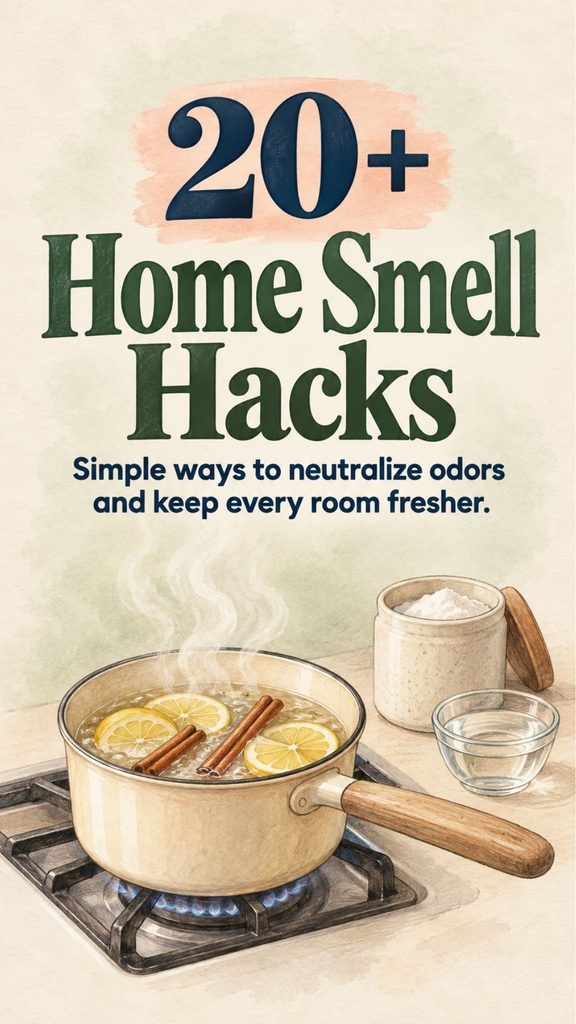
A home that smells fresh usually has less to do with covering the air in fragrance and more to do with finding what is causing the odor in the first place.
Trash, damp towels, forgotten food, dirty drains, pet areas, cooking grease, musty fabrics, and poor ventilation can all create unpleasant smells. The source article offers 20 different ways to freshen the home, ranging from deep cleaning and baking soda to simmered spices, herbs, diffusers, and scented products.
Some of those ideas are useful exactly as they are. Others work better with a few safety or practicality adjustments.
You Might Also Like:
- Loading posts...
The best approach is simple:
Remove the source first.
Ventilate when possible.
Deodorize what remains.
Then add fragrance if you want it.
Here are more than 20 practical ways to make your home smell genuinely fresher.
1. Start With a Real Deep Clean
If a room smells unpleasant, fragrance should not be the first solution.
Look for the source.
Wash dirty laundry.
Empty rubbish.
Clean pet areas.
Check beneath furniture.
Wipe greasy kitchen surfaces.
Wash bedding.
Clean bathrooms.
Look for forgotten food.
Dust can also hold household odors, particularly when mixed with pet hair, cooking residue, or moisture.
A room that is physically clean generally needs much less added fragrance.
The original article makes deep cleaning its first recommendation because accumulated dirt, dander, and dirty clothing can all contribute to household odors.
2. Air the House Out
Fresh air is one of the simplest home-fragrance tools available.
When weather, outdoor air quality, security, and allergies allow, open windows on opposite sides of the home for a short period.
Cross-ventilation can help move stale indoor air outside.
You do not need to leave windows open for hours.
Even ten or fifteen minutes can make a closed room feel noticeably different.
During wildfire smoke, heavy pollution, high pollen, extreme heat, or severe cold, keeping windows closed may be the better choice.
Use common sense rather than treating open windows as a rule.
3. Wash the Things That Hold Smells
Sometimes the room itself is clean, but the fabrics are not.
Soft furnishings can hold cooking odors, body oils, smoke, pet smells, and moisture.
Periodically wash or clean items such as:
curtains,
throw blankets,
pillow covers,
bath mats,
pet bedding,
and washable cushion covers.
Follow fabric-care instructions.
A freshly washed textile often improves a room more effectively than another air freshener.
4. Clean Your Trash Can, Not Just the Trash Bag
Replacing the bag does not necessarily remove the smell.
Leaks and residue can remain on the bottom or sides of the bin.
Empty it.
Wash it using an appropriate household cleaner.
Rinse if required.
Then allow it to dry before inserting a new liner.
This is especially important for kitchen rubbish containing food.
The source correctly notes that scented rubbish bags may mask odors but do not replace cleaning the actual bin.
5. Use Baking Soda in a Clean Trash Can
Once the bin is clean and dry, a small amount of baking soda can help with lingering odors.
Sprinkle some on the bottom beneath the liner or keep a small open container nearby where it cannot spill.
Replace it periodically.
Baking soda is most useful as an odor-control aid.
It should not become an excuse to leave food waste sitting for long periods.
The strongest-smelling rubbish should still leave the house promptly.
6. Add Absorbent Paper Under the Trash Bag
This is a very simple practical trick.
Place a few sheets of newspaper, plain paper, or another absorbent disposable material at the bottom of the bin beneath the liner.
If a bag develops a minor leak, the paper may absorb some liquid before it spreads throughout the bottom of the bin.
Replace the paper whenever it becomes damp or dirty.
It will not deodorize an already filthy bin, but it can make cleanup easier.
7. Try a Stovetop Simmer Pot
A simmer pot can make the kitchen and nearby rooms smell warm and inviting.
Add water to a saucepan with fragrant ingredients such as:
cinnamon sticks,
citrus peel,
whole cloves,
rosemary,
or other food-safe aromatic spices and herbs.
Bring the water to a gentle simmer, then reduce the heat.
The original source suggests simmering cinnamon and vanilla in water to fragrance the house.
The important safety rule is to stay nearby and keep checking the water level.
Never leave a simmering pot unattended or allow it to boil dry.
8. Simmer Lemon Peels
If you have leftover lemon peels, put them to use before discarding or composting them.
Add the peel to a saucepan of water and simmer gently.
The warm water releases the citrus aroma into the room.
Orange peel works too.
You can combine citrus with rosemary or a cinnamon stick if you enjoy a stronger fragrance.
Again, keep the saucepan attended and maintain enough water.
9. Let Actual Baking Fragrance the Home
Few artificial fragrances imitate real baking perfectly.
Bread.
Apple pie.
Cinnamon rolls.
Cookies.
Roasted fruit.
If you already plan to bake, enjoy the natural aroma as part of the process.
There is no need to turn on the oven solely to fragrance the house. Heating an empty oven simply for scent wastes energy and introduces unnecessary heat.
If you want fragrance without baking food, a small supervised simmer pot is usually simpler.
10. Keep Dried Herbs in Small Bundles
Dried herbs can provide a subtle natural fragrance.
Rosemary, lavender, mint, thyme, and sage can all work depending on what you enjoy.
Tie small dried bundles and hang them somewhere dry with good airflow.
You can also place dried herbs in breathable sachets inside drawers or linen cupboards.
Make sure plant material is properly dried before storing it in enclosed spaces.
Damp herbs can develop mold rather than making anything smell better.
11. Bring Fresh Herbs Into the Kitchen
Fresh herbs can provide a pleasant scent before they ever reach a recipe.
A pot of rosemary, basil, mint, or thyme on a suitable sunny windowsill adds both greenery and useful cooking ingredients.
Brush past rosemary or mint and their aroma is naturally released.
This is a better reason to keep plants than expecting them to purify an entire home’s air.
12. Don’t Rely on Houseplants as Air Purifiers
Houseplants are beautiful, and some flowering plants are fragrant.
But a few houseplants do not meaningfully replace ventilation or proper indoor air-quality measures in an ordinary home.
Keep plants because you enjoy them.
Choose fragrant varieties if appropriate.
Just do not assume that adding several succulents will remove household odors or flood the room with enough oxygen to noticeably change indoor air quality.
If something smells bad, locate the source.
13. Use Reed Diffusers Carefully
Reed diffusers can provide continuous fragrance without an open flame.
They work by drawing fragranced liquid upward through porous reeds and allowing it to evaporate.
Place the diffuser on a stable, protected surface.
Diffuser oils may damage painted, polished, wooden, or plastic surfaces if spilled.
Keep them where children and pets cannot knock them over or ingest the liquid.
If someone in the household experiences headaches, asthma symptoms, or fragrance sensitivity, use less fragrance or skip it entirely.
A home does not need to smell strongly perfumed to smell clean.
14. Use Candles for Fragrance, Not Odor Removal
A scented candle can create a cozy atmosphere.
It does not solve the reason the room smells bad.
Clean first.
Then, if you enjoy candles, use one as an optional finishing touch.
Place it on a stable, heat-resistant surface away from curtains, bedding, papers, children, and pets.
Never leave a candle burning unattended.
Extinguish it before leaving the room for an extended period, leaving the house, or going to sleep.
The source also stresses extinguishing scented candles before leaving or sleeping.
15. Be Selective With Incense
Incense gives a room a strong fragrance, but burning it also releases smoke and particles into indoor air.
People with asthma, migraines, respiratory sensitivities, children, or pets may find it irritating.
If you use incense, ventilate appropriately and keep it away from combustible materials.
Never leave it burning unattended.
If your goal is simply a fresh-smelling room, you may prefer fragrance methods that do not create smoke.
16. Use Linen Spray on Clean Fabrics
A light linen spray can make freshly cleaned bedding, curtains, or other compatible textiles smell pleasant.
But fragrance spray should not replace washing something that is actually dirty.
Check the product label before spraying furniture, rugs, clothing, or delicate fabric.
Test an inconspicuous spot first because some formulas can stain or mark certain materials.
Use a light mist.
Fabric does not need to be soaked in fragrance.
17. Use Baking Soda on Rugs With Care
Baking soda is commonly used to help reduce smells in rugs and carpets.
If you want to try it, first check the care instructions for your flooring and vacuum.
Use a light application rather than covering the carpet with a thick layer of powder.
Let it sit briefly, then vacuum thoroughly.
Fine powders can be hard on some vacuum cleaners and may be difficult to remove completely from certain carpet types.
For deep or persistent carpet odors—particularly pet urine, mildew, or water damage—proper cleaning and treatment of the underlying source is more important.
18. Freshen the Refrigerator by Cleaning It First
A smelly refrigerator usually contains something that needs attention.
Remove spoiled food.
Check forgotten containers.
Clean spills.
Wash drawers or shelves as necessary.
Keep strongly scented foods properly covered.
Once the refrigerator itself is clean, an open container of baking soda can be used as an optional odor-control aid.
The original article suggests dry oats, but oats are food and can eventually absorb moisture or become stale. Baking soda is generally the simpler choice for routine refrigerator deodorizing.
No deodorizer can compensate for spoiled food hiding behind the milk.
19. Check the Garbage Disposal or Kitchen Drain
When the kitchen smells unpleasant but the trash is empty, inspect the sink area.
Food residue can collect in strainers, disposal splash guards, or drains.
Clean accessible parts according to the sink or disposal manufacturer’s directions.
Never put your hand inside a garbage disposal.
Avoid randomly combining strong drain cleaners, bleach, vinegar, or other chemicals.
If a drain odor persists, plumbing problems may need proper investigation rather than more fragrance.
20. Wash Dishcloths and Sponges Frequently
A kitchen can look clean while the dishcloth itself smells terrible.
Wet cloths and sponges can develop unpleasant odors quickly.
Let reusable cloths dry between uses and wash them frequently.
Replace sponges when they become worn or persistently smelly.
Keep a rotation of washable kitchen cloths so you can easily switch to a clean one.
Sometimes the easiest way to make the kitchen smell better is simply to remove the damp rag beside the sink.
21. Don’t Forget the Dishwasher
Dishwashers can develop odors from food particles, dirty filters, seals, or standing residue.
Clean the filter according to the manufacturer’s directions.
Inspect around the door seal.
Remove trapped food.
Run the appropriate cleaning cycle if recommended for your machine.
Also avoid leaving dirty dishes sealed inside for long periods when possible.
A dishwasher should clean dishes, not become a storage cabinet for food residue.
22. Freshen Closets by Fixing Moisture First
A musty closet may be telling you something more important than “add fragrance.”
Check for damp clothing, wet shoes, poor airflow, or moisture on walls.
Make sure everything is completely dry before putting it away.
Leave some breathing room between tightly packed clothing.
Wash musty textiles.
If you find persistent moisture or visible mold, address the cause rather than covering the odor with herbs, tea bags, or perfume.
Fragrance cannot repair a moisture problem.
23. Use Cedar or Dried Lavender in Drawers
Once drawers and cupboards are clean and dry, subtle fragrance can be pleasant.
Dried lavender sachets are a classic option.
Cedar pieces can provide a woody scent.
Place them where they do not stain fabric and refresh or replace them when the fragrance fades.
This produces a much softer effect than saturating enclosed spaces with essential oil.
24. Be Careful With Essential Oils on Cotton Balls
Adding essential oil to cotton balls and hiding them around the house sounds simple, but concentrated essential oils can irritate skin, harm some surfaces, and create risks for certain pets.
If you use this method, use only a small amount and place the cotton securely in a small dish or other protected container.
Do not place oil-soaked cotton directly on wood, painted furniture, fabric, or plastic.
Keep it out of reach of children and animals.
Also remember that “natural” does not automatically mean harmless.
25. Hang Fresh Mint Near the Shower—Not in the Water
A fresh bundle of mint can add a subtle herbal aroma to a bathroom.
Tie the stems securely and hang them somewhere they receive warmth and humidity without being constantly soaked by shower water.
Replace the bundle once it begins deteriorating.
A permanently wet herb bundle can become unpleasant rather than refreshing.
Ventilate the bathroom after showers to control moisture.
26. Wash Pet Bedding and Pet Areas
If you share your home with animals, their bedding can become one of the strongest sources of household odor.
Wash washable beds and blankets according to care instructions.
Vacuum pet hair from furniture.
Clean litter areas regularly.
Wash food and water bowls.
Address accidents promptly with an appropriate cleaner.
Do not try to overpower pet odors with strong fragrances.
Animals can be much more sensitive to scent than humans, and certain essential oils can be unsafe around particular species.
27. Clean the Washing Machine
A machine used to clean clothes can itself become smelly.
Front-loading washers in particular may develop odor when moisture remains around seals or detergent residue builds up.
Follow your appliance manufacturer’s cleaning instructions.
Clean dispensers and accessible seals.
Run a recommended cleaning cycle when needed.
Leave the door or lid open between loads if the manufacturer recommends it and doing so is safe in your household.
A clean washer helps prevent freshly washed clothes from developing a musty smell.
28. Dry Laundry Completely Before Storing It
Even slightly damp towels or clothes can develop a musty odor when placed in drawers or cupboards.
Allow everything to dry completely first.
This matters especially for:
towels,
thick blankets,
bath mats,
and heavy clothing.
If stored textiles smell musty, wash and dry them rather than simply spraying fragrance over them.
29. Check Hidden Sources of Dampness
A persistent musty smell deserves investigation.
Look beneath sinks.
Check around windows.
Inspect bathroom corners.
Look near plumbing fixtures.
Pay attention to basements, closets, and areas behind furniture.
A damp smell may indicate a moisture problem or mold growth.
Masking that odor with candles or air freshener does not solve the underlying issue.
If there is extensive or recurring water damage, professional assessment may be appropriate.
30. Create a Simple Signature Home Scent
Once the home is clean, you can choose one subtle scent family rather than layering several competing fragrances.
Maybe your home scent is:
lemon and rosemary,
lavender,
vanilla and cinnamon,
fresh linen,
cedar,
or simply clean air with very little added fragrance.
Using fewer scents often makes a home feel fresher than combining candles, plug-ins, diffusers, sprays, incense, and essential oils all at once.
A visitor should not be able to smell your house from the sidewalk.
Fresh can be subtle.
The Best Home-Smell Hack Is Source Control
If something smells bad, do not immediately ask:
What fragrance can cover this?
Ask:
What is creating this smell?
Maybe it is yesterday’s rubbish.
A wet towel.
Food beneath an appliance.
A dirty pet bed.
A musty drain.
Laundry forgotten in the washer.
Old food in the refrigerator.
Once that problem is removed, you may discover that the room needs very little additional fragrance.
The original source ends with a useful distinction between masking an odor and actually getting rid of it, while also warning that some fragranced products can trigger sensitivities and that flammable products require care.
That is the most important principle to keep.
A Fresh Home Doesn’t Have to Smell Strong
There is a difference between a house that smells fresh and one that smells heavily fragranced.
Freshness often smells like almost nothing.
Clean bedding.
Fresh outdoor air.
A recently cleaned kitchen.
Dry towels.
A faint trace of herbs.
Dinner simmering on the stove.
That is enough.
Deep clean when needed, keep dampness and rubbish under control, wash fabrics regularly, ventilate when conditions allow, and then use fragrance as a pleasant finishing touch rather than as the main cleaning strategy.
When the source of bad odors is actually removed, keeping your home ready for guests becomes much easier—and you need far fewer products to do it.