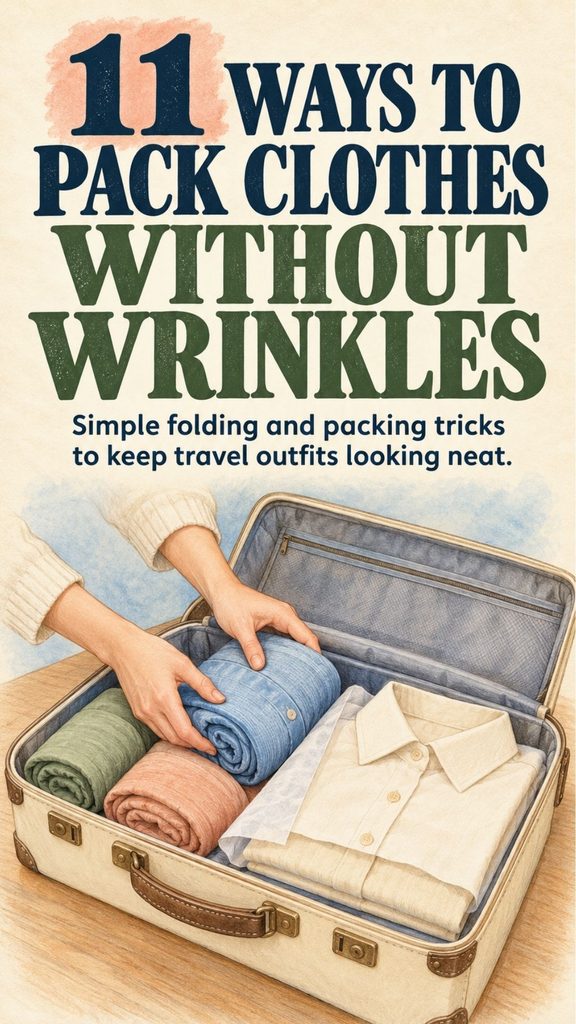
Nothing is more frustrating than carefully choosing your outfits for a trip, only to open your suitcase and discover that everything is covered in stubborn wrinkles. Your freshly ironed shirts have deep creases, your favorite dress looks crushed, and the trousers you planned to wear to dinner suddenly need a thorough pressing.
Fortunately, a few smart packing techniques can make a noticeable difference.
The secret isn’t simply folding everything as neatly as possible. It’s understanding how different fabrics behave, reducing unnecessary pressure, and arranging your luggage so garments don’t become tightly compressed or shift around during travel.
You Might Also Like:
- Loading posts...
Some clothes travel beautifully when rolled. Others look better when folded around soft garments, protected with tissue paper, or kept inside a garment bag.
The right method depends on what you’re packing, how long you’ll be traveling, and whether you’re using a backpack, carry-on suitcase, or larger checked bag.
Here are 11 practical ways to pack clothes with fewer wrinkles, along with simple tips for keeping your outfits looking fresh after you arrive.
Why Do Clothes Wrinkle Inside a Suitcase?
Wrinkles develop when fabric becomes bent, folded, compressed, or twisted and the fibers temporarily hold the resulting shape.
Some fabrics crease more easily than others.
Linen, cotton, and certain delicate woven materials tend to show wrinkles readily, while many synthetic fabrics and stretchy knits are more resistant.
The conditions inside your suitcase also matter.
Overpacking forces clothing into tight spaces, creating sharp folds and pressure points. Loose packing can allow garments to shift, bunch, and become twisted.
Moisture and heat can also influence how wrinkles form and set in different fabrics.
That’s why there isn’t one perfect packing technique for every garment.
A combination of methods generally works better than trying to roll or fold everything the same way.
1. Roll Casual Clothing Instead of Folding It
Rolling is one of the simplest packing methods, particularly for casual garments that don’t need perfectly sharp lines.
It works well for:
- T-shirts
- Leggings
- Casual trousers
- Workout clothes
- Pajamas
- Socks
- Many knit tops
Rolling reduces the number of sharp folds in a garment and can make clothing easier to arrange inside a suitcase.
However, rolling doesn’t guarantee wrinkle-free results. Rolling too tightly may create small compression creases, especially in wrinkle-prone fabrics.
How to Roll a T-Shirt
- Lay the shirt flat on a clean surface.
- Smooth out existing wrinkles.
- Fold the sleeves inward to create a neat rectangle.
- Fold the sides inward if necessary.
- Roll from the bottom toward the neckline.
- Place the finished roll in the suitcase without crushing it.
How to Roll Trousers
Place one trouser leg directly over the other.
Smooth the fabric, align the seams, and begin rolling from the cuffs toward the waistband.
Use gentle, even pressure.
For jeans and casual trousers, rolling can be convenient. For tailored dress trousers, a different method may better preserve the intended creases and shape.
2. Try Bundle Wrapping for Wrinkle-Prone Outfits
Bundle wrapping is a useful technique for travelers carrying several shirts, dresses, or tailored garments.
Instead of folding every item separately, you arrange the clothing in overlapping layers and wrap everything around a soft central bundle.
This creates broader bends rather than multiple sharp folds.
The method works particularly well when you have enough suitcase space to keep the finished bundle from being crushed.
How Bundle Wrapping Works
Begin by laying your most wrinkle-prone garment flat across your open suitcase.
This might be a dress, blazer, or button-down shirt.
Leave the sleeves or longer sections extending outside the packing area temporarily.
Place another garment on top, smoothing it carefully.
Continue layering clothing, alternating the direction of pieces where useful.
Next, create a soft central core using wrinkle-resistant items such as socks, underwear, or folded knitwear.
Wrap the surrounding garments around this core, one layer at a time.
Finally, tuck the bundle securely into the suitcase.
When Is Bundle Wrapping Best?
This technique is useful for business travel, weddings, and occasions when you’re packing several dressier outfits.
Its main disadvantage is convenience.
Removing one item from the middle can require unpacking much of the bundle.
If you need quick access to different outfits every day, rolling or packing folders may be easier.
3. Use Overlapping Layers to Reduce Sharp Creases
If bundle wrapping feels too complicated, overlapping is a simpler alternative.
The idea is to avoid folding delicate garments into small, sharply creased rectangles.
Instead, lay longer items across the suitcase and allow their ends to extend beyond the edges temporarily.
Add softer clothing over the center, then fold the extended sections gently across the top.
For example, place a pair of dress trousers across the suitcase with the legs hanging over one side.
Arrange folded T-shirts or knitwear in the middle.
Then bring the trouser legs over the soft layer.
The clothing underneath creates a gentle curve that may reduce sharp fold lines.
This method works well for longer dresses, trousers, and certain lightweight jackets.
It is especially useful in a large suitcase where the garments have room to lie relatively flat.
4. Place Tissue Paper Between Delicate Fabrics
Tissue paper is an old-fashioned packing trick that can still be useful for delicate clothing.
Placing smooth sheets of tissue paper between layers may reduce friction and help prevent fabrics from catching or rubbing against one another.
It can also soften folds when positioned carefully.
How to Use Tissue Paper
Lay your garment flat and smooth out existing wrinkles.
Place a sheet of clean, acid-free tissue paper across areas that will be folded.
For a blouse, you can place tissue inside the sleeves before folding them inward.
For a delicate dress, position tissue paper between folded sections to reduce direct fabric-on-fabric contact.
Finish by folding the garment loosely rather than pressing it into a very small bundle.
Best Clothing for This Method
Tissue paper can be useful for:
- Silk blouses
- Satin garments
- Delicate dresses
- Lightweight woven shirts
- Special-occasion outfits
Avoid using colored or printed tissue that might transfer dye, particularly onto light fabrics.
Tissue paper takes up some additional room, but it can be worthwhile when protecting an outfit for an important occasion.
5. Choose Wrinkle-Resistant Clothing Whenever Possible
The easiest way to reduce travel wrinkles is to pack fabrics that naturally resist creasing.
Not every garment needs special treatment.
Certain knits, synthetic blends, and fabrics designed for travel can remain relatively smooth even after hours inside a suitcase.
Fabrics That Often Travel Well
Polyester blends: Many polyester fabrics resist wrinkles and recover their shape reasonably well.
Nylon blends: These are common in lightweight travel and outdoor clothing.
Stretch knits: Jersey and other stretchy knits often tolerate folding and rolling better than crisp woven fabrics.
Merino wool: Certain merino garments resist creasing and can be practical for travel.
Spandex blends: A small amount of stretch can help some garments recover from compression.
Fabric construction matters just as much as fiber content. A structured polyester garment may behave differently from a soft polyester knit.
Fabrics That May Need More Care
Linen wrinkles readily and often has a naturally relaxed appearance.
Traditional cotton shirts can develop noticeable fold marks, particularly when packed tightly.
Some silk, rayon, and viscose garments are also prone to creasing.
If you’re packing for a formal event, consider how much preparation the garment will need after unpacking.
Test Before Packing
If you’re uncertain about a garment, gently squeeze a small, inconspicuous section of fabric in your hand for several seconds.
Release it and see how quickly the fabric recovers.
This isn’t a laboratory test, but it can provide a rough indication of how easily the material creases.
6. Pack Light and Avoid Overstuffing Your Suitcase
Overpacking is one of the biggest causes of wrinkled travel clothing.
When a suitcase is filled beyond its comfortable capacity, clothes become compressed against one another.
That pressure can leave deep folds, crushed collars, and unwanted creases.
Instead of trying to fit every possible outfit into your luggage, plan clothing around the activities you actually have scheduled.
Build a Small Travel Wardrobe
Choose pieces that coordinate easily.
For example, two pairs of trousers, several versatile tops, and one jacket may create multiple outfits without requiring a completely different set of clothes for each day.
Check your accommodation’s laundry options if you’re traveling for an extended period.
Rewearing suitable items can reduce the amount you need to pack.
Distribute Weight Carefully
Place heavier objects, such as shoes and toiletry bags, near the wheel end of an upright rolling suitcase.
Keep hard or bulky items from pressing directly into delicate clothing.
Avoid placing shoes on top of freshly folded dress shirts.
Use small spaces for socks and other flexible items, but don’t force clothing into every available gap.
The goal is a suitcase that closes comfortably while keeping the contents reasonably stable.
7. Use Garment Covers or Smooth Protective Layers
A smooth protective layer between garments can help reduce friction and prevent delicate clothing from rubbing directly against other items.
Traditional packing advice sometimes recommends using individual plastic dry-cleaning bags.
The slippery plastic allows garments to move against one another with less resistance.
However, thin plastic bags can tear, trap moisture, and create unnecessary waste.
They also pose suffocation hazards to children and should be kept out of their reach.
A More Practical Alternative
Consider reusable garment covers made from smooth, lightweight material.
These can help separate delicate outfits from the rest of your luggage.
For certain dry-cleaned garments, a clean plastic protective sleeve may be useful during short-term transport, but it shouldn’t automatically become long-term clothing storage.
Avoid packing clothing while damp.
For longer storage, breathable garment bags are generally preferable to sealed plastic because they allow moisture to escape.
This method works particularly well for suits, dresses, and delicate shirts.
8. Use Packing Folders for Dress Shirts and Trousers
Packing folders are designed to hold neatly folded clothing in a relatively flat, organized stack.
Many include a folding board that helps you create uniform folds.
They’re particularly useful for button-down shirts, lightweight sweaters, blouses, and certain trousers.
How to Use a Packing Folder
Start with a clean, dry garment.
Button the shirt to help it maintain its shape.
Lay it flat and smooth the fabric.
Use the folding board as a guide to fold the sleeves and sides inward.
Fold the lower portion of the shirt according to the folder’s instructions.
Place the folded garment inside the packing folder and secure its closure without excessive compression.
Repeat with additional garments if the folder is designed to hold several pieces.
Why Packing Folders Help
The rigid or semi-rigid structure can keep shirts from becoming twisted or heavily compressed.
Packing folders also make it easier to remove several folded garments without disturbing the rest of the suitcase.
They won’t eliminate every wrinkle, especially in linen or delicate cotton, but they can help preserve a tidy shape.
For short business trips, they may be more convenient than a full garment bag.
9. Pack Formal Clothing in a Garment Bag
If you’re traveling with a suit, evening dress, blazer, or another carefully pressed outfit, a garment bag may be the most practical choice.
Garment bags allow clothing to remain on hangers or lie in a long, protected compartment.
Many designs fold once for transportation, reducing the number of creases compared with tightly folding the same garment several times.
How to Pack a Suit
Hang the jacket on an appropriately shaped hanger.
Fasten the garment bag according to its design.
Arrange trousers neatly along their existing creases if appropriate.
Keep collars, shoulders, and lapels smooth.
Avoid overfilling the bag with additional clothing.
Traveling by Car
A hanging garment bag may be convenient during a road trip.
Secure it so it won’t obstruct visibility, interfere with vehicle controls, or fall onto passengers.
For air travel, check the airline’s carry-on size and baggage rules before choosing a garment bag.
Not every aircraft or airline offers hanging storage, so you may need to place the bag in an overhead compartment or check it.
For a wedding or formal event, consider traveling with enough time to inspect and freshen the outfit after arrival.
10. Use Wardrobe Boxes When Moving House
Packing clothes for a vacation is different from transporting an entire wardrobe during a move.
If you’re relocating, wardrobe boxes can help protect garments that would otherwise need to be folded into ordinary moving cartons.
These tall cardboard boxes contain a hanging bar.
You can transfer suitable clothes directly from your closet onto the bar, allowing them to remain hanging during transport.
Best Uses for Wardrobe Boxes
They’re particularly helpful for:
- Coats
- Jackets
- Suits
- Dresses
- Formal wear
- Long skirts
- Delicate hanging garments
To pack a wardrobe box, assemble it according to the manufacturer’s directions and make sure the hanging bar is secure.
Transfer garments on sturdy hangers.
Avoid adding more weight than the box is designed to support.
Close the box and label it clearly.
Wardrobe boxes take up more room than regular moving boxes and may cost more, but they can save time when unpacking.
They’re generally intended for relocation rather than airline travel.
11. Organize Clothing With Packing Cubes
Packing cubes are useful for separating clothing into manageable groups.
Instead of having shirts, trousers, underwear, and accessories mixed together, you can organize each category into its own compartment.
This makes unpacking easier and reduces the need to rummage through the entire suitcase.
Choose the Right Cube Size
Small cubes are useful for underwear, socks, swimwear, and lightweight accessories.
Medium cubes can hold T-shirts, pajamas, and casual clothing.
Larger cubes may accommodate sweaters or trousers.
Pack each cube so that clothing remains organized without being crushed.
Are Compression Cubes Good for Wrinkles?
Compression packing cubes can save space by reducing the volume of packed clothing.
However, they don’t necessarily prevent wrinkles.
In fact, excessive compression can create additional creases in fabrics that wrinkle easily.
Compression cubes are generally more suitable for soft, resilient clothing, such as some knits or casual travel items.
For a crisp dress shirt or delicate blouse, a regular packing folder or protective garment bag may be the better choice.
Which Packing Method Is Best for Each Type of Clothing?
Different garments benefit from different techniques.
Use this quick comparison when deciding how to organize your suitcase.
| Clothing type | Recommended packing method |
|---|---|
| T-shirts | Gentle rolling |
| Jeans | Rolling or simple folding |
| Leggings and workout clothes | Rolling or packing cubes |
| Dress shirts | Packing folder or bundle wrapping |
| Tailored trousers | Overlapping or garment bag |
| Suits and blazers | Garment bag |
| Delicate dresses | Tissue paper and loose folding |
| Knit sweaters | Loose folding or rolling, depending on the knit |
| Underwear and socks | Small packing cubes |
| Formal evening wear | Protective garment bag |
These are general recommendations rather than strict rules.
Always consider the fabric, construction, and care instructions of the individual garment.
How to Arrange Everything Inside Your Suitcase
Choosing a packing technique is only half the job.
The way you arrange the finished clothing can also influence how many wrinkles develop.
Start by placing shoes and heavier items in suitable areas near the wheel end of a rolling suitcase.
Keep toiletries in leak-resistant containers or bags.
Next, add casual clothing and packing cubes.
Place more delicate folded items where they won’t be crushed by heavier belongings.
If you’re using a packing folder, position it flat in a suitably sized compartment.
Avoid wedging hard objects against collars, sleeves, or other areas where sharp pressure marks may develop.
Finally, close your suitcase without forcing the zipper.
A case that needs to be sat on to close is probably packed too tightly for wrinkle-prone clothing.
What to Do Before Packing Your Clothes
A little preparation can prevent problems before the suitcase is even opened.
Make Sure Everything Is Completely Dry
Never pack damp clothing for extended periods.
Moisture trapped in luggage can contribute to unpleasant odors, mildew, and fabric problems.
Allow freshly washed or steamed garments to dry completely before folding.
Smooth Out Existing Wrinkles
Packing methods are most effective when clothing is already reasonably smooth.
If a shirt has deep wrinkles before packing, rolling or folding won’t magically remove them.
Iron or steam garments according to their care labels before placing them in the suitcase.
Let the fabric cool and dry completely before packing.
Check the Care Label
Certain garments require special handling.
Structured jackets, delicate embellishments, and fabrics that should not be steamed or ironed need extra attention.
Follow the manufacturer’s instructions rather than applying the same technique to every outfit.
How to Remove Wrinkles After You Arrive
Even carefully packed clothing may develop a few creases during travel.
The easiest solution is to address them as soon as you arrive.
Unpack Immediately
Remove wrinkle-prone garments from the suitcase and hang them on suitable hangers.
Don’t leave pressed outfits compressed inside luggage for several days.
Some light wrinkles may relax while the garment hangs, particularly in resilient fabrics.
Use a Travel Steamer
A small handheld garment steamer can be useful for travelers who frequently carry dress shirts or formal clothing.
Check the care label first and follow the steamer’s instructions.
Keep hot steam away from your skin and allow garments to dry before wearing them.
Steaming may not be suitable for every material or finish.
Use an Iron When Necessary
For stubborn creases, ironing may provide a better result than steaming.
Use the temperature recommended for the fabric.
If you’re staying in a hotel, check whether an iron and ironing board are available.
For delicate garments, consider whether professional pressing would be more appropriate.
Be Careful With Shower Steam
Hanging clothing in a steamy bathroom is a common travel trick.
It may help relax some light wrinkles, but the results are inconsistent.
Keep clothing away from direct water and allow it to dry thoroughly afterward.
Don’t rely on this method for heavily creased formal outfits.
Common Packing Mistakes That Cause Wrinkles
Even good packing techniques can fail when small mistakes are repeated.
Rolling everything too tightly: Excessive pressure can create compression wrinkles.
Overstuffing packing cubes: A cube packed beyond its capacity may crush its contents.
Mixing heavy and delicate items: Shoes and toiletry bags can press into softer fabrics.
Packing damp clothing: Trapped moisture can create odors and affect fabric condition.
Using the same method for every material: Linen, cotton, polyester, and wool don’t all behave the same way.
Leaving clothes packed after arrival: Unpacking promptly gives garments time to relax.
Using too many sharp folds: Repeated tight folds can create visible lines.
Assuming wrinkle-resistant means wrinkle-proof: Even travel-friendly fabrics can crease under enough pressure.
The best results usually come from combining appropriate fabric choices with gentle packing and careful luggage organization.
A Simple Wrinkle-Free Packing Routine for Your Next Trip
If you’re preparing for an upcoming vacation or business trip, use this straightforward routine.
The day before departure: Choose your outfits and check that everything is clean, dry, and in good condition.
Before packing: Iron or steam wrinkle-prone garments if necessary, then let them cool completely.
Pack casual clothing: Roll T-shirts, leggings, and suitable everyday items.
Protect dressier outfits: Use packing folders, overlapping layers, tissue paper, or a garment bag.
Arrange your suitcase: Keep heavier items separate from delicate fabrics and avoid unnecessary compression.
After arrival: Unpack important outfits promptly and hang them before they develop deeper creases.
This approach doesn’t require expensive travel organizers. You can start with a well-arranged suitcase and add accessories only if they solve a recurring problem.
Final Thoughts: Travel With Neater Clothes and Less Stress
Packing clothes without wrinkles is less about finding one perfect folding trick and more about choosing the right technique for each garment.
Rolling is practical for casual clothing, while bundle wrapping and overlapping can help protect dressier outfits. Tissue paper and garment covers offer extra protection for delicate fabrics, and packing folders keep shirts neatly organized.
Garment bags are especially useful for formal wear, while packing cubes make everyday luggage easier to manage.
Most importantly, avoid overpacking and give your clothes enough room to maintain their shape.
No packing technique can guarantee that every fabric will emerge completely crease-free after hours of travel. But careful preparation can substantially reduce the amount of ironing or steaming needed when you reach your destination.
With a little planning, you can spend less time fixing wrinkled clothes and more time enjoying your trip, knowing your favorite outfits are ready when you need them.