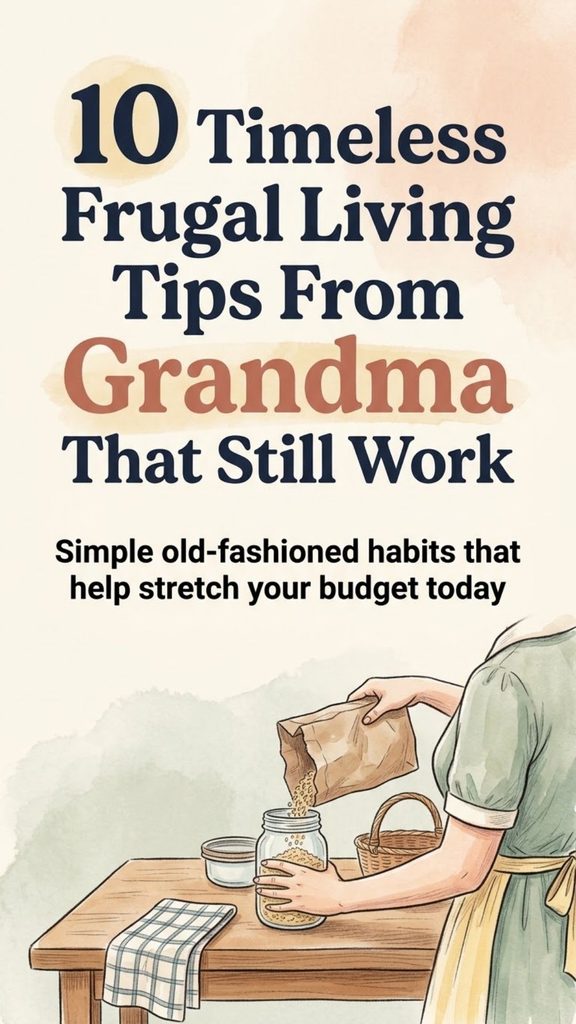
Frugal living used to be less about trends and more about everyday common sense. Many grandmothers learned to stretch groceries, care for their belongings, reuse what they had, and avoid wasting money simply because household budgets demanded it.
Some old-fashioned habits no longer make sense, but plenty of them still do. The most useful lessons are not about denying yourself everything you enjoy. They are about using resources carefully, buying with intention, and getting more value from what you already have.
These ten timeless habits can still make a noticeable difference in a modern household.
You Might Also Like:
- Loading posts...
1. Use What You Have Before Buying More
One of the simplest frugal habits is also one of the easiest to overlook: check what you already own before buying something new.
Older generations often worked through the pantry, repaired household items, reused containers, and found another purpose for things before replacing them. That approach can save surprisingly large amounts of money over time.
Before going shopping, check:
- The pantry and freezer
- Cleaning supplies
- Toiletries
- Craft materials
- Clothing
- Storage containers
- Household tools
This is especially useful with food. Instead of planning every meal around ingredients you need to buy, look at what needs to be used first and build meals around those items.
A half bag of rice, a few vegetables, eggs, leftover chicken, or canned beans can often become a complete meal with very little extra spending.
The goal is not to keep everything forever. It is simply to stop buying duplicates while perfectly useful things are already sitting at home.
2. Cook From Basic Ingredients More Often
Convenience foods save time, but they often cost more than the basic ingredients used to make them.
Grandma’s kitchen was usually built around staples that could be used in many different ways: flour, oats, potatoes, rice, beans, eggs, seasonal vegetables, broth, herbs, and inexpensive cuts of meat.
You do not have to make everything from scratch to benefit from this approach.
Start with the foods that are both easy and worthwhile for your household. That might mean cooking soup instead of buying individual cans, preparing oatmeal instead of single-serving breakfast packets, or roasting a whole chicken and using the leftovers in several meals.
Basic ingredients also tend to be more flexible. A bag of potatoes can become baked potatoes, soup, mashed potatoes, roasted wedges, or breakfast hash. A single-purpose packaged food usually offers far fewer options.
Frugal cooking works best when it is practical. If making something from scratch takes hours, requires expensive ingredients, or creates more work than it saves, buying the ready-made version may be the sensible choice.
3. Waste Less Food
Throwing away food means throwing away the money used to buy it.
Older homemakers became skilled at turning small leftovers into another meal because wasting usable food simply was not an option.
Leftover roasted vegetables can go into soup or a frittata. Stale bread can become breadcrumbs, croutons, bread pudding, or French toast. Cooked meat can be added to sandwiches, casseroles, tacos, soups, or salads.
The freezer is one of the most useful modern tools for practicing this old-fashioned habit. Freeze food before it spoils instead of waiting until it is too late.
A simple “use first” container in the refrigerator can also help. Put opened packages, leftovers, and produce that needs attention in one visible area. Check it before planning lunch or dinner.
Frugality is often less about finding cheaper food and more about making sure the food you already paid for actually gets eaten.
4. Mend, Repair, and Maintain Before Replacing
Previous generations often repaired things because replacement was expensive and less convenient.
That habit still makes sense.
A loose button does not require a new shirt. A torn seam may only need ten minutes with a needle and thread. A wobbly chair may need tightened screws rather than a trip to the furniture store.
Maintenance matters too.
Cleaning appliance filters, sharpening tools, conditioning suitable leather goods, maintaining wooden furniture, and following proper care instructions can help useful possessions last longer.
Not every object should be repaired. Sometimes the cost of repair exceeds the value of the item, and damaged electrical or safety equipment may need professional attention or replacement.
But developing the habit of asking, “Can this be fixed?” before automatically buying another one can save a great deal over the years.
5. Keep a Simple Pantry
A practical pantry is one of the best tools for frugal homemaking.
It does not need hundreds of matching jars or months of emergency food. It simply needs enough versatile staples to help you put together affordable meals without constantly running to the store.
Useful basics might include:
- Rice and pasta
- Flour and oats
- Beans and lentils
- Canned tomatoes
- Cooking oil
- Potatoes and onions
- Basic herbs and spices
- Broth or stock ingredients
- Baking staples
- A few dependable freezer foods
Choose staples based on what your family genuinely eats.
There is no financial advantage in buying twelve cans of something just because they were discounted if no one likes them.
A well-managed pantry reduces impulse shopping and makes it easier to cook at home when plans change.
6. Make a List and Stick to It
Grandma may have kept her grocery list on the back of an envelope, but the principle still works.
Shopping without a plan makes it much easier to buy duplicates, forget essentials, and pick up things simply because they look appealing.
Before shopping, check the kitchen and write down what is genuinely needed. If possible, plan several meals around ingredients already at home and add only the missing items.
A list also helps you compare purchases more thoughtfully.
You can still take advantage of a genuinely useful sale, but “on sale” does not automatically mean “worth buying.” A bargain only saves money when it replaces something you were already going to purchase or will realistically use.
This applies beyond groceries. Keeping a running household list can prevent random trips for cleaning products, toiletries, hardware, and other everyday needs.
7. Learn a Few Basic Household Skills
Knowing how to do simple tasks yourself can reduce unnecessary expenses and make you less dependent on buying a solution every time something goes wrong.
Useful skills include:
- Sewing on a button
- Mending a basic seam
- Cooking several inexpensive meals
- Removing common stains safely
- Hemming simple fabric
- Growing a few herbs
- Repainting small household items
- Making minor non-hazardous household repairs
- Caring properly for tools and furniture
The goal is not to become an expert in everything.
Some jobs, especially electrical, structural, gas, major plumbing, and other safety-sensitive work, should be left to qualified professionals.
Frugal self-reliance means knowing what you can reasonably handle and when paying an expert is the smarter choice.
8. Let Useful Things Do More Than One Job
Older households often had fewer specialized gadgets. One sturdy item might serve several purposes.
A Dutch oven can roast, braise, simmer, bake, and make soup. Glass jars can hold dry goods, leftovers, buttons, craft supplies, or homemade dressings. A good basket can move laundry today and hold blankets tomorrow.
Before purchasing a highly specialized tool, ask how frequently you will actually use it.
A kitchen gadget that performs one unusual task twice a year may take up more space and money than it saves. A dependable knife, saucepan, baking sheet, mixing bowl, and wooden spoon can handle an enormous amount of everyday cooking.
This does not mean specialized tools are always wasteful. If you use something frequently and it genuinely makes life easier, it can be a worthwhile purchase.
Frugality is about value, not owning as little as possible.
9. Buy Quality Where It Matters
Grandma’s frugality was not always about buying the cheapest option.
Often, the better value was the item that lasted.
A very cheap pair of shoes that wears out quickly can cost more over several years than a well-made pair that is cared for and repaired. The same principle can apply to cookware, tools, bedding, coats, and furniture.
That does not mean expensive always equals better. Price and quality are not the same thing.
Instead, look at:
- How often you will use the item
- Whether it can be repaired
- How difficult it is to maintain
- Whether replacement parts are available
- The quality of materials and construction
- Cost per use
Spend thoughtfully on the things that work hard in your household. Save on items where durability makes little difference.
That balance is far more useful than automatically choosing either the cheapest or most expensive option.
10. Be Content With Enough
Perhaps the most valuable old-fashioned frugal habit has little to do with coupons or budgets.
It is learning to recognize when you already have enough.
Modern shopping makes it incredibly easy to keep upgrading. There is always a newer kitchen appliance, another seasonal decoration, another storage product, another beauty item, or another version of something already sitting in the house.
Frugal living becomes much easier when every want does not automatically become a purchase.
Before buying something that is not essential, give yourself time to think.
Ask:
Do I already own something similar?
Where will I keep it?
How often will I use it?
Would I still want it if it were not on sale?
Am I buying it because I need it, or because I am bored, influenced, or tempted by the moment?
Waiting a day or two is often enough for an impulse to pass.
Contentment does not mean never buying nice things. It means being able to enjoy what you own without constantly needing the next thing.
Frugal Living Is About Stewardship, Not Deprivation
The best lessons from Grandma’s generation were not complicated. Use things up. Waste less. Cook what you have. Repair what you can. Take care of your possessions. Think before spending.
These habits still work because they address the everyday leaks that quietly drain a household budget.
You do not have to adopt every old-fashioned habit or turn frugality into a strict lifestyle. Start with the areas where your household wastes the most money or resources.
Maybe that means planning meals around the freezer this week. Perhaps it means mending three pieces of clothing instead of replacing them. It could be as simple as waiting 48 hours before making non-essential purchases.
Frugal living works best when it makes life steadier rather than smaller.
The real lesson Grandma understood was simple: taking good care of what you have often matters more than constantly getting more.