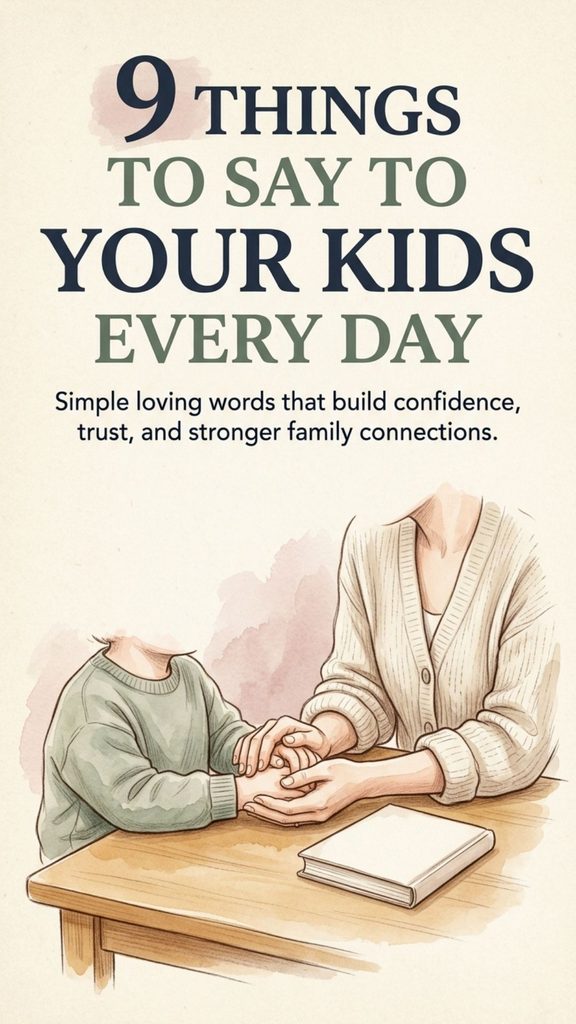
Raising happy, confident children doesn’t require perfect parenting, expensive toys, or a house filled with elaborate activities.
Sometimes, the most meaningful things we give our children are the words we say during ordinary moments.
A simple “I love you” before school, a sincere “I’m proud of how hard you tried,” or a gentle “I believe in you” during a difficult moment can help a child feel supported and understood.
You Might Also Like:
- Loading posts...
Children are constantly learning about themselves through their experiences and relationships. The way parents and caregivers speak to them can influence their developing sense of confidence, belonging, and emotional security.
Of course, words alone aren’t enough. Children also need consistent care, attention, healthy boundaries, and adults who follow through on their promises.
And there isn’t a magical set of phrases that guarantees a child will grow up happy or successful.
But thoughtful, encouraging communication can help strengthen the parent-child relationship and create opportunities for meaningful connection.
Here are nine positive things worth saying to your children regularly, along with practical examples of how to make those words feel genuine.
1. “I Love You”
These three little words are among the most important things a child can hear.
Children need to know they’re loved not only when they’re behaving well, achieving something, or making their parents proud, but also when they’re struggling.
Unconditional love means your care for your child doesn’t disappear when they make mistakes.
A child who forgets their homework, argues with a sibling, or has a difficult day still needs to feel secure in that relationship.
Make It Part of Everyday Life
Say “I love you” during ordinary moments, not only on birthdays or special occasions.
You might say it:
- When your child wakes up in the morning.
- Before they leave for school.
- During a quiet moment together.
- After you’ve worked through a disagreement.
- At bedtime.
You can also remind your child, “I love you, even when we disagree.”
Pair your words with affection that your child welcomes, whether that’s a hug, holding hands, spending time together, or simply listening.
What this teaches: Love isn’t something children have to earn through good behavior or achievements.
2. “I Like It When You…”
Children often hear adults pointing out what they’re doing wrong.
“Pick up your toys.”
“Stop interrupting.”
“Don’t make a mess.”
Instructions and corrections are sometimes necessary, but noticing positive behavior is equally important.
When you tell your child exactly what you appreciate, you help them understand which actions are thoughtful, helpful, or considerate.
What to Say Instead of Generic Praise
Rather than always saying “Good job,” try being specific.
“I like it when you help your little brother put his toys away.”
“I noticed you waited patiently while I finished talking.”
“I appreciate how gently you treated the dog.”
“Thank you for putting your shoes away without being reminded.”
Specific encouragement shows children that their actions matter.
It also helps them recognize behaviors they can choose to repeat.
Just be careful not to make affection feel conditional on being helpful or obedient.
Children deserve warmth and respect even on days when following directions is difficult.
What this teaches: Their everyday choices can positively affect the people around them.
3. “You Bring So Much Joy Into My Life”
Children benefit from knowing that their presence is appreciated.
Sometimes, parents become so busy managing schedules, responsibilities, and household tasks that they forget to express how much they enjoy spending time with their children.
You don’t need a special occasion to tell your child that you’re glad they’re part of your life.
Simple Ways to Express It
You might say:
“I had so much fun reading with you today.”
“I love hearing your funny stories.”
“Spending time with you is one of my favorite parts of the day.”
“I’m so happy we got to do this together.”
These statements help children feel valued for who they are.
However, there’s an important distinction between saying a child brings you joy and suggesting that they’re responsible for your happiness.
Avoid making children feel that they must keep you cheerful or manage your emotions.
A child should be free to have difficult feelings without worrying about disappointing a parent.
What this teaches: Their company is valued, and they belong in a relationship built on warmth and enjoyment.
4. “I’m Proud of You”
Children naturally want to know whether the important adults in their lives notice their efforts.
Hearing sincere pride from a parent can be encouraging, especially when they’re attempting something challenging.
But pride shouldn’t be reserved for perfect grades, winning competitions, or finishing first.
Some of the most meaningful achievements are small and easily overlooked.
A shy child introducing themselves to someone new.
A frustrated child trying again after making a mistake.
A young child learning to tie their shoes.
An older child admitting they did something wrong.
Praise Effort, Growth, and Character
Try saying:
“I’m proud of how much effort you put into that project.”
“I’m proud that you told me the truth, even though it was difficult.”
“You kept practicing when it wasn’t easy. I noticed that.”
“I’m proud of the kindness you showed your friend.”
It’s also useful to ask children how they feel about their own accomplishments.
“Are you proud of what you learned?”
This encourages them to develop their own sense of satisfaction rather than relying entirely on outside approval.
What this teaches: Progress, effort, honesty, and kindness deserve recognition.
5. “You Are Special Just the Way You Are”
Every child develops their own combination of interests, strengths, personality traits, and abilities.
Some children are naturally talkative, while others enjoy quiet activities.
Some love sports, while others prefer drawing, reading, building things, or exploring nature.
Children shouldn’t feel pressured to become copies of their siblings, friends, or classmates.
Celebrate Their Individuality
You might say:
“I love how curious you are about the world.”
“You have such an interesting imagination.”
“I enjoy seeing the things you create.”
“You don’t have to like everything your friends like.”
“There’s no one else exactly like you, and that’s wonderful.”
Celebrate your child’s individuality without suggesting they’re better than other people.
Being special doesn’t mean being superior.
It means they’re a unique person who deserves respect and acceptance.
Avoid repeatedly comparing children, even when you intend the comparison as a compliment.
What this teaches: They can appreciate their own identity while respecting differences in others.
6. “I Trust You”
Trust is an important part of a healthy parent-child relationship.
When children feel trusted in age-appropriate situations, they have opportunities to develop responsibility and decision-making skills.
But trust doesn’t mean removing every rule or allowing children to make choices beyond their developmental abilities.
Healthy trust develops gradually through guidance, communication, and experience.
Show Trust Through Small Responsibilities
For a younger child, you might say:
“I trust you to choose which book we read tonight.”
“I trust you to put your art supplies away when you’re finished.”
For an older child:
“I trust you to tell me if something is bothering you.”
“I trust you to ask for help if you need it.”
“Let’s talk about how you can handle this responsibility.”
It’s important to remember that children make mistakes.
When they do, focus on helping them understand what happened and how to repair the situation.
Avoid turning mistakes into permanent character judgments.
Instead of saying, “I can never trust you again,” explain which behavior needs to change and what rebuilding trust will involve.
What this teaches: Responsibility grows through practice, guidance, and honest communication.
7. “I Believe in You”
Growing up involves uncertainty.
Children encounter unfamiliar situations, challenging schoolwork, friendship problems, and new responsibilities.
Sometimes, they doubt their own abilities.
A parent’s encouragement can help them feel supported enough to take the next step.
But believing in your child doesn’t mean promising that everything will work out exactly as they hope.
Encourage Without Creating Pressure
Instead of saying, “You’re definitely going to win,” consider:
“I believe you can give this your best effort.”
“I know you’ve been working hard to improve.”
“Whatever happens, we can figure out the next step together.”
“I believe you can learn how to do this.”
This approach encourages confidence while leaving room for mistakes and setbacks.
Children need to understand that failure doesn’t make them less worthy.
They can feel disappointed, learn something, and try again when they’re ready.
What this teaches: They have support while developing their abilities and learning from experience.
8. “I Know You Can Work Through This”
When children face a challenge, it’s natural for parents to want to solve the problem immediately.
But constantly stepping in can prevent children from practicing important skills.
Whenever it’s safe and developmentally appropriate, give your child opportunities to think, experiment, and work through manageable difficulties.
Offer Encouragement and Practical Support
Imagine your child is struggling with a puzzle.
Instead of completing it for them, you might say:
“That piece is tricky. What else could you try?”
“Would you like a hint?”
“Let’s look at the problem together.”
For an older child facing a difficult assignment:
“I can see this is frustrating.”
“What’s one small step you could take first?”
“Do you want help making a plan?”
The important thing is to encourage persistence without demanding endless effort.
Sometimes children genuinely need assistance, rest, or a different approach.
It’s also perfectly acceptable to stop and try again later.
What this teaches: Challenges can be approached one step at a time, and asking for help is part of problem-solving.
9. “I’m Grateful for You”
Gratitude is often associated with saying thank you for gifts, favors, or acts of kindness.
But expressing gratitude for your child as a person can be especially meaningful.
A child doesn’t need to complete chores or achieve something impressive to deserve appreciation.
You can simply be thankful for the opportunity to know them, spend time with them, and watch them grow.
Make Your Gratitude Personal
Try saying:
“I’m grateful that I get to spend time with you.”
“Thank you for sharing your thoughts with me.”
“I’m glad we got to laugh together today.”
“I appreciate how thoughtful you were toward your friend.”
“One of my favorite things about being your parent is getting to know the person you’re becoming.”
These statements can create warm moments of connection.
They’re especially meaningful when said sincerely, without expecting a particular response.
What this teaches: Their presence and relationship with you matter beyond accomplishments or responsibilities.
5 More Powerful Things Kids Need to Hear
The original nine phrases provide a useful foundation, but there are several other statements that can strengthen everyday family communication.
“I’m Listening”
Children need opportunities to express themselves without immediately being corrected, interrupted, or judged.
When your child wants to tell you something, give them your attention when possible.
Put down your phone, make appropriate eye contact, and let them finish.
You don’t always need to solve the problem right away.
Sometimes, being heard is what matters most.
“It’s Okay to Have Big Feelings”
Children experience disappointment, anger, fear, excitement, and sadness just like adults do.
However, they’re still learning how to understand and manage those feelings.
Try saying:
“It’s okay to feel angry. We still need to keep everyone safe.”
“I can see that you’re disappointed.”
“Would you like to tell me what happened?”
Accepting feelings doesn’t mean accepting harmful behavior.
It means helping children learn the difference between emotions and actions.
“I’m Sorry”
Parents make mistakes too.
Maybe you raised your voice, misunderstood what happened, or responded impatiently.
A sincere apology can model accountability.
You might say:
“I’m sorry I shouted earlier. I was frustrated, but I should have handled that differently.”
Children benefit from seeing adults acknowledge mistakes and make efforts to repair relationships.
“What Do You Think?”
Asking for a child’s thoughts shows that their perspective matters.
Give them appropriate opportunities to make decisions and express preferences.
You might ask which family activity they’d enjoy, how they would solve a simple problem, or what they think about a story.
This doesn’t mean children make every household decision.
It means their ideas deserve thoughtful attention.
“I’m Here When You Need Me”
Children don’t need adults to be available every second of every day.
But they benefit from knowing that trusted caregivers will respond when they need comfort, guidance, or protection.
A simple reminder can be reassuring:
“You can always tell me if something is worrying you.”
“We’ll work through this together.”
“I’m here to help.”
Why Positive Words Matter in Childhood
Children develop their understanding of themselves through many experiences, including everyday interactions with the adults around them.
Warm, responsive relationships help create an environment where children can explore, learn, and express their feelings.
Encouraging communication can support those relationships.
But confidence doesn’t come from compliments alone.
Children also need age-appropriate independence, opportunities to solve problems, realistic feedback, consistent boundaries, and adults who demonstrate respect through their actions.
For example, telling a child “I trust you” is more meaningful when you also provide appropriate opportunities to practice responsibility.
Saying “I’m listening” matters most when you actually make time to hear what they have to say.
Words and actions work together.
Things Parents Should Avoid Saying Too Often
Sometimes, well-intentioned comments can create pressure or discourage honest communication.
Consider replacing a few common phrases with more supportive alternatives.
| Instead of Saying | Try Saying |
|---|---|
| “Stop crying. You’re fine.” | “I can see you’re upset. I’m here.” |
| “You’re the smartest kid in class.” | “You worked hard to understand that.” |
| “Why can’t you be more like your sibling?” | “Let’s focus on what you need help with.” |
| “You always mess things up.” | “That didn’t work. What can we try next?” |
| “Don’t disappoint me.” | “Do your best, and we’ll talk about what you learn.” |
| “There’s nothing to be scared of.” | “It feels scary right now. Let’s figure it out together.” |
No parent communicates perfectly all the time.
The goal isn’t to memorize flawless responses.
It’s to become more aware of how everyday words may affect the relationship.
How to Use These Phrases Naturally Every Day
You don’t need to recite all nine statements every morning like a checklist.
In fact, encouragement often feels more meaningful when it happens naturally.
Look for small opportunities throughout the day.
In the morning: Tell your child you love them and wish them a good day.
After school: Listen to something they want to share without immediately asking about grades or homework.
During chores: Notice their cooperation or effort.
When they’re frustrated: Offer support without immediately taking over.
At dinner: Ask about something they enjoyed or found interesting.
At bedtime: Remind them that they’re loved and appreciated.
Some days, you’ll say several of these phrases.
Other days, connection may happen through a hug, a shared laugh, or sitting quietly together.
And that’s okay.
A Simple Seven-Day Family Connection Challenge
If you’d like to become more intentional about encouraging your children, try this gentle one-week challenge.
Monday — Express love. Tell your child you love them during an ordinary moment.
Tuesday — Notice something positive. Offer specific appreciation for an action or effort.
Wednesday — Listen more closely. Set aside a few minutes for an uninterrupted conversation.
Thursday — Encourage independence. Let your child make an age-appropriate decision.
Friday — Celebrate progress. Recognize something they’ve been practicing or learning.
Saturday — Enjoy time together. Choose an activity with no pressure to be productive.
Sunday — Express gratitude. Tell your child something you genuinely appreciate about sharing life with them.
The purpose isn’t to complete every task perfectly.
It’s to create small opportunities for connection that can continue beyond the week.
Frequently Asked Questions About Encouraging Children
Should You Tell Your Child “I Love You” Every Day?
Expressing love regularly is a healthy way to nurture connection.
Children also benefit from experiencing love through attention, responsiveness, affection they welcome, and consistent care.
Can You Praise Children Too Much?
Praise is most useful when it’s sincere, specific, and doesn’t create pressure to perform.
Constant exaggerated praise may be less helpful than noticing genuine effort, thoughtful behavior, and meaningful progress.
What if My Child Doesn’t Respond to Affectionate Words?
Children have different personalities and communication styles.
Some enjoy verbal affection, while others prefer shared activities, physical closeness, or quiet companionship.
Respect your child’s preferences and continue offering warmth without demanding a particular reaction.
Should You Say These Things to Teenagers Too?
Absolutely.
Teenagers still benefit from feeling loved, respected, trusted, and supported.
You may simply need to adapt your wording to suit their age and preference for independence.
What if I’ve Said Hurtful Things in the Past?
Every parent makes mistakes.
Acknowledging what happened, apologizing sincerely, and changing your behavior can help repair trust.
If communication problems are persistent or severe, professional family support may be helpful.
Do These Phrases Guarantee Confident Children?
No single parenting technique can guarantee a particular outcome.
Children’s development is shaped by many factors, including temperament, relationships, experiences, health, and environment.
Positive communication is one useful part of a broader, supportive parenting approach.
Final Thoughts: The Little Words Your Children May Remember for Years
When children grow up, they may not remember every toy, birthday decoration, or expensive family outing.
But meaningful moments of connection can leave lasting impressions.
They may remember being comforted when they were scared, encouraged when something felt impossible, or listened to when they had something important to say.
Telling your children “I love you,” “I’m proud of your effort,” and “I believe in you” doesn’t require money or elaborate planning.
It requires attention, sincerity, and a willingness to connect.
You don’t have to be a perfect parent.
And you don’t need to say all the right things every single day.
What matters is building a relationship where children consistently experience love, respect, guidance, and support.
Sometimes, the simplest words are the ones that help a child feel most at home: “I love you. I’m here for you. And I’m glad you’re in my life.”