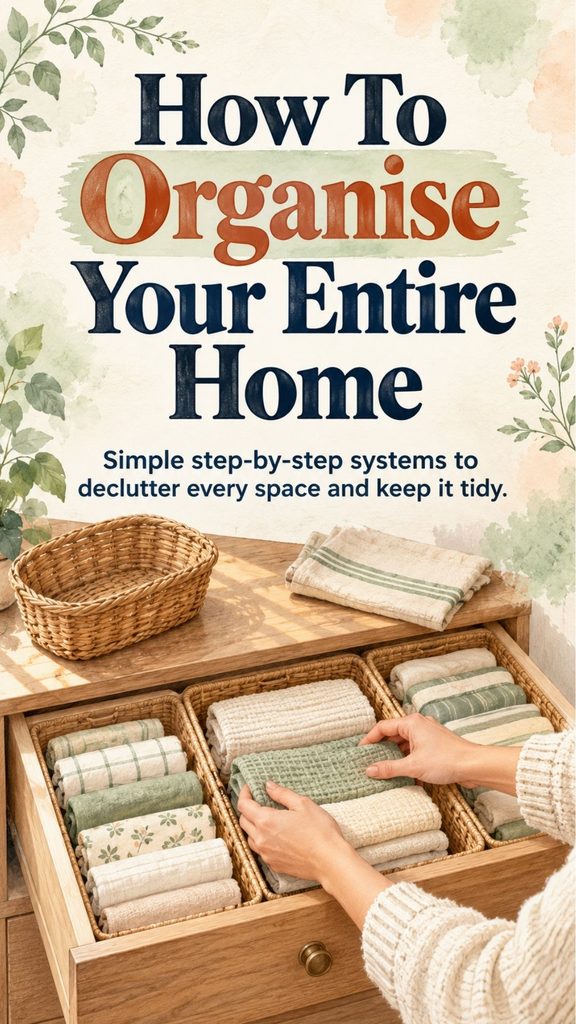
An organised home isn’t necessarily one with perfectly arranged shelves, matching storage containers, or empty countertops. It’s a home where everyday things are easy to find, belongings have sensible places to live, and tidying up doesn’t feel like an endless project.
Unfortunately, getting there can seem overwhelming, especially when clutter has gradually spread through bedrooms, kitchen drawers, cupboards, bathrooms, and forgotten storage spaces.
The mistake many people make is attempting to organise everything at once. They empty several cupboards, create enormous piles, become exhausted halfway through, and end up with a bigger mess than they started with.
You Might Also Like:
- Loading posts...
A better approach is to work systematically, tackling small areas before moving on to larger spaces. You don’t need to purchase an expensive collection of organisers or spend an entire weekend rearranging your belongings.
With a practical plan, a few simple storage solutions, and manageable maintenance habits, you can gradually organise your entire home and make it easier to keep that way.
1. Start Small Instead of Tackling an Entire Room
When you decide to organise your house, it’s tempting to begin with an ambitious goal such as cleaning the whole kitchen or completely transforming your bedroom.
However, a room contains many individual storage areas, each requiring separate decisions.
Instead of approaching your house room by room, begin with smaller organisational zones.
For example, the kitchen could be divided into:
- Cutlery and utensil drawers.
- Food storage containers.
- The refrigerator.
- Baking supplies.
- Pantry shelves.
- Under-sink storage.
- Cooking equipment.
- Frequently used countertop items.
Your bedroom might include the wardrobe, bedside table, jewellery box, underwear drawer, and under-bed storage.
Choose one manageable area and finish it completely before opening another.
This approach prevents half-completed projects from spreading throughout the house. It also means you can make genuine progress even when you only have fifteen or twenty minutes available.
A single organised drawer might seem insignificant, but several small improvements eventually create a noticeably more functional home.
2. Declutter Before Buying Storage Containers
One of the most common organisation mistakes is buying baskets, dividers, boxes, and decorative containers before deciding what actually needs to be stored.
Storage products can be helpful, but they won’t solve the problem if you simply rearrange belongings you no longer want or use.
Begin by removing the contents of your chosen area and assessing what belongs there.
Prepare four categories:
Keep: Items you regularly use, genuinely enjoy, or have a clear reason to retain.
Donate or Sell: Belongings in suitable condition that no longer serve your household.
Discard or Recycle: Broken, expired, unusable, or unwanted items that cannot reasonably be passed along.
Relocate: Things worth keeping that belong somewhere else in the house.
As you sort, consider when you last used an item, whether you own unnecessary duplicates, and whether it is worth the space it occupies.
You don’t have to follow an extreme minimalist approach. Sentimental belongings, seasonal decorations, and occasionally used equipment can all have a place in an organised home.
The important thing is making conscious decisions rather than automatically keeping everything.
Avoid leaving donation bags in a corner indefinitely. Arrange to remove them from the house within a reasonable time so they don’t become another form of clutter.
3. Give Similar Items a Shared Home
Once you’ve removed unnecessary belongings, examine everything that remains.
Grouping similar items is one of the easiest ways to make storage more practical.
Instead of keeping charging cables in several random drawers, establish a dedicated electronics area. Keep baking utensils together, collect cleaning cloths in one location, and create a specific place for stationery.
The arrangement should reflect how your household actually functions.
Items used every day belong in convenient, accessible locations. Things used occasionally can be stored on higher shelves or toward the back of cupboards.
For example, if you bake regularly, measuring cups, mixing bowls, baking trays, and frequently used ingredients should be relatively close to one another.
A special cake tin used twice a year doesn’t need to occupy the most accessible kitchen shelf.
Organising according to actual habits is usually more effective than copying a beautiful storage arrangement that doesn’t suit your daily routine.
4. Organise Your Kitchen for Easier Cooking
The kitchen is one of the busiest areas in most homes, making it a worthwhile place to establish practical storage systems.
Start by considering how you move around the room while preparing meals.
Keep frequently used cooking utensils close to your main preparation area. Store everyday plates and glasses somewhere accessible, and avoid making heavy cookware difficult to retrieve.
Pantry and Food Cupboards
Group pantry items into sensible categories such as baking ingredients, breakfast foods, canned goods, grains, snacks, and cooking essentials.
Check expiration dates and place older products toward the front so they are more likely to be used first.
Clear containers can be useful for certain dry goods, but there is no need to transfer every ingredient into matching jars. Original packaging often provides valuable cooking instructions, ingredient details, and expiration information.
Choose whatever makes food easiest to identify and manage.
Refrigerator
Remove expired or spoiled food, wipe shelves, and give frequently used items consistent locations.
Keep raw meat and poultry securely contained on a lower shelf to prevent drips onto ready-to-eat foods.
A small designated area for foods that should be used soon can also help reduce unnecessary waste.
Kitchen Drawers
Use inexpensive dividers or small containers to separate utensils, measuring tools, food clips, and miscellaneous accessories.
The goal is to avoid rummaging through a crowded drawer every time you need something simple.
5. Create a Wardrobe That Is Easy to Maintain
Bedroom organisation becomes easier when clothing storage reflects what you actually wear.
Begin by removing clothes that no longer fit your needs, separating seasonal pieces, and identifying items that require repairs.
Then organise the remaining clothing into straightforward categories.
You could arrange hanging clothes by type, keep folded knitwear together, and assign individual drawers to socks, underwear, and other smaller garments.
Drawer dividers can be especially useful for preventing small items from mixing together.
Avoid forcing too many clothes into a limited space. Overfilled drawers and tightly packed wardrobes are difficult to maintain, even when they were beautifully organised initially.
If storage is limited, consider keeping out-of-season clothing in labelled containers rather than occupying valuable everyday wardrobe space.
Keep frequently worn shoes accessible and store special-occasion footwear separately.
The purpose is to make getting dressed simpler, not to create an elaborate clothing display that requires constant rearranging.
6. Simplify Bathroom Storage
Bathrooms often contain a surprising collection of half-used products, expired toiletries, duplicate cosmetics, and miscellaneous supplies.
Start by checking everything stored inside cabinets and drawers.
Dispose of expired products appropriately, remove empty packaging, and separate everyday essentials from occasional-use items.
Useful bathroom categories include:
- Daily skincare.
- Hair products and accessories.
- Dental supplies.
- First-aid items.
- Spare toiletries.
- Cleaning supplies.
- Personal care products.
Small baskets and drawer dividers work particularly well in bathrooms because many products come in awkwardly shaped containers.
If multiple people share the space, assigning separate baskets can prevent belongings from becoming mixed together.
Store medicines according to their label instructions, preferably away from excessive bathroom heat and humidity when required, and keep hazardous products safely out of children’s reach.
There is little benefit in creating a complicated system. Bathroom organisation should make morning and evening routines easier.
7. Give Your Entryway a Proper Storage System
The entrance to a home can become cluttered remarkably quickly.
Shoes, bags, keys, coats, umbrellas, letters, and miscellaneous belongings often accumulate near the front door because there is no designated place for them.
A functional entryway doesn’t require a large hallway or expensive furniture.
Even a small arrangement can make a difference.
Consider adding hooks for frequently used jackets, a basket for scarves and hats, a shoe rack, and a small tray for keys.
If paperwork regularly enters your home through the front door, provide a dedicated place for incoming letters rather than allowing them to spread across kitchen countertops.
The most effective entryway system is one that takes very little effort to use when someone arrives home.
8. Organise Household Paperwork and Important Documents
Physical clutter isn’t limited to clothing and household objects.
Bills, instruction manuals, receipts, warranties, school letters, and other documents can become difficult to manage when they are scattered throughout the house.
Establish a simple household administration area, even if it consists of nothing more than one drawer and a small filing box.
Create clear categories for documents that need to be retained.
For example:
- Important personal documents.
- Insurance information.
- Household bills.
- Tax-related paperwork.
- Product warranties.
- Appliance manuals.
- School or childcare information.
- Documents requiring action.
Keep incoming paperwork in a designated tray and review it regularly.
Shred unnecessary documents containing sensitive personal information rather than placing them directly into household recycling.
Digital files deserve organisation too. Use clearly named folders and maintain appropriate backups for important records.
For online accounts, a reputable password manager is generally preferable to keeping an openly accessible list of passwords in a household binder.
9. Use Affordable Containers and Labels
An organised home doesn’t need an expensive matching storage collection.
Before shopping, look at what you already own.
Shoeboxes can separate accessories inside cupboards. Small jars can hold suitable household supplies. Existing baskets can organise shelves, and sturdy boxes can be repurposed for seasonal storage.
Measure cupboards, drawers, and shelves before purchasing additional containers.
One perfectly sized organiser is often more useful than several attractive baskets that waste valuable space.
Labels are particularly helpful in areas used by several members of the household.
Consider labelling pantry categories, craft supplies, seasonal decorations, storage boxes, and children’s activity materials.
You can use a label maker, masking tape, handwritten tags, or simple adhesive labels.
Not every drawer requires a label, but shared or less frequently accessed storage areas often benefit from clear identification.
The easier it is to recognise where something belongs, the more likely it is to be returned after use.
10. Don’t Forget Hidden Storage Areas
Once the main living spaces are functioning well, turn your attention to areas that are easy to ignore.
Under-bed storage, utility cupboards, linen closets, garages, laundry rooms, and spare-room cupboards can gradually become dumping grounds.
Apply the same basic process: remove unnecessary items, group what remains, and establish practical storage locations.
For linen cupboards, consider keeping complete bedding sets together or separating sheets by bed size.
In laundry areas, provide specific places for detergents, cleaning cloths, stain-removal products, and frequently used supplies.
Seasonal decorations are easier to manage when stored in clearly labelled boxes.
Avoid placing heavy items on high shelves, blocking exits with storage containers, or keeping hazardous chemicals where children or pets can access them.
Organisation should make a home safer and easier to use, not simply hide clutter behind closed doors.
11. Create a Weekly Home Organisation Routine
The secret to maintaining an organised home is accepting that belongings will naturally move around as people live their daily lives.
An organisation system is not a one-time project. It needs occasional attention.
Rather than waiting until every room becomes cluttered again, establish a short weekly reset.
Choose one small area to inspect each week.
A simple monthly rotation might look like this:
| Week | Organisation Task |
|---|---|
| Week 1 | Kitchen drawers and pantry |
| Week 2 | Bathroom storage and toiletries |
| Week 3 | Wardrobe and bedroom drawers |
| Week 4 | Entryway, paperwork, and miscellaneous storage |
You can adjust the schedule to suit your household.
Alongside the weekly routine, spend a few minutes each evening returning everyday belongings to their proper places.
Small resets are usually much less demanding than repeatedly undertaking enormous decluttering projects.
12. Make Your Storage Beautiful Without Sacrificing Function
Practical organisation doesn’t have to look clinical or overly minimalist.
Natural baskets, wooden trays, linen containers, simple ceramic jars, and coordinated hangers can make a space feel pleasant while serving a genuine purpose.
However, decorative details should be added after the storage system works.
A beautiful pantry is not particularly useful if ingredients are difficult to reach or impossible to identify.
Likewise, arranging everything in matching containers isn’t an improvement if it creates additional work every time you return from grocery shopping.
Choose materials, colours, and storage solutions that suit your home and are easy to maintain.
Sometimes the most attractive result is simply a clear countertop, an orderly drawer, or a shelf with enough breathing room that everything can be seen.
A Simple 7-Day Plan to Begin Organising Your Home
If you feel unsure where to begin, use this manageable one-week starting plan.
Day 1: Organise one kitchen drawer and check a pantry shelf.
Day 2: Sort bathroom products and remove empty or expired containers.
Day 3: Declutter one wardrobe section or dresser drawer.
Day 4: Establish a proper place for shoes, bags, coats, and keys.
Day 5: Gather scattered paperwork and create a simple filing system.
Day 6: Organise one overlooked cupboard or storage area.
Day 7: Remove donation items, return misplaced belongings, and review what you’ve completed.
This plan will not necessarily organise every inch of a large household in seven days. Instead, it provides a realistic starting point and introduces a system that can be repeated until every area has received attention.
An Organised Home Should Make Everyday Life Easier
A well-organised house is not one that never gets messy.
Cooking creates dishes. Children play with toys. Laundry accumulates. People leave things in the wrong places. These are normal parts of living in a home.
The difference is having straightforward systems that make restoring order easier.
Start with one drawer, one shelf, or one cupboard. Remove what is unnecessary, group similar belongings, and create sensible storage locations using what you already have.
Gradually work through the rest of the house, paying particular attention to the places where clutter repeatedly collects.
You don’t need perfection, expensive storage products, or an exhausting weekend transformation.
A home becomes easier to manage when everything has a reasonable place, everyday routines are supported by practical organisation, and tidying no longer requires starting from scratch every time.