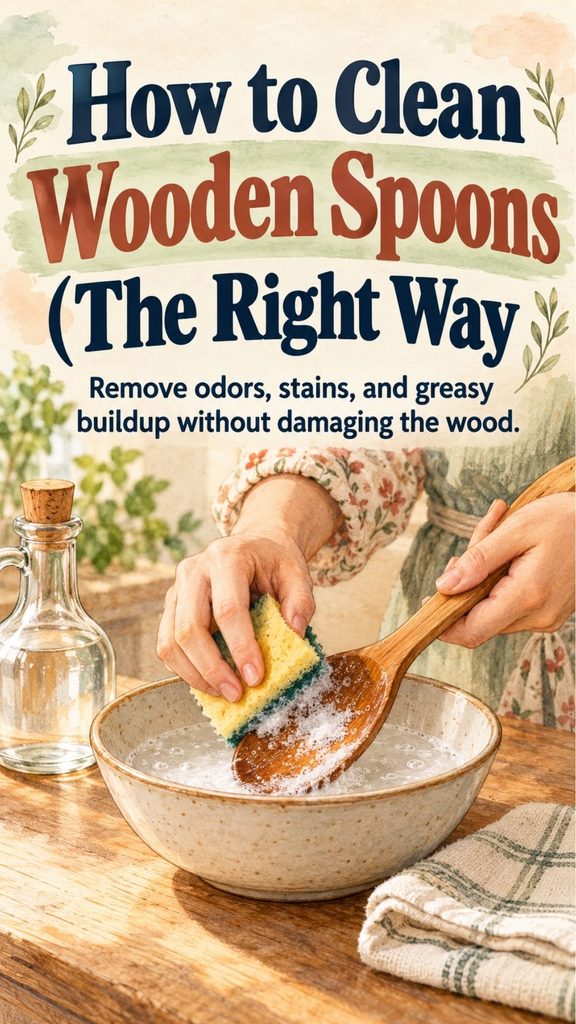
Wooden spoons earn their place in the kitchen because they are sturdy, comfortable to use, gentle on cookware, and suitable for stirring everything from soups and sauces to bread dough. A well-made wooden spoon can last for years, but only if it is cleaned and dried properly.
Wood behaves differently from stainless steel, silicone, or plastic. It is porous and can absorb some moisture, oils, odors, and food residue. Repeated exposure to water followed by improper drying can also cause the wood to swell, roughen, split, or eventually develop cracks.
Fortunately, wooden utensils do not need complicated cleaning treatments. For everyday use, warm water, dish soap, proper drying, and occasional conditioning are usually all that is necessary.
You Might Also Like:
- Loading posts...
More aggressive methods—including prolonged soaking, repeated boiling, and dishwasher cleaning—can shorten the life of the spoon rather than improve it.
Here is how to clean wooden spoons properly, remove stubborn odors and stains, and keep the wood in good condition.
The Best Way to Clean Wooden Spoons After Everyday Use
Routine cleaning should be simple.
Wash a wooden spoon soon after using it instead of leaving food residue to dry on the surface.
Use warm water, a small amount of ordinary dish soap, and a clean sponge or dishcloth. Scrub the entire spoon, paying particular attention to the bowl of the spoon, edges, handle, and any carved areas where food can collect.
Rinse thoroughly under clean running water.
Then dry the spoon immediately with a clean towel.
Do not simply place a soaking-wet wooden spoon flat on the counter. Allow it to continue air-drying in a position where air can circulate around it before putting it into a drawer or utensil container.
This basic routine is suitable for most wooden utensils and is much gentler than repeated deep-cleaning treatments.
Why You Shouldn’t Soak Wooden Spoons
Leaving wooden spoons sitting in a sink or bowl of water is one of the easiest ways to damage them.
Wood absorbs moisture. As it becomes wet, it can swell. During drying, it contracts again. Repeated or prolonged wetting can eventually encourage warping, splitting, rough surfaces, and cracks.
For the same reason, wooden spoons are generally better washed by hand than in a dishwasher.
Dishwashers expose utensils to prolonged moisture, high temperatures, strong detergents, and heated drying cycles. Those conditions can be particularly hard on unfinished or lightly finished wood.
Wash the spoon, rinse it, dry it, and let it finish air-drying. There is usually no benefit in soaking it.
Should You Boil Wooden Spoons?
Videos showing wooden spoons being boiled often reveal cloudy water, grease, or residue and can make boiling appear to be an excellent cleaning technique.
It is not a good routine for maintaining wooden utensils.
Prolonged exposure to boiling water can cause wood to absorb moisture rapidly and experience considerable temperature changes. Repeating the treatment may dry out, warp, roughen, or crack the spoon.
If a wooden utensil has become so dirty, cracked, deeply contaminated, or difficult to clean that ordinary washing no longer seems sufficient, replacing it may make more sense than repeatedly boiling it.
For regular cleaning, warm soapy water is the gentler choice.
How to Remove Odors From Wooden Spoons
Wooden spoons sometimes retain the smell of strongly flavored ingredients such as garlic, onions, curry, or tomato-based sauces.
Start with a thorough wash using dish soap and warm water.
If an odor remains after the spoon dries, baking soda can be useful as a mild deodorizing cleaner.
Make a simple paste by combining baking soda with a small amount of water. Spread it over the spoon and gently rub the surface with your fingers, a soft sponge, or a soft cleaning brush.
Allow it to remain briefly, then rinse the spoon thoroughly.
Dry it with a towel and allow it to air-dry completely.
You may need to repeat the process for a particularly persistent odor.
How to Deal With Stains
Wood naturally changes color with use.
Tomato sauce, turmeric, berries, and other strongly colored foods may leave stains, especially on pale wood. A stained spoon is not necessarily a dirty spoon.
Start by washing it normally.
For persistent discoloration, try gently scrubbing with a baking-soda-and-water paste. Baking soda provides mild abrasion without requiring a harsh scouring cleaner.
Avoid aggressively sanding or scrubbing the spoon every time it changes color. Normal darkening and patina develop naturally on frequently used wooden utensils.
The goal should be cleanliness and good condition, not keeping the wood permanently looking new.
Vinegar and Baking Soda: Do You Need Both?
A popular cleaning method involves pouring vinegar onto baking soda and using the fizzing mixture as a cleaner.
The bubbling certainly looks effective, but vinegar and baking soda chemically react with one another. Once combined, they begin neutralizing each other’s acidity and alkalinity.
For wooden spoons, there is usually little reason to combine them.
If you want gentle scrubbing and odor removal, use baking soda with water.
If you choose to use diluted vinegar for a specific cleaning purpose, use it separately rather than assuming that combining the two creates a stronger cleaner.
For most everyday wooden-spoon cleaning, neither is essential. Dish soap and warm water remain the simplest option.
Avoid Harsh Scrubbing
Wooden spoons can become slightly rough over time, but aggressive scouring can make matters worse.
Avoid steel wool and very abrasive scrubbers unless you are deliberately refinishing a damaged wooden utensil.
A normal kitchen sponge, dishcloth, or soft brush is enough for routine cleaning.
If dried food is stuck to the spoon, wet it briefly under warm water and scrub rather than leaving the entire utensil submerged for a long period.
Let Wooden Spoons Dry Completely
Proper drying matters almost as much as proper washing.
After rinsing, remove as much surface moisture as possible with a clean towel.
Then allow the utensil to dry completely in open air.
Do not put a damp spoon into a closed drawer or tightly packed utensil crock where moisture remains trapped against the wood.
Persistent moisture can encourage discoloration, unpleasant odors, and microbial growth.
A spoon that has developed suspicious fuzzy growth, deep cracks containing food residue, severe splitting, or areas that cannot be cleaned properly should generally be replaced.
How to Condition Wooden Spoons
Wooden utensils can become dry and dull after repeated washing.
Occasional conditioning can help maintain the surface and reduce excessive drying.
Start with a completely clean and thoroughly dry spoon.
Apply a small amount of food-grade mineral oil intended for wooden kitchenware. Rub it over the entire surface using a clean, lint-free cloth or paper towel.
Allow the oil time to absorb, then wipe away any excess.
Another option is a conditioning product made specifically for wooden cutting boards and utensils, often containing food-grade mineral oil combined with beeswax.
There is no universal schedule for oiling. Condition the spoon when the wood begins to appear noticeably dry, pale, or rough rather than applying oil simply because a certain number of days have passed.
Don’t Use Cooking Oil to Condition Wooden Utensils
It may seem logical to condition a wooden spoon with whatever oil is already in the kitchen, but ordinary cooking oils are not always a good choice.
Oils such as olive oil can oxidize and eventually develop unpleasant odors or flavors.
Food-grade mineral oil is commonly preferred for wooden kitchen tools because it remains stable and does not become rancid in the same way many edible oils can.
Make sure the product is specifically suitable for food-contact wooden surfaces.
A Simple Wooden Spoon Care Routine
Keeping wooden spoons in good condition does not require a complicated cleaning ritual.
After cooking:
- Wash promptly with warm water and dish soap.
- Scrub gently with a sponge or soft brush.
- Rinse thoroughly.
- Towel-dry immediately.
- Allow the spoon to air-dry completely.
- Condition occasionally with food-grade mineral oil when the wood looks dry.
For stubborn odors or light staining, use a baking-soda-and-water paste as an occasional extra step.
Avoid prolonged soaking, routine boiling, dishwasher cleaning, harsh abrasives, and storing wooden utensils while damp.
When Should You Replace a Wooden Spoon?
Wooden spoons are durable, but they do not last forever.
Minor discoloration or a few surface scratches are usually not reasons to throw one away. More serious deterioration deserves attention.
Consider replacing a spoon if it develops deep cracks or splits that trap food, visible mold that cannot be removed, severe warping, large splinters, or extensive deterioration that makes the surface difficult to clean.
A badly damaged utensil is not improved by adding more oil.
Replacing it is often the more sensible option.
Keep Wooden Spoons Simple to Care For
The best care for wooden spoons is surprisingly ordinary.
They do not need frequent boiling, complicated homemade cleaning mixtures, or aggressive scrubbing. They need prompt hand washing, complete drying, and occasional conditioning.
Treat the wood gently and pay attention to its condition.
With those simple habits, good wooden spoons can remain smooth, useful, and dependable through countless pots of soup, batches of sauce, cakes, breads, and everyday family meals.