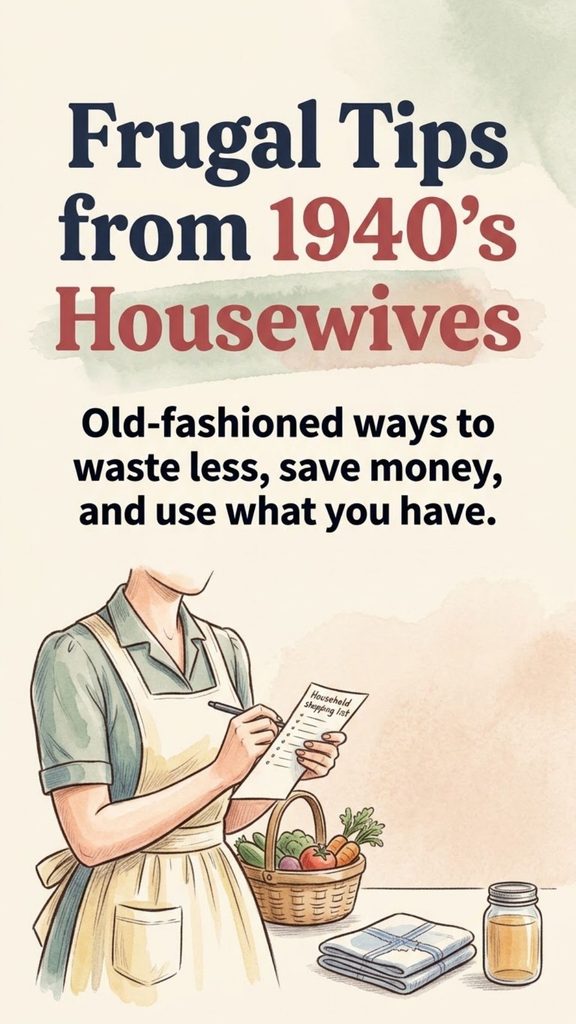
Frugality in the 1940s was not built around trendy challenges or trying to spend as little as possible for fun. For many families, careful household management was simply necessary.
Americans entered the decade still carrying memories of the Great Depression, and World War II soon created new pressures. Certain foods and consumer goods were rationed, fuel and rubber were limited, manufacturing shifted toward military needs, and millions of households adjusted their routines around wartime shortages.
Women played an enormous role in keeping homes running during this period. Many continued managing households while others also entered paid employment in much larger numbers during the war years. Meals still had to be prepared, clothing maintained, children cared for, gardens tended, and household supplies stretched as far as possible.
You Might Also Like:
- Loading posts...
Life in the 1940s should not be romanticized. Families dealt with uncertainty, separation, shortages, exhausting work, and wartime loss. Yet some of the everyday habits households relied on remain remarkably practical for anyone trying to reduce expenses today.
The useful lesson is not to recreate wartime life. It is to recover the habit of using what you already have carefully before buying more.
1. Shop Your Kitchen Before Shopping at the Store
One of the strongest lessons from wartime homemaking is simple: start with what you already have.
During World War II, American households faced rationing and shortages involving items such as sugar, coffee, meat, fats, canned foods, shoes, gasoline, and other goods at various points during the war. Homemakers could not always decide on a meal and assume every ingredient would be waiting at the store.
Meals often had to begin with a different question:
What food is already available, and how can I turn it into dinner?
That approach is just as valuable now.
Before making your weekly grocery list, look through your:
- refrigerator
- freezer
- pantry
- bread box
- produce drawer
Pay particular attention to foods that need to be used soon.
A half bag of carrots can become soup. Cooked chicken can go into sandwiches, a casserole, tacos, or fried rice. Overripe bananas can be frozen for baking. Small amounts of vegetables can be added to soups, omelets, pasta dishes, or stir-fries.
Building even two or three meals each week around ingredients already in the house can prevent food from quietly becoming waste.
2. Learn to Stretch Expensive Ingredients
Wartime cooking encouraged families to make limited ingredients serve more people.
Meat, fats, sugar, and other foods could be difficult to obtain in desired quantities, so cooks developed ways to make meals satisfying without depending on large portions of costly ingredients.
That principle still works beautifully.
Instead of making meat the largest part of every dinner, combine smaller quantities with foods such as:
- beans
- lentils
- potatoes
- rice
- pasta
- vegetables
- bread
- oats
Meatloaf is a classic example of this style of cooking because meat can be combined with other ingredients and served alongside inexpensive vegetables or potatoes.
Soups, stews, casseroles, curries, bean dishes, and pasta meals perform the same job.
You are not necessarily trying to eliminate expensive foods. You are simply asking them to do less work.
A pound of meat used as the centerpiece of one dinner may feed a household once. Used thoughtfully in soup, pasta, tacos, or a casserole, it may contribute to several meals.
3. Treat Leftovers as Ingredients
A frugal kitchen does not view leftovers as failed meal planning.
They are ingredients waiting for their next use.
Roasted vegetables can become soup. Rice can become fried rice. Cooked potatoes can become breakfast potatoes or potato cakes. Stale bread can be turned into crumbs, croutons, bread pudding, or stuffing.
Even small leftovers are useful.
Keeping a clearly labeled container in the refrigerator for ingredients that should be used quickly can help. When planning tomorrow’s lunch or dinner, check that container first.
The important distinction is food safety. Leftovers should be refrigerated promptly, stored properly, and discarded when they are no longer safe to eat. Saving money is never worth risking illness.
4. Make Desserts Simpler
Sugar rationing changed American baking during World War II. Recipes using smaller amounts of sugar, naturally sweet ingredients, or alternative sweeteners became more attractive because households had to make limited supplies last.
There is a modern budgeting lesson here even without ration coupons.
Dessert does not have to require a long list of specialty ingredients.
Some of the least expensive homemade desserts are also the simplest:
- baked apples
- fruit crisps
- rice pudding
- bread pudding
- simple cakes
- oatmeal cookies
- seasonal fruit
- homemade custard
Fruit that is slightly past its best appearance can often still be cooked into a sauce, crumble, pie filling, or compote if it remains safe to eat.
Simplifying desserts can reduce grocery spending while also making it less tempting to buy expensive packaged sweets.
5. Grow Something You Actually Eat
Victory gardens became one of the best-known features of the American home front during World War II.
Families, schools, and communities were encouraged to grow vegetables and fruits to supplement the food supply. Gardens appeared in backyards, community plots, and other available spaces.
The modern version does not need to be a huge vegetable garden.
A few productive plants can still reduce the amount you buy, particularly if you concentrate on foods your household regularly uses.
Good possibilities include:
- herbs
- lettuce
- green onions
- tomatoes
- peppers
- beans
- cucumbers
- zucchini
Herbs are especially practical because a small amount at the grocery store can be relatively expensive, while many culinary herbs can be harvested repeatedly at home.
Before spending heavily on raised beds, tools, containers, or elaborate garden systems, start small. A garden intended to save money can easily become an expensive hobby if you buy more equipment than you need.
Use existing containers when they are safe for growing food, start with a manageable number of plants, and learn what grows well in your climate before expanding.
6. Preserve Food When It Actually Saves Something
Preserving seasonal food was an important household skill long before the 1940s, and wartime conservation campaigns encouraged families to preserve homegrown and locally available produce.
Today, freezing and safe home canning can still reduce waste, especially when you have a garden or access to large quantities of inexpensive seasonal produce.
But preserving food is not automatically cheaper.
Buying small amounts of expensive produce specifically for canning may cost more than buying the finished product at the store. There are also costs for jars, lids, freezer space, electricity, and equipment.
Preservation makes the most financial sense when you have:
- a productive garden
- a large seasonal harvest
- inexpensive bulk produce
- fruit trees producing more than you can eat
- food that would otherwise spoil
If you can food at home, use current tested recipes and modern food-safety guidance. Old family recipes may have sentimental value, but preservation recommendations have changed as food-safety knowledge has improved.
7. Mend Clothes Before Replacing Them
Clothing received far more maintenance in earlier generations than many garments do today.
A missing button, loose hem, small seam tear, or minor hole did not automatically mean an item was finished.
Learning a few simple repairs can dramatically extend the useful life of clothing.
You do not need advanced sewing skills. Start with:
- Sewing on a button.
- Repairing a loose seam.
- Fixing a fallen hem.
- Patching a small hole.
- Reinforcing fabric before damage grows.
The earlier you make a repair, the easier it usually is.
A tiny opening along a seam may take five minutes to stitch. Ignore it for several washes and it can become a much larger tear.
Clothing also lasts longer when it is cared for gently. Washing only when necessary, following care labels, treating stains promptly, avoiding excessive heat, and storing garments properly can reduce how frequently they need replacing.
8. Use Things Until Their Useful Life Is Finished
One difference between a truly frugal household and a household that simply enjoys bargain shopping is the willingness to stop replacing things unnecessarily.
A perfectly functional table does not need replacing because a new style is popular. Towels do not need to match. A scratched storage container can still store household items. Furniture can often be cleaned, repaired, refinished, or repurposed.
Before buying a replacement, ask:
Is the old item actually unusable, or am I simply tired of it?
That question can prevent hundreds of small purchases.
This does not mean keeping dangerous appliances or broken items forever. Frugality is about getting reasonable value from possessions, not creating clutter.
Once an object is genuinely worn out, unsafe, or no longer useful, replacing it can be the sensible choice.
9. Combine Errands and Drive Less
Fuel conservation was a serious wartime issue. Gasoline and rubber were strategically important, and civilian driving was restricted in various ways during the war.
Families responded by walking, sharing rides, using public transportation, and reducing unnecessary journeys.
You can apply the same thinking without wartime restrictions.
Instead of making several separate car trips, group errands by location.
For example, one trip might include:
- groceries
- pharmacy
- bank
- post office
- hardware store
Planning errands together can reduce fuel use, vehicle wear, and wasted time.
If an errand is comfortably walkable, walking may eliminate the transportation cost entirely. Carpooling and public transportation can also make sense depending on where you live.
10. Use Less Electricity Without Making Home Uncomfortable
Modern households use far more electrical devices than families did in the 1940s, which means there are also more opportunities to waste energy.
Start with the easiest habits.
Turn lights off in empty rooms. Do not leave televisions playing when nobody is watching. Shut computers down or use appropriate power-saving settings when they are not needed. Run dishwashers and washing machines with full loads when practical.
Heating and cooling deserve particular attention because they can account for a significant portion of household energy use.
Rather than making the house uncomfortable, look for waste:
- doors or windows allowing drafts
- heating or cooling empty rooms unnecessarily
- excessively high or low thermostat settings
- dirty HVAC filters
- curtains left open when they increase unwanted heat gain
- appliances running longer than needed
Frugality works best when it reduces waste rather than quality of life.
11. Find Entertainment Close to Home
Household budgets can leak money through entertainment without anyone noticing.
Meals out, frequent shopping trips, paid attractions, impulse purchases, and transportation can turn a simple weekend into an expensive one.
Families in earlier decades often relied more heavily on entertainment close to home or within their communities.
Modern alternatives might include:
- library visits
- picnics
- local parks
- board games
- movie nights at home
- community events
- gardening
- neighborhood walks
- potluck dinners
- visiting friends or relatives
Frugal entertainment does not have to feel like a punishment.
Often the most successful approach is to spend intentionally on a few activities you truly enjoy while replacing forgettable spending with inexpensive alternatives.
12. Share Instead of Buying Everything Yourself
A strong sense of community can also reduce household expenses.
Neighbors and relatives once relied more heavily on each other for borrowed tools, shared meals, transportation, childcare, skills, and labor.
Many modern households own equipment they use only once or twice a year.
Before purchasing something like a specialty tool, large ladder, party table, carpet cleaner, or piece of garden equipment, consider whether borrowing or renting makes more sense.
Potlucks apply the same principle to food. Instead of one household paying for an entire gathering, everyone contributes something.
Community frugality is particularly powerful because it saves resources without requiring everyone to live with less.
13. Learn Basic Household Skills
Perhaps the most valuable frugal habit from earlier generations was knowing how to do ordinary things.
Cooking, sewing, gardening, preserving food, cleaning, basic repairs, and careful household planning gave families options.
Skills reduce dependence on buying a solution every time a problem appears.
You do not need to master everything at once.
Choose one useful skill at a time:
- cook five inexpensive dinners confidently
- learn three clothing repairs
- grow one vegetable successfully
- learn basic furniture care
- understand simple home maintenance
- make a household budget
- learn how to freeze seasonal produce properly
A useful skill can continue saving money for decades.
The Real Lesson From 1940s Frugality
The most practical idea to borrow from 1940s homemaking is not a particular recipe, sewing technique, or garden plan.
It is the order in which problems were often approached.
Use what you have first. Repair before replacing. Turn leftovers into another meal. Grow or make something when it genuinely saves money. Avoid wasting fuel, energy, food, fabric, and household supplies. Learn skills that make you less dependent on constant purchasing.
Modern households have conveniences that families in the 1940s could hardly have imagined, and there is no reason to reject them. The goal is not to recreate a difficult period of history.
It is to combine modern convenience with an older respect for resources.
That kind of frugality does not require deprivation. It simply means making purchases deliberately, taking better care of what you own, and wasting less of the money and resources already passing through your household.