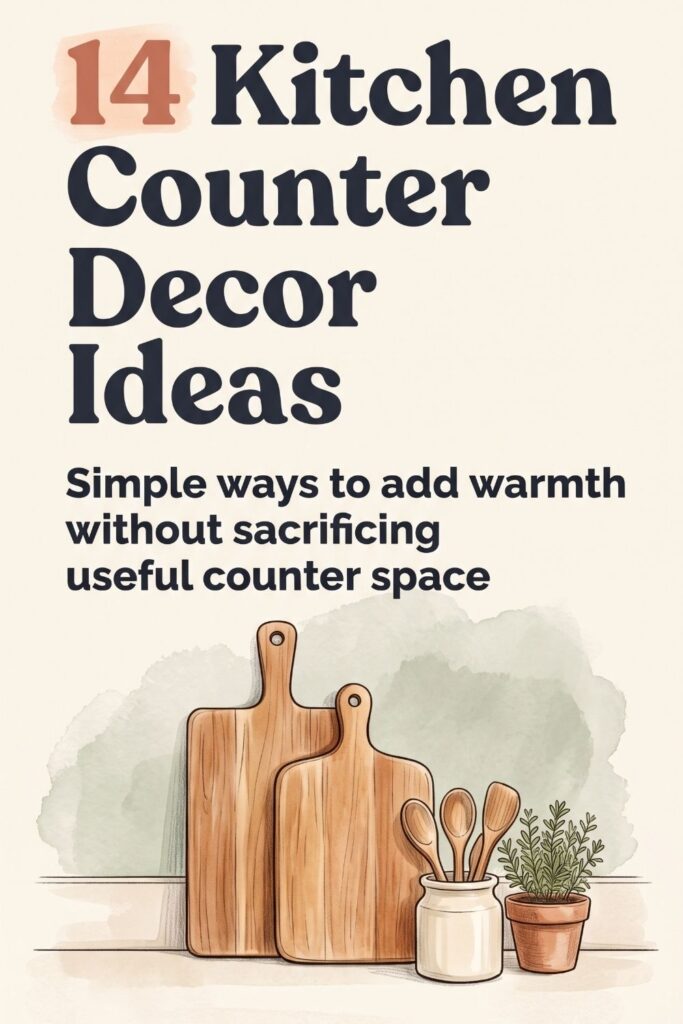
Kitchen countertops are easy to overdecorate because they are large, visible surfaces that seem to invite styling. The problem is that they are also working spaces. They need room for chopping, mixing, serving, unpacking groceries, and handling the small routines that happen throughout the day.
The best countertop decor does not compete with those tasks. It supports them. A cutting board can add warmth while remaining useful. A basket can provide texture while holding fruit. A ceramic crock can bring visual order to utensils that would otherwise fill a drawer or spread across the counter.
You do not need expensive accessories or a full kitchen renovation to create a more welcoming room. A few thoughtfully chosen pieces, arranged near the places where they are actually used, can make the entire kitchen feel calmer and more complete.
You Might Also Like:
- Loading posts...
Start With Function, Not Decoration
Before adding anything, clear the counters and notice how you use each area. The space beside the stove may need cooking tools and oils. The section near the sink may need soap, towels, and a brush. A corner near an outlet may naturally become a coffee station.
Once those practical zones are clear, decoration becomes easier. Instead of filling empty surfaces randomly, you can choose useful objects that suit each location.
A simple countertop usually works best when it includes:
- Open space for food preparation
- Frequently used tools within reach
- One or two warm natural materials
- A small amount of greenery or seasonal color
- Clear groups rather than scattered individual objects
This approach creates a kitchen that feels styled without becoming difficult to maintain.
1. Place Fresh Herbs in a Simple Ceramic Pot
A healthy herb plant adds natural color and softens the hard surfaces found in most kitchens. Basil, thyme, parsley, chives, and mint can all work indoors, but their success depends on light, temperature, watering, and the specific growing conditions in your home.
Place the pot near a bright window rather than choosing its location based only on appearance. If the plant becomes pale, stretched, or weak, it may not be receiving enough light.
A rustic ceramic container suits farmhouse and cottage-style kitchens, while a smooth white or gray pot works well in more modern spaces. Make sure the container has appropriate drainage or use it as a decorative cover around a smaller nursery pot. Standing water can damage roots and stain the countertop.
One well-kept herb plant will usually look more attractive than a crowded row of neglected pots.
2. Lean Wooden Cutting Boards Against the Backsplash
Wooden cutting boards bring warmth to kitchens dominated by white cabinets, stone counters, metal appliances, or tile. Instead of hiding every board in a cupboard, display two or three upright against the backsplash.
Choose different heights to create a layered arrangement. A large rectangular board can form the background, with a smaller handled or round board in front. The shapes may vary, but similar wood tones will help the group feel connected.
Keep boards near the food-preparation area so the display remains practical. After washing them, allow them to dry completely before placing them flat against a wall. Trapped moisture can encourage odors, staining, or warping.
Avoid displaying so many boards that you have to move the entire stack each time you cook. Two useful boards often create enough visual interest.
3. Turn a Glass Bottle Into a Small Flower Vase
A narrow glass bottle, old-fashioned milk bottle, preserving jar, or simple glass pitcher can become an understated vase. This is an easy way to add flowers without using a large arrangement that takes over the counter.
A few garden clippings, daisies, small roses, or seasonal branches are usually enough. Shorter stems are easier to position safely and are less likely to interfere with cabinets or cooking areas.
One bottle creates a clean, minimal look. A group of two or three bottles in different heights feels more collected and informal. Keep the arrangement away from direct heat, grease, and areas where it could be knocked over.
Change the water regularly and remove fading stems promptly. Fresh flowers create charm; neglected flowers create the opposite effect.
4. Display a Small Stack of Well-Loved Cookbooks
Cookbooks add personality because they suggest how the kitchen is actually used. Older books with worn covers can bring vintage character, while newer books can introduce color and a more contemporary mood.
Choose a small stack of books you genuinely consult rather than using valuable counter space for books that are never opened. Place them in a dry corner away from the sink, kettle steam, cooking splatter, and direct heat.
Three books are often enough to create height beneath a small bowl, decorative object, or plant. Avoid stacking books so high that the arrangement feels unstable or blocks an outlet.
If your kitchen is compact, one cookbook displayed on a stand may be more practical than a stack.
5. Use a Woven Basket for Counter-Safe Fruit
A wicker, rattan, or seagrass basket adds texture while keeping suitable fruit visible and easy to reach. Apples, oranges, lemons, and some other whole fruits may be stored at room temperature for a limited period, depending on ripeness and household conditions.
Not every type of produce belongs in the same basket. Some fruits release ethylene gas, which can speed the ripening of nearby produce. Soft, damaged, or overripe fruit should be removed quickly to prevent mess and waste.
Choose a basket with enough space to avoid crushing the fruit. A washable liner can catch debris, although it should not trap moisture.
The basket itself should suit the size of the counter. A low, shallow shape usually feels less bulky than a tall basket filled beyond its rim.
6. Keep Everyday Utensils in a Ceramic Crock
A ceramic utensil holder is one of the most practical countertop accessories. It keeps wooden spoons, spatulas, whisks, and other frequently used tools close to the stove.
White ceramic is versatile, but soft green, charcoal, cream, or handmade pottery can work just as well. Choose a container with enough weight and width to remain stable when tall utensils are removed.
Do not fill it with every tool you own. Overcrowding makes utensils difficult to retrieve and creates visual clutter. Store occasional-use tools in a drawer and keep only the pieces you reach for regularly.
Position the crock close enough to the cooking area to be useful, but not so close to a burner that the utensils are exposed to excess heat or splatter.
7. Group Small Succulents in Terracotta Pots
Succulents can add sculptural greenery to a bright kitchen, but they are not automatically suitable for every counter. Most need strong light, good drainage, and careful watering. A dark corner far from a window may not support healthy growth.
Terracotta pots are commonly used because the porous clay allows moisture to evaporate more readily than many glazed containers. However, the plants still need drainage holes and an appropriate potting mix.
A group of three small pots usually looks balanced without occupying too much space. Vary the plant shapes while keeping the pots similar. Place a protective tray underneath to prevent water or soil from reaching the counter.
If natural light is limited, consider a realistic artificial plant rather than repeatedly replacing unhealthy live ones.
8. Add Warmth With a Copper Kettle
Copper has a rich color that contrasts beautifully with pale counters, white cabinetry, wood, and stone. A kettle can act as a decorative focal point, particularly near a stove or a group of cutting boards.
A decorative vintage kettle should not automatically be treated as functional cookware. Older pieces may have worn linings, unknown repairs, loose parts, or materials that are unsuitable for heating or food contact. Use an antique kettle only as decoration unless its condition and intended use are clear.
A new, food-safe kettle can provide the same visual warmth while remaining practical. Keep the surrounding area simple so the copper finish stands out instead of getting lost among many small objects.
Copper naturally changes appearance over time. Some people prefer a polished shine, while others enjoy the darker patina that develops with age.
9. Fill a Glass Jar With Dry Pantry Staples
Clear jars can make practical ingredients part of the decor. Dried beans, lentils, rice, oats, or pasta add quiet color and texture while remaining visible.
Use clean, completely dry containers with secure lids. Moisture, pests, and poor storage conditions can damage dried foods. Labeling the jar with the ingredient and purchase date is more useful than creating decorative layers that cannot be easily rotated or used.
Avoid combining different ingredients in the same jar solely for appearance unless you plan to separate them later. A jar filled with one usable ingredient is simpler and less wasteful.
Keep the container away from direct sunlight and heat, both of which can reduce food quality over time. Decorative storage should still follow sensible pantry practices.
10. Introduce Texture With Linen Towels
Textiles soften a kitchen filled with hard surfaces. A linen or linen-blend hand towel can add warmth near the sink, on an oven handle, or folded beside a bread basket.
Neutral colors such as cream, oatmeal, muted gray, or soft beige are easy to coordinate. Thin stripes or small checks can introduce pattern without making the counter feel busy.
Towels should remain clean, dry, and positioned safely. Do not drape fabric close to an open flame or hot burner. A towel that is constantly damp should be replaced with a dry one rather than left in place as decoration.
For a tidy appearance, fold the towel lengthwise and let only a small section hang naturally. The goal is relaxed texture, not a large piece of fabric covering the workspace.
11. Display a Marble Mortar and Pestle
A marble mortar and pestle brings weight, natural pattern, and a polished finish to the counter. It can be useful for crushing spices, grinding small amounts of herbs, or making pastes, depending on the size and surface of the set.
Place it near the area where spices and seasonings are used. Pairing it with wooden tools or pottery prevents the marble from making the arrangement feel too formal.
Marble is porous and may react with acidic ingredients, depending on its finish and condition. Follow the manufacturer’s care guidance and avoid allowing strongly colored or acidic mixtures to sit in the bowl for long periods.
Because a mortar and pestle is heavy, choose a stable location where it will not need to be moved every day.
12. Brighten the Counter With a Wire Basket of Lemons
Fresh lemons create a strong color accent, especially in kitchens with neutral surfaces. A black wire basket offers contrast, while a white, brass-toned, or natural metal basket produces a softer look.
The open design allows air to move around the fruit, but airflow alone does not guarantee longer storage. Freshness also depends on temperature, humidity, ripeness, and how long the lemons have already been stored.
Use a modest quantity rather than piling the basket high. Check the fruit regularly and remove any damaged lemons. If you keep lemons for extended periods, refrigeration may preserve them longer than room-temperature display.
This idea works best when the fruit is regularly used for cooking, baking, tea, or drinks. Otherwise, an attractive display can quickly become food waste.
13. Corral Oils and Seasonings on a Small Tray
A tray is one of the most effective tools for making countertop items look intentional. It turns several bottles into one visual group and makes the area easier to wipe down.
Place frequently used cooking oil, vinegar, salt, and pepper on a bamboo, wood, metal, or stone tray near the cooking area. Choose only the items you use often. Specialty bottles that appear once every few months belong in a cupboard.
A tray with a small rim can contain minor drips, but it still needs regular cleaning. Wipe bottle bases before returning them, and keep oils away from direct sunlight and stove heat when possible. Heat and light can reduce the quality of some oils.
Leave enough space around the bottles so they can be lifted without knocking into one another.
14. Use a Mason Jar for Wooden Spoons
A mason jar filled with wooden spoons offers an informal alternative to a ceramic crock. It works especially well in casual farmhouse, country, and cottage-style kitchens.
Choose a jar wide enough to remain stable. A narrow container packed with tall utensils may tip easily. Limit the contents to clean, dry tools that are used regularly.
Wooden utensils should be fully dry before storage. Keeping damp spoons pressed together in a container can trap moisture and encourage unpleasant odors or damage.
For a more unified display, use mostly wooden tools rather than mixing many bright plastic colors. A few varied wood tones will still feel natural and collected.
How to Make Countertop Decor Look Cohesive
A coordinated kitchen does not require every object to match. In fact, a room filled with identical pieces can feel flat. Cohesion comes from repeating a few materials, tones, and shapes.
Choose a simple palette based on what is already present in the room. For example:
- Warm wood
- White or cream ceramic
- Clear glass
- One metal finish
- A small amount of green or seasonal color
You can mix modern and vintage pieces, but one style should remain visually dominant. A traditional kitchen may include a sleek soap dispenser, while a modern kitchen may benefit from one worn cutting board or handmade bowl.
The often-repeated 70/20/10 decorating ratio can be used as a loose visual guide rather than a strict rule. Most of the room can follow the main style, a smaller share can introduce a complementary look, and one or two pieces can provide contrast. There is no need to calculate exact percentages.
Repeated tones matter more than matching sets. A wooden spoon, cutting board, and tray may come from different sources yet still feel related if their colors are similar.
Keep Decorations Grouped by Purpose
Scattered objects make a counter look untidy even when each item is attractive. Grouping creates order.
Near the stove, you might keep:
- A utensil crock
- A cutting board
- A small tray with oil and seasonings
Near the sink, you might place:
- Hand soap
- A dish brush
- A folded towel
In a beverage corner, you might gather:
- A coffee maker or kettle
- Mugs
- Sugar or tea in one small container
Each group should support a real activity. This makes the arrangement easier to understand visually and more convenient to use.
Common Countertop Decorating Mistakes
The most common mistake is filling every empty space. Open counter area is not unfinished. It is necessary working room and an important part of the overall design.
Other problems include keeping too many tiny objects, placing fabric near heat, displaying food that no one eats, and using plants in locations where they cannot survive. Decorative containers can also become clutter collectors if their contents are not edited regularly.
Avoid blocking outlets, cabinet doors, appliance vents, or frequently used drawers. Do not place breakable objects near the edge of the counter, especially in busy households.
Cleaning also matters. If an arrangement takes too long to move and wipe around, it will eventually become frustrating. A good countertop setup should be easy to lift, clean, and return in a few minutes.
Kitchen Countertop Decor FAQs
How many decorative items should remain on the counter?
There is no fixed number because kitchens vary in size and function. A better rule is to keep only objects that are useful, meaningful, or visually strong. Group them into a few clear zones and preserve enough empty space for daily preparation.
How can white countertops feel less cold?
Introduce warm materials such as wood, wicker, terracotta, linen, and aged metal. Green plants, fruit, pottery, and warm-toned cutting boards can soften a white surface without changing the kitchen permanently.
What is the most practical countertop decoration?
Items that already serve a daily purpose are usually the easiest to live with. Cutting boards, utensil holders, fruit baskets, trays, towels, and frequently used cookware can all contribute to the room’s appearance while remaining functional.
Should small appliances stay on display?
Appliances used every day can remain out if they have a logical place and do not consume essential preparation space. Appliances used occasionally are usually better stored away. Removing even one bulky item can make a counter feel noticeably calmer.
How often should countertop decor be changed?
There is no need to restyle the kitchen on a fixed schedule. Adjust the arrangement when it becomes cluttered, inconvenient, or difficult to clean. Small seasonal changes, such as switching flowers, towels, or fruit, can refresh the space without replacing the main pieces.
Create a Kitchen That Feels Lived In, Not Overfilled
A charming countertop is not a display shelf filled with decorative objects. It is a working surface made more inviting through useful materials, thoughtful grouping, and a few natural details.
Begin with what you already own. Stand up the cutting boards, gather cooking bottles on a tray, move wooden spoons into a sturdy jar, or place a bowl of fruit where it will actually be eaten. Then stop before every corner is occupied.
The most comfortable kitchens leave room for real life. A little wood, pottery, greenery, glass, or linen can add character, but open space is what allows those details to be noticed.